Representative Bruce F. Caputo
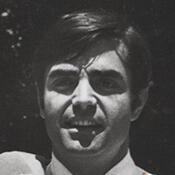
Here you will find contact information for Representative Bruce F. Caputo, including email address, phone number, and mailing address.
| Name | Bruce F. Caputo |
| Position | Representative |
| State | New York |
| District | 23 |
| Party | Republican |
| Status | Former Representative |
| Term Start | January 4, 1977 |
| Term End | January 3, 1979 |
| Terms Served | 1 |
| Born | August 7, 1943 |
| Gender | Male |
| Bioguide ID | C000137 |
About Representative Bruce F. Caputo
Bruce Faulkner Caputo (born August 7, 1943) is an American lawyer, investor, and politician from New York. A member of the Republican Party, he is most notable for his service as a member of the New York State Assembly from 1973 to 1976 and as a United States Representative from New York from 1977 to 1979. During his single term in Congress, he contributed to the legislative process at a significant period in American history, participating in the democratic process and representing the interests of his constituents in the U.S. House of Representatives.
Caputo entered elective politics in the early 1970s. In 1972 he was elected to the New York State Assembly, representing a district based in Yonkers in Westchester County. He was re-elected in 1974 and served in the 180th and 181st New York State Legislatures from 1973 to 1976. During his tenure in the Assembly, Caputo served on several key committees, including the Ways and Means Committee, the Housing Committee, and the Insurance Committee, giving him experience in fiscal policy, housing issues, and regulatory matters at the state level.
In 1976, when Republican Congressman Peter A. Peyser vacated his U.S. House seat to challenge incumbent U.S. Senator James L. Buckley for the Republican Senate nomination, Caputo ran for the open congressional seat. In the general election he defeated Democratic Assemblyman J. Edward Meyer, a former Republican who had become a Democrat in 1973. Caputo’s congressional district included Yonkers, three towns in lower Westchester County, and the Woodlawn, Wakefield, Williamsbridge, Edenwald, Eastchester, and Baychester sections of the Bronx. He served in the United States House of Representatives from January 3, 1977, to January 3, 1979. While in Congress, Caputo served on the House Banking, Finance and Urban Affairs Committee and on the House Ethics Committee, roles that placed him at the center of debates over financial regulation, urban policy, and standards of conduct in the House.
As his first term in Congress progressed, Caputo was drawn into statewide politics. In 1978, Perry Duryea, the Republican leader of the New York State Assembly and the front-runner for the Republican nomination for governor, selected Caputo as his running mate for lieutenant governor. The Republican state convention formally nominated the Duryea–Caputo ticket in the fall of 1978. In the November general election, however, the Republican ticket was defeated by the Democratic incumbents: Governor Hugh L. Carey and his running mate, Lieutenant Governor Mario Cuomo. Following the 1978 elections, Caputo completed his term in Congress, which ended in January 1979, and did not return to the House.
After leaving Congress, Caputo moved into the private sector. He joined the management consulting firm Booz Allen Hamilton, working in its mergers and acquisitions and banking departments. This position drew on his legislative experience in financial and urban affairs and marked the beginning of a long period in which he combined legal practice, consulting, and private investment. Over time he developed a career as a lawyer and private investor, focusing on real estate and early-stage privately held companies.
Caputo continued to seek higher office in the early 1980s. In 1980 he entered the Republican primary for the U.S. Senate seat held by Jacob Javits. Positioned on the party’s right flank, he competed with Nassau County Executive Alfonse D’Amato for conservative support. When D’Amato secured the nomination of the New York Conservative Party, Caputo withdrew from the race. D’Amato went on to defeat Javits in the Republican primary and to win the general election. In his 1995 autobiography, “Power, Politics, and Pasta: The World According to Senator Al D’Amato,” D’Amato later offered a sharply critical account of Caputo and their rivalry during this period.
Despite these intraparty contests, Caputo remained active in public affairs. In 1981 President Ronald Reagan nominated him to serve as an alternate United States delegate to the United Nations General Assembly. The United States Senate confirmed his nomination, and Caputo began serving in that diplomatic role in the spring of 1981, participating in the work of the General Assembly during the early years of the Reagan administration. Early in 1982, he announced his candidacy for the U.S. Senate against incumbent Democrat Daniel Patrick Moynihan, who was seeking a second term. Although Caputo was regarded as a rising figure in New York Republican politics and raised campaign funds from around the country, he ended his campaign after failing to secure the backing of key Republican and Conservative Party county leaders.
Following his withdrawal from statewide races, Caputo stepped back from electoral politics and devoted himself primarily to his legal and business pursuits. Drawing on his experience in government, consulting, and finance, he worked as a lawyer and as a private investor in real estate and early-stage privately held companies. His career thus combined public service in the New York State Assembly and the U.S. House of Representatives with subsequent roles in international diplomacy, management consulting, and private enterprise.