Representative Bruce A. Morrison
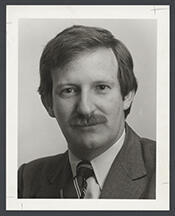
Here you will find contact information for Representative Bruce A. Morrison, including email address, phone number, and mailing address.
| Name | Bruce A. Morrison |
| Position | Representative |
| State | Connecticut |
| District | 3 |
| Party | Democratic |
| Status | Former Representative |
| Term Start | January 3, 1983 |
| Term End | January 3, 1991 |
| Terms Served | 4 |
| Born | October 8, 1944 |
| Gender | Male |
| Bioguide ID | M000992 |
About Representative Bruce A. Morrison
Bruce Andrew Morrison (born October 8, 1944) is an American attorney, lobbyist, and Democratic Party politician who represented Connecticut in the United States House of Representatives from 1983 to 1991. Over the course of four terms in Congress, he contributed to the legislative process during a significant period in American history, participating in the democratic process and representing the interests of his constituents. He later became the Democratic nominee for Governor of Connecticut in 1990 and went on to build a prominent career in immigration law and public affairs.
Morrison was born in 1944 and came of age during the post–World War II era, a time that would shape his interest in public policy and civil rights. He pursued higher education at the University of Pennsylvania, where he received a Bachelor of Arts degree in 1965. He then attended the University of Illinois at Urbana–Champaign, earning a Master of Arts in 1966, before enrolling at Yale Law School. At Yale, he completed his Juris Doctor in 1973, training in an environment that emphasized public service and constitutional law and that would strongly influence his later work in Congress, particularly on issues of immigration and civil liberties.
Following his graduation from Yale Law School, Morrison embarked on a legal and public-interest career that laid the groundwork for his entry into electoral politics. He initially worked in legal services and public advocacy, gaining experience in representing low-income clients and engaging with complex regulatory and statutory frameworks. This early legal work, combined with his academic background, positioned him as a policy-focused attorney with a strong interest in social justice, which would become a hallmark of his later legislative efforts.
Morrison was first elected to the U.S. House of Representatives from Connecticut in 1982 and took office on January 3, 1983. A member of the Democratic Party, he served four consecutive terms, remaining in office until January 3, 1991. During his tenure, he became particularly influential on immigration policy. As chair of the House Subcommittee on Immigration and Citizenship, he was a primary author of the Immigration Act of 1990, one of only two major immigration bills in United States history to significantly increase legal immigration. The legislation expanded legal immigration categories, revised family- and employment-based visa allocations, and created new avenues for high-skilled immigrants, reflecting Morrison’s interest in both humanitarian concerns and the economic needs of the United States.
Morrison’s congressional service coincided with the late Cold War and the beginning of the post–Cold War era, a period marked by shifting global migration patterns and evolving domestic debates over immigration, civil rights, and economic policy. In addition to his work on immigration, he participated broadly in the legislative process, contributing to debates and policymaking affecting his Connecticut constituents and the nation. He also emerged as a notable advocate for Irish-American causes and for American involvement in the Irish peace process. In this capacity, he acted as a key intermediary between Sinn Féin leader Gerry Adams and President Bill Clinton, helping to facilitate dialogue that contributed to the broader context in which the Northern Ireland peace process advanced during the 1990s.
In 1990, Morrison sought higher office by running for governor of Connecticut. The incumbent Democratic Governor, William O’Neill, had become very unpopular due to years of state budget crises and chose not to seek re-election. Morrison entered the Democratic primary and defeated William Cibes to secure the party’s nomination. In the general election, however, he faced Republican John G. Rowland and independent candidate Lowell Weicker. Despite a sizable Democratic voter registration advantage in the state, Morrison finished a distant third in the general election, behind Rowland and the eventual winner, Weicker. His campaign was hampered by widespread public dissatisfaction with the Democratic Party in Connecticut at the time, and he was unable to overcome the broader political headwinds facing his party.
After leaving Congress in 1991 and following his defeat in the gubernatorial race, Morrison returned to the practice of law. He started his own law firm in New Haven, Connecticut, specializing in immigration law. In this role, he drew on his extensive legislative experience and deep knowledge of immigration statutes, representing clients navigating the complex U.S. immigration system. His legal practice reinforced his reputation as a leading figure in immigration policy, bridging the worlds of law, public policy, and advocacy.
Morrison later expanded his work into lobbying and public affairs. After serving on the Federal Home Loan Bank Board’s Finance Board, he left that position in July 2000 and founded the Morrison Public Affairs Group (MPAG), a Bethesda, Maryland-based lobbying firm. MPAG specializes in financial services, housing finance, and immigration policy, reflecting Morrison’s combined expertise in regulatory issues and legislative strategy. In addition to his lobbying work, he has continued to conduct an immigration law practice, maintaining a professional focus on the intersection of law, finance, and public policy while remaining engaged in issues of immigration and international affairs, particularly those affecting the Irish-American community.