Representative Bruce F. Vento
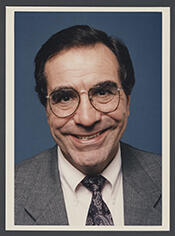
Here you will find contact information for Representative Bruce F. Vento, including email address, phone number, and mailing address.
| Name | Bruce F. Vento |
| Position | Representative |
| State | Minnesota |
| District | 4 |
| Party | Democratic |
| Status | Former Representative |
| Term Start | January 4, 1977 |
| Term End | January 3, 2001 |
| Terms Served | 12 |
| Born | October 7, 1940 |
| Gender | Male |
| Bioguide ID | V000087 |
About Representative Bruce F. Vento
Bruce Frank Vento (October 7, 1940 – October 10, 2000) was an American educator and politician who served as a Representative from Minnesota in the United States Congress from 1977 to 2001. A member of the Democratic-Farmer-Labor Party (the Minnesota affiliate of the Democratic Party), he represented Minnesota’s 4th congressional district in the U.S. House of Representatives from 1977 until his death in 2000, contributing to the legislative process during 12 terms in office and participating actively in the democratic process on behalf of his constituents.
Vento was born in Saint Paul, Minnesota, on October 7, 1940. He grew up in the city he would later represent in Congress, developing an early familiarity with the working-class neighborhoods and communities of the East Side of St. Paul. His upbringing in this urban environment helped shape his later legislative focus on housing, environmental protection, and social welfare, as he remained closely connected to the concerns of local residents throughout his public career.
Vento pursued higher education at the University of Minnesota Twin Cities in Minneapolis, where he received a Bachelor of Arts degree in 1961. He continued his studies at the University of Wisconsin–River Falls, earning a Bachelor of Science degree with honors in 1965. Following his graduation, he became a public school teacher in St. Paul, Minnesota. His experience as an educator in the city’s schools reinforced his interest in public service and exposed him to the challenges faced by low- and moderate-income families, themes that would recur in his later legislative work.
Vento entered elective office at the state level before coming to Congress. He served in the Minnesota House of Representatives from 1971 until 1976. During his tenure in the state legislature, he gained a reputation as a diligent and engaged lawmaker, building expertise in issues related to education, housing, and community development. His work in the Minnesota House laid the groundwork for his subsequent congressional career and helped establish his standing within the Democratic-Farmer-Labor Party.
In 1976, Vento was elected to the United States House of Representatives from Minnesota’s 4th congressional district, taking office in January 1977. He served continuously in the House from 1977 until his death in 2000, encompassing 12 terms in office. As a member of the House of Representatives, Vento participated in a significant period in American history, addressing issues ranging from economic change and urban decline to environmental protection and social policy. He became particularly recognized for his efforts in cleaning the environment and promoting affordable housing. Among his most notable legislative achievements was his role in the development and passage of the McKinney-Vento Homeless Assistance Act of 1986, landmark legislation that provides federal funding for shelter and services for homeless individuals and families. His advocacy on homelessness and housing policy made him widely known as a leading congressional voice on these issues.
Vento also played a significant role in legislation affecting refugee and veteran communities, particularly among Laotian and Hmong Americans. He introduced the first bill in the U.S. Congress to grant honorary U.S. citizenship and facilitate naturalization for Laotian and Hmong veterans who had served in the “U.S. Secret Army” in Laos during the Vietnam War. This effort culminated in the Hmong Veterans’ Naturalization Act of 2000, which was passed by the House and Senate following his death and signed into law by President Bill Clinton. Vento worked closely with the Lao Veterans of America, the Lao Veterans of America Institute, the Center for Public Policy Analysis, and leaders in the Lao- and Hmong-American community, including Hmong elders and community figures such as Cherzong Vang and Colonel Wangyee Vang. Over more than a decade, he helped build bipartisan support on Capitol Hill, in Congress, and at the White House for this legislation, reflecting his broader commitment to human rights and recognition of wartime allies.
Vento’s congressional service coincided with major national debates over environmental policy, and he became known for supporting conservation and urban environmental restoration. His advocacy contributed to projects in and around St. Paul that reclaimed former industrial and railroad sites for public use. The Bruce Vento Nature Sanctuary in Lowertown St. Paul, a former railroad yard and informal dumping ground, was developed as a model reclamation project and named in his honor, reflecting his support for transforming blighted land into accessible natural space. Similarly, the Bruce Vento Regional Trail, which runs through St. Paul, commemorates his work on behalf of environmental and community improvements; along this path, near Johnson Parkway just north of Phalen Avenue, a memorial grove has been established in his name.
Vento announced in 2000 that he would not seek a 13th term in Congress, after being diagnosed with pleural mesothelioma, a rare form of lung cancer caused by exposure to asbestos. He died in office on October 10, 2000, in the midst of his final term, as a result of this illness. Because his death occurred approximately one month before the November 2000 election and he had already declined to run again, no special election or replacement candidates were required; the regularly scheduled election proceeded, and State Representative Betty McCollum, a fellow Democrat-Farmer-Labor member, was elected to succeed him as representative of Minnesota’s 4th congressional district. Vento’s death placed him among the members of the United States Congress who have died in office in the modern era.
Vento’s legacy in Minnesota is reflected in multiple institutions and public spaces that bear his name. East Consolidated Elementary School in St. Paul was renamed Bruce Vento Elementary School in 2000, honoring his roots as a teacher and his long service to the community. The Bruce Vento Nature Sanctuary and Bruce Vento Regional Trail continue to serve residents and visitors, embodying his commitment to environmental stewardship and urban renewal. His congressional papers, documenting his extensive work on housing, homelessness, environmental policy, and refugee and veterans’ issues, are preserved at the Minnesota Historical Society as the Bruce Vento Papers, providing a resource for researchers and historians. His public life and legislative record are also documented through appearances on C-SPAN and other archival sources, underscoring his enduring role in Minnesota and national public life.