Senator Buckner Thruston
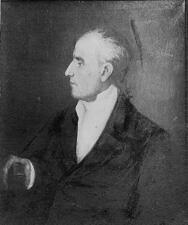
Here you will find contact information for Senator Buckner Thruston, including email address, phone number, and mailing address.
| Name | Buckner Thruston |
| Position | Senator |
| State | Kentucky |
| Party | Republican |
| Status | Former Representative |
| Term Start | December 2, 1805 |
| Term End | December 31, 1809 |
| Terms Served | 1 |
| Born | February 9, 1763 |
| Gender | Male |
| Bioguide ID | T000249 |
About Senator Buckner Thruston
Buckner Thruston (February 9, 1763 – August 30, 1845) was an American lawyer, slaveowner, and politician who served as a United States Senator from Kentucky, a member of the Virginia House of Delegates, and a United States circuit judge of the United States Circuit Court of the District of Columbia. A member of the Republican (Democratic-Republican) Party, he represented Kentucky in the United States Senate from 1805 to 1809 and later held a long federal judicial commission in the nation’s capital.
Thruston was born in Petsworth Parish in Gloucester County in the Colony of Virginia, British America. His birth is recorded as February 9, 1763 in some sources and February 9, 1764 in others. He came from a prominent Virginia family whose status rested on landholding and military service, supported by enslaved labor. His grandfather had been a colonel of the local militia and a farmer who used enslaved workers. His father, Charles Mynn Thruston (often spelled Thurston), also farmed with enslaved labor, but was educated and ordained as an Anglican minister. The elder Thruston moved the family westward to Frederick County, Virginia, where he combined farming with his clerical duties until 1776. During the American Revolutionary War, he became known as a “fighting parson” after recruiting a military company, joining the Continental Army, and rising to the rank of colonel, losing the use of an arm as a result of a combat wound. Buckner Thruston’s mother died when he was an infant, and his father’s remarriage created a large blended family of several brothers and sisters. In this environment, Thruston received an education appropriate to his social standing in Frederick County.
For higher education, Thruston traveled to Williamsburg, Virginia, where he attended the College of William & Mary, one of the principal institutions of higher learning in the early United States. He received an Artium Baccalaureus (A.B.) degree in 1783. After reading law, he was admitted to the Virginia bar and began his legal career. In the late 1780s he moved west to what was then Kentucky County, Virginia, later the District of Kentucky, and, after June 1, 1792, the Commonwealth of Kentucky. Many Revolutionary War veterans and land speculators were settling in the region at that time, and Thruston established a private law practice in Lexington, Kentucky, positioning himself within the emerging legal and political community of the new state.
Thruston’s public career began in Virginia politics. Jefferson County voters elected him, along with Abner Field, to the Virginia House of Delegates in 1789. He served in that session but was replaced, along with Field, in the following year, and thus did not sit concurrently with his father, who represented Frederick County in the previous and subsequent sessions. After the Kentucky region moved toward statehood, Thruston was drawn into the complex legal and political issues surrounding the separation of Kentucky from Virginia. In 1791 he was appointed a commissioner to help resolve the boundary dispute between Kentucky and Virginia, and in the same year he served as a judge of the Kentucky District Court. Following Kentucky’s admission to the Union in 1792, he became clerk of the Kentucky Senate, serving from 1792 to 1794. The Kentucky legislature later named him a judge of the Kentucky Circuit Court, a position he held from 1802 to 1803. During this period, his father relocated to Louisiana shortly after President Thomas Jefferson’s Louisiana Purchase. In 1804, Thruston was offered an appointment as United States District Judge of the United States District Court for the District of Orleans, but he declined the post.
Kentucky legislators elected Thruston as a Democratic-Republican to the United States Senate, where he served one term from March 4, 1805, to December 18, 1809. As a Senator from Kentucky and a member of the Republican Party, he served during a significant period in American history marked by the Jefferson and Madison administrations, rising tensions with Great Britain, and debates over trade restrictions and national expansion. In the Senate, Thruston participated in the legislative process and represented the interests of his Kentucky constituents, contributing to the democratic governance of the young republic. He resigned his Senate seat on December 18, 1809, in order to accept a federal judicial appointment.
On December 12, 1809, President James Madison nominated Thruston to a seat on the United States Circuit Court of the District of Columbia, filling the vacancy created by the death of Judge Allen Bowie Duckett. The United States Senate confirmed his nomination on December 13, 1809, and he received his commission on December 14, 1809. From that date until his death on August 30, 1845, Thruston served as a United States circuit judge for the District of Columbia, presiding over a wide range of civil and criminal matters in the federal courts of the capital city. His long tenure on the bench, spanning more than three decades, placed him among the longer-serving federal judges of his era and made him a significant figure in the early legal history of Washington, D.C.
Thruston married and had several children, and like his forebears he owned enslaved people throughout his adult life. After relocating to Washington, D.C., his household continued to rely on enslaved labor. The 1820 census recorded the Thruston household as including three enslaved boys, two enslaved adult women, and two free Black individuals. By 1830, the household included five enslaved persons. One of his sons, Charles Mynn Thruston, pursued a career as a United States Army officer, later retiring to Cumberland, Maryland, where he farmed and served as mayor at the outset of the American Civil War. During the war, Charles Mynn Thruston returned to military service as a general of volunteers in the Union Army, although he relinquished that post in 1862 in favor of a younger officer.
Buckner Thruston remained on the bench of the United States Circuit Court of the District of Columbia until his death in Washington, D.C., on August 30, 1845. His service on that court formally terminated on the date of his death. He was interred in the Congressional Cemetery in Washington, D.C., a burial ground for many members of Congress and federal officials, reflecting his long association with the national government as legislator and judge.