Senator Burnet Rhett Maybank
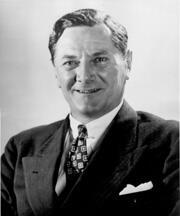
Here you will find contact information for Senator Burnet Rhett Maybank, including email address, phone number, and mailing address.
| Name | Burnet Rhett Maybank |
| Position | Senator |
| State | South Carolina |
| Party | Democratic |
| Status | Former Representative |
| Term Start | January 3, 1941 |
| Term End | January 3, 1955 |
| Terms Served | 3 |
| Born | March 7, 1899 |
| Gender | Male |
| Bioguide ID | M000279 |
About Senator Burnet Rhett Maybank
Burnet Rhett Maybank (March 7, 1899 – September 1, 1954) was a three-term United States senator from South Carolina, the 99th governor of South Carolina, and mayor of Charleston, South Carolina. A member of the Democratic Party, he served in the U.S. Senate from 1941 until his death in 1954, contributing to the legislative process during three terms in office. He was the first governor from Charleston since the American Civil War and one of only about twenty people in United States history to have been elected mayor, governor, and United States senator. During his tenure in the Senate, Maybank was a powerful ally of President Franklin D. Roosevelt. His unexpected death from a heart attack on September 1, 1954, led to Strom Thurmond being elected senator in the ensuing political upheaval.
Maybank was born in Charleston, South Carolina, into one of the city’s most prominent and wealthy families. He was the first of ten children born to Dr. Joseph Maybank VI and Harriet Lowndes Rhett. Through his lineage he was directly descended from five former South Carolina governors—Thomas Smith, Rawlins Lowndes, Robert Gibbes, James Moore, and William Aiken Jr.—and was a great-grandson of U.S. Senator Robert Barnwell Rhett. He attended Porter Military Academy (now Porter-Gaud School) in Charleston and later graduated from the College of Charleston. During World War I he served in the United States Navy, an experience that preceded his return to Charleston and entry into business and public life.
On June 28, 1923, Maybank married Elizabeth deRosset Myers. The couple had three children: a son, Burnet Rhett Maybank Jr., and two daughters, Elizabeth and Roberta. After the death of his first wife, Maybank remarried; his second marriage produced no children. His son, Burnet R. Maybank Jr., later followed him into public service, serving as lieutenant governor of South Carolina, as a member of the General Assembly, and as a candidate for governor, thereby extending the family’s long tradition of political involvement in the state.
Before entering full-time public service, Maybank established himself in the cotton export business in Charleston, working in that field from 1920 to 1938. A lifelong Democrat, he entered elective politics in 1927 when he won a four-year term as an alderman in Charleston. He became mayor pro tempore in 1930 and, in 1931, was elected mayor of Charleston, a position he held until 1938. As mayor during the Great Depression, Maybank balanced the city’s budget, refused to accept a proposed increase of his own salary from $3,600 to $6,000, and reduced local taxes. He aggressively sought and utilized federal funds made available under President Franklin D. Roosevelt’s New Deal for slum clearance, public housing, infrastructure improvements, and unemployment relief. Under his leadership, Works Progress Administration funds were used to restore the historic Dock Street Theatre and to improve city docks and construct a city incinerator. During this period he also served on the State Board of Bank Control (1932–1933), chaired the South Carolina Public Service Authority (1935–1939), which oversaw the Santee River hydroelectric and flood-control project often called the “little TVA,” and sat on the South Carolina State Advisory Board of the federal Public Works Administration from 1933 to 1934.
With the favorable publicity from the Santee project, a strong political base in Charleston, and the support of his mentor, U.S. Senator James F. Byrnes, Maybank was elected governor of South Carolina in 1938. As governor, he sought to modernize law enforcement by attempting, though unsuccessfully, to create an adequate statewide police force. He nonetheless supervised vigorous prosecutions of criminal activity and strictly enforced liquor and gambling statutes. He personally intervened to prevent the destruction of a historic high wall surrounding the old Charleston jail when it was threatened by a housing project expansion. In the racially segregated society of the time, Maybank fought the Ku Klux Klan, expanded economic opportunities for Black South Carolinians, and worked to improve the quality of Black schools, which had long been underfunded, although he did not challenge the state’s system of Black disfranchisement entrenched in the constitution and election laws since the early twentieth century. Throughout his gubernatorial tenure he remained a liberal supporter of Roosevelt’s New Deal public works and relief programs, even as he opposed some of the administration’s labor policies.
In January 1941 President Roosevelt appointed Senator Byrnes to the U.S. Supreme Court, creating a vacancy in the Senate. Maybank resigned the governorship to run in the special election held in September 1941 and won the seat, defeating former governor Olin D. Johnston with 56.6 percent of the vote. He was elected to a full six-year term in 1942 and was reelected without opposition in 1948, serving continuously in the Senate from 1941 until his death in 1954. In Washington, Maybank quickly became a powerful member of the southern Democratic bloc and a key ally of the Roosevelt administration during World War II and the early postwar years. He served as chairman of the Committee on Banking and Currency and as co-chairman of the Joint Committee on Defense Production. As chair of the Subcommittee on Independent Offices of the Senate Appropriations Committee, he played a critical role in sustaining the U.S. nuclear weapons program in the early 1950s. In 1953 he introduced the “Maybank Amendment” to the Defense Appropriations Bill, which relieved the Department of Defense from statutory requirements to direct a fixed percentage of its expenditures to areas of high unemployment. Shortly before his death, Fortune magazine named him one of the “20 Most Influential Americans,” underscoring his national prominence.
Maybank’s senatorial career also had a more personal dimension in his relationships with staff and constituents. In 1944 a fourteen-year-old runaway from South Carolina, Bertie Bowman, approached Maybank in Washington seeking work. Maybank secured him a janitorial position and took a personal interest in the boy, who had no family in the capital. Bowman gradually advanced in the Senate’s employ and eventually became hearing coordinator for the Senate Foreign Relations Committee. In his 2009 memoir, “Step by Step: A Memoir of Hope, Friendship, Perseverance, and Living the American Dream,” Bowman credited Maybank’s early support as pivotal. In March 2009 Maybank’s granddaughter, Elizabeth Parker, traveled to Washington to meet Bowman, and the following month additional members of the Maybank family met Bowman and his wife in Charleston, reflecting the enduring legacy of the senator’s personal generosity. Vice President Joe Biden later invoked Maybank’s words at the 2010 dedication of the Ernest Hollings Special Collections Library at the University of South Carolina, quoting from Maybank’s essay “Who Is the South Carolinian?” to illustrate the state’s tradition of neighborly service and kindness.
Burnet Rhett Maybank died of a heart attack on September 1, 1954, at his summer home in Flat Rock, North Carolina, while still serving in the Senate. He was interred in Magnolia Cemetery in Charleston. His funeral was attended by numerous dignitaries, including then-Governor James F. Byrnes, Strom Thurmond, Ernest F. Hollings, thirteen United States senators, members of Congress, and state and local officials. His sudden death two months before election day upended the 1954 Senate race in South Carolina; Strom Thurmond subsequently won the seat as a write-in candidate against the nominee chosen by Democratic Party leaders to replace Maybank. In the years following his death, several landmarks were named in his honor, including South Carolina Highway 700 (Maybank Highway), the Burnet Maybank Bridge, and Maybank Hall at the College of Charleston. His Charleston residence, known as the Cleland Kinloch and Burnet R. Maybank Huger House, was placed on the National Register of Historic Places in 2015, further commemorating his role in the civic and political life of South Carolina.