Representative Burnett Mitchell Chiperfield
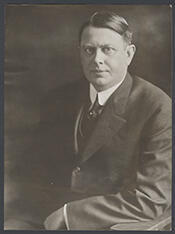
Here you will find contact information for Representative Burnett Mitchell Chiperfield, including email address, phone number, and mailing address.
| Name | Burnett Mitchell Chiperfield |
| Position | Representative |
| State | Illinois |
| District | 15 |
| Party | Republican |
| Status | Former Representative |
| Term Start | December 6, 1915 |
| Term End | March 3, 1933 |
| Terms Served | 3 |
| Born | June 14, 1870 |
| Gender | Male |
| Bioguide ID | C000364 |
About Representative Burnett Mitchell Chiperfield
Burnett Mitchell Chiperfield (June 14, 1870 – June 24, 1940) was a U.S. Representative from Illinois and a prominent Republican politician, attorney, and military officer in the early twentieth century. He was born in Dover, Illinois, and attended the public schools of Illinois before pursuing higher education at Hamline University in St. Paul, Minnesota. After his university studies he read law, preparing for a career in the legal profession that would underpin much of his later public service.
Chiperfield was admitted to the bar in 1891 and began practicing law in Illinois. Establishing himself as a lawyer in private practice, he soon entered public legal service as prosecuting attorney for Fulton County, Illinois, a position he held from 1896 to 1900. Alongside his legal work, he was active in local affairs and business and was also a banker, reflecting his engagement with the economic life of his community. His growing prominence in legal and civic circles helped launch his political career at the state level.
From 1903 to 1913, Chiperfield served as a member of the Illinois House of Representatives, where he participated in state legislative affairs for a full decade. During this period he also played a role in the development of public higher education in western Illinois, serving as secretary and trustee of the Western Illinois State Normal School (now Western Illinois University) in Macomb from 1904 to 1909. His work with the Normal School placed him at the center of efforts to expand teacher training and educational opportunities in the region, complementing his legislative responsibilities in Springfield.
In addition to his legal and political career, Chiperfield had a long record of military service. He served as an officer in the Illinois National Guard for twenty years and saw active duty in the Spanish–American War. During World War I he entered the United States Army Judge Advocate General’s Corps, serving from 1917 to 1919 and again from 1921 to 1934, ultimately rising to the rank of lieutenant colonel. In this capacity he investigated claims of subversion in the Army, oversaw dozens of courts-martial, and served in France during the war. After the Armistice he was assigned to civil affairs work with the Army of Occupation in Koblenz, Germany, reflecting the trust placed in his legal and administrative judgment.
Chiperfield’s national political career began with an unsuccessful bid for election to the Sixty-third Congress in 1912. He was subsequently elected as a Republican to the Sixty-fourth Congress, serving as a Representative from Illinois from March 4, 1915, to March 3, 1917. His service in Congress occurred during a significant period in American history, as the nation moved toward involvement in World War I. As a member of the House of Representatives, he participated in the legislative process and represented the interests of his Illinois constituents. After this initial term he did not seek renomination to the House but instead became an unsuccessful candidate for the United States Senate.
Chiperfield remained active in Republican Party affairs between and after his periods of congressional service. He served as a delegate to the Republican National Convention in 1920, participating in the selection of the party’s national ticket in the postwar era, and again as a delegate in 1936 during the New Deal period. He returned to Congress when he was elected simultaneously as a Republican to the Seventy-first and Seventy-second Congresses to fill the vacancy caused by the death of Representative-elect Edward J. King, serving from November 4, 1930, to March 3, 1933. In total, he served three terms in the U.S. House of Representatives between 1915 and 1933, contributing to the legislative process during a time marked by World War I, the Roaring Twenties, and the onset of the Great Depression.
After his final term, Chiperfield was an unsuccessful candidate for reelection to the Seventy-third Congress in 1932 and for election to the Seventy-fourth Congress in 1934, as the political landscape shifted during the early New Deal years. He continued to be recognized as a significant Republican figure in Illinois and remained identified with both his legal and military careers. He was also known as the father of Robert Bruce Chiperfield, who would later serve in Congress, extending the family’s involvement in national legislative affairs.
Burnett Mitchell Chiperfield died on June 24, 1940, in Canton, Illinois. He was interred in Greenwood Cemetery in Canton. His life encompassed service as a lawyer, state legislator, military officer, banker, and three-term U.S. Representative from Illinois, and his career reflected the intertwined legal, military, and political currents of his era.