Representative Burton Chauncey Cook
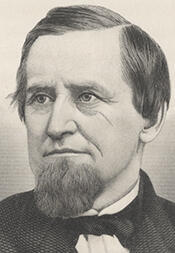
Here you will find contact information for Representative Burton Chauncey Cook, including email address, phone number, and mailing address.
| Name | Burton Chauncey Cook |
| Position | Representative |
| State | Illinois |
| District | 6 |
| Party | Republican |
| Status | Former Representative |
| Term Start | December 4, 1865 |
| Term End | March 3, 1873 |
| Terms Served | 4 |
| Born | May 11, 1819 |
| Gender | Male |
| Bioguide ID | C000715 |
About Representative Burton Chauncey Cook
Burton Chauncey Cook (May 11, 1819 – August 18, 1894) was a U.S. Representative from Illinois and a prominent Republican politician during the mid-nineteenth century. He was born in Pittsford, New York, on May 11, 1819. In his youth he attended the Collegiate Institute in Rochester, New York, where he received his formal education before turning to the study of law. Seeking opportunity in the expanding West, he moved in 1835 to Ottawa, Illinois, then a developing community in LaSalle County, and there completed his legal training. He was admitted to the bar and commenced the practice of law in Ottawa in 1840.
Cook quickly became active in public affairs and legal administration in Illinois. In 1846 he was elected by the state legislature to serve as State’s attorney for the ninth judicial district for a term of two years. When that office became elective by popular vote, he was reelected by the people in 1848 for an additional four-year term, reflecting his growing reputation as a capable lawyer and public servant. Building on this experience, he was elected to the Illinois Senate, in which he served from 1852 to 1860. During these eight years in the state legislature, he participated in the formative debates of the antebellum period as Illinois’ political landscape shifted toward the emerging Republican Party.
As national tensions over slavery and secession intensified, Cook became increasingly involved in Republican Party politics and national deliberations. He served as a delegate to the Republican National Convention in 1860, at which Abraham Lincoln was nominated for the presidency, and again as a delegate to the Republican National Convention in 1864, held during the Civil War. In 1861 he was also a member of the peace convention held in Washington, D.C., an extraordinary gathering of delegates from various states convened in a last effort to devise means to prevent the impending Civil War. Although the convention did not succeed in averting conflict, Cook’s participation underscored his engagement with the critical constitutional and sectional issues of his time.
Burton Chauncey Cook served as a Representative from Illinois in the United States Congress from 1865 to 1873. A member of the Republican Party, he was elected as a Republican to the Thirty-ninth and to the three succeeding Congresses, serving from March 4, 1865, to August 26, 1871, when he resigned his seat. Over the course of these four terms in office, his service in Congress occurred during a significant period in American history, encompassing the final months of the Civil War and the era of Reconstruction. As a member of the House of Representatives, Burton Chauncey Cook contributed to the legislative process, participated in the democratic governance of the reunited nation, and represented the interests of his Illinois constituents.
During his congressional tenure, Cook held important committee assignments that reflected his influence within the House. He served as chairman of the Committee on Roads and Canals during the Fortieth Congress, a position that placed him at the center of deliberations over internal improvements and transportation infrastructure at a time when the nation was rebuilding and expanding its economic networks. In the Forty-first Congress he served as chairman of the Committee on the District of Columbia, overseeing legislation affecting the governance and development of the nation’s capital. Through these roles he helped shape federal policy in areas critical to postwar recovery and national integration.
After resigning from Congress in August 1871, Cook returned to private life and resumed the practice of law. He eventually settled in Evanston, Illinois, where he continued his legal career and remained a respected figure in the state’s legal and political circles. Burton Chauncey Cook died in Evanston on August 18, 1894. He was interred in Oakwood Cemetery in Chicago, Illinois, closing a career that had spanned local, state, and national service during one of the most consequential periods in United States history.