Representative Butler Ames
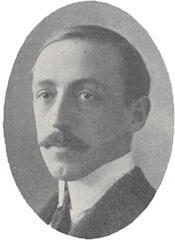
Here you will find contact information for Representative Butler Ames, including email address, phone number, and mailing address.
| Name | Butler Ames |
| Position | Representative |
| State | Massachusetts |
| District | 5 |
| Party | Republican |
| Status | Former Representative |
| Term Start | November 9, 1903 |
| Term End | March 3, 1913 |
| Terms Served | 5 |
| Born | August 22, 1871 |
| Gender | Male |
| Bioguide ID | A000173 |
About Representative Butler Ames
Butler Ames (August 22, 1871 – November 6, 1954) was an American politician, engineer, soldier, and businessman. He was born in Lowell, Middlesex County, Massachusetts, the son of Adelbert Ames, a Union Army general, Reconstruction-era governor and United States Senator from Mississippi, and Blanche Butler Ames, daughter of Benjamin Franklin Butler, a prominent Union general and later Governor of Massachusetts and U.S. Representative. Through this lineage he was closely connected to two of the most notable Union commanders of the American Civil War, a family background that strongly influenced his later military and political career.
Ames was educated in the public schools of Lowell and at Phillips Exeter Academy in Exeter, New Hampshire. He entered the United States Military Academy at West Point and graduated in 1894. Upon graduation he was appointed a second lieutenant in the Eleventh Regiment, United States Infantry. He soon resigned from the United States Army, however, in order to pursue advanced technical training. He enrolled at the Massachusetts Institute of Technology, where he took a postgraduate course in engineering, became a member of the Theta Xi fraternity, and graduated in 1896 as a mechanical and electrical engineer. This combination of military and technical education prepared him for a career that would move between engineering, manufacturing, and public service.
After completing his studies at MIT, Ames engaged in manufacturing in Lowell, entering the city’s robust industrial and engineering milieu. He quickly became active in local politics and civic affairs, serving as a member of the common council of Lowell in 1896. When the Spanish–American War broke out in 1898, he, like his father a generation earlier, returned to military service. He was commissioned a lieutenant and adjutant of the Sixth Regiment, Massachusetts Volunteer Infantry. In addition to his regimental duties, he was appointed acting engineer officer of the Second Army Corps under General William Graham. He was promoted to lieutenant colonel in August 1898 and subsequently served as civil administrator of the Arecibo district of Puerto Rico, a post he held until November 1898, participating in the early U.S. military government of the newly acquired territory.
Ames’s political career advanced rapidly after his return from Puerto Rico. He became a member of the Massachusetts House of Representatives, serving from 1897 to 1899, where he aligned with the Republican Party and represented the interests of his industrial hometown. Building on his state legislative experience and family political heritage, he was elected as a Republican to the Fifty-eighth Congress and to the four succeeding Congresses, serving in the U.S. House of Representatives from March 4, 1903, to March 3, 1913. During his decade in Congress he represented a Massachusetts district during a period of rapid industrial growth and Progressive Era reform, although the specific committee assignments and legislative initiatives for which he was best known are less extensively documented. In 1904 he was elected an honorary member of the New Hampshire Society of the Cincinnati, reflecting both his family’s long military tradition and his own service. He chose not to be a candidate for renomination in 1912 and left Congress at the close of the Sixty-second Congress.
Following his congressional service, Ames resumed and expanded his manufacturing and business pursuits, becoming a prominent industrial executive. He served as president of the United States Cartridge Company, a major ammunition manufacturer based in Lowell, and as treasurer of the Heinze Electrical Company of Lowell. At the time of his death he was treasurer and a director of the Wamesit Power Company of Lowell, Massachusetts. His business interests extended beyond New England: he was a director of the Union Land and Grazing Company in Colorado Springs, Colorado, and he also served as vice president and a director of Ames Textile in Lowell, continuing the family’s longstanding involvement in the region’s textile and industrial enterprises.
Ames also developed a notable connection to Italy through his acquisition and restoration of Villa del Balbianello on Lake Como. He first visited Europe in 1911 and was immediately taken with the villa, then in a state of some neglect, and determined to purchase it. In 1914 he nearly lost the property to Prince Eitel Friedrich of Prussia, the youngest son of Kaiser Wilhelm II. The sale to the prince was blocked by an Italian law that recognized the villa as one of the art monuments of Italy and gave the Italian state the right of preferred purchase at the offered price. After protracted negotiations and delays, Ames finally secured ownership in 1919 and undertook a careful and extensive restoration of the villa and its grounds. His experiences and recollections were later recorded on a dictaphone tape, in which he recounted both the struggle to acquire the property and aspects of his own life story.
That dictaphone recording was later transcribed, and members of his extended family published it in book form under the title “Butler Ames and the Villa Balbianello, Lake Como, Italy, An American Oral History.” The volume, printed by Hobblebush Press in 2009, includes essays and introductions by Evelyn Ames, Pauline Ames Plimpton, Ezio Antonini, and Sarah and George Plimpton, as well as period photographs and an illustrated guest book covering the years 1920 to 1970. The book was edited by Oakes Plimpton and made available through Amazon Books and directly from the editor at his residence in Arlington, Massachusetts. Ames’s heirs retained the villa for several decades after his death, ultimately selling Villa del Balbianello in 1974 to the Italian explorer and businessman Guido Monzino, under whom it continued to gain international renown.
Butler Ames died in Tewksbury, Massachusetts, on November 6, 1954, at the age of 83. He was interred in the Hildreth family cemetery, located behind the main cemetery on Hildreth Street in Lowell, where he is buried alongside his father, his grandfather Benjamin Franklin Butler, and other members of his extended family. His life spanned the post–Civil War, Spanish–American War, and early twentieth-century industrial eras, and he left a legacy that combined military service, public office, industrial leadership, and an enduring contribution to the preservation of an important Italian cultural landmark.