Representative Byron Berry Harlan
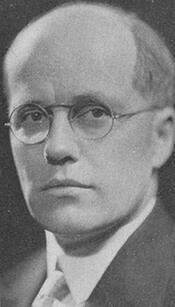
Here you will find contact information for Representative Byron Berry Harlan, including email address, phone number, and mailing address.
| Name | Byron Berry Harlan |
| Position | Representative |
| State | Ohio |
| District | 3 |
| Party | Democratic |
| Status | Former Representative |
| Term Start | December 7, 1931 |
| Term End | January 3, 1939 |
| Terms Served | 4 |
| Born | October 22, 1886 |
| Gender | Male |
| Bioguide ID | H000209 |
About Representative Byron Berry Harlan
Byron Berry Harlan (October 22, 1886 – November 11, 1949) was an American attorney, prosecutor, jurist, and Democratic member of the United States House of Representatives from Ohio. He represented Ohio’s Third Congressional District for four consecutive terms from 1931 to 1939, serving during a pivotal era that encompassed the Great Depression and the New Deal. Over the course of his public career, he held a series of legal and judicial posts, including service as United States attorney for the southern district of Ohio and as a judge of the United States Tax Court.
Harlan was born in Greenville, Darke County, Ohio, and moved with his parents, Benjamin Berry Harlan and Margaret (Bond) Harlan, to Dayton, Ohio, when he was eight years old. His father was a high school teacher, and Harlan was educated in the Dayton public schools. He went on to attend the University of Michigan, where he was a member of the Theta Chi fraternity. He received a Bachelor of Arts degree from the university’s College of Arts and Sciences in 1909 and an LL.B. from its Law Department in 1911. That same year he was admitted to the Ohio bar and commenced the practice of law in Dayton.
Around 1914, Harlan married Sada B. Shaw (1887–1952), who had been born in Canada and immigrated to the United States at the age of three. The couple made their home in Dayton and had three children. Alongside his growing legal practice, Harlan became active in civic and humane causes. From 1912 to 1916 he served as assistant prosecuting attorney of Montgomery County, Ohio, gaining experience in criminal law and public prosecution. He also served on the governing board of the Humane Society of Dayton with Harry N. Routzohn and other prominent local citizens, reflecting a long-standing interest in animal welfare and humane work.
Harlan’s involvement in humane organizations expanded beyond Dayton. In 1928 he became president of the Ohio Federated Humane Societies, a position he held for fifteen years, and by 1938 he was serving as honorary vice president of the American Humane Association. These roles placed him at the forefront of statewide and national efforts to coordinate humane societies and promote legislation and public policies aimed at preventing cruelty and improving standards of care for animals and vulnerable populations.
In 1930, Harlan was elected as a Democrat from Ohio’s Third District to the Seventy-second Congress and was reelected to the three succeeding Congresses, serving from March 4, 1931, to January 3, 1939. His tenure in the House of Representatives coincided with the onset of the Great Depression and the implementation of President Franklin D. Roosevelt’s New Deal. Harlan served as chairman of the Committee on Revision of the Laws in the Seventy-second and Seventy-third Congresses, a position that involved overseeing the technical updating and clarification of federal statutes. In 1931 he publicly indicated his intent to support the repeal of Prohibition, arguing that repeal would “preserve a government of law and particularly local government as much as possible” and that money then flowing into corrupt channels and financing crime would be redirected into legal avenues.
Harlan’s congressional service unfolded amid intense political and social pressures. In June 1933, a disgruntled Spanish–American War veteran, who had been removed from the pension and disability rolls of the Veterans Bureau, murdered the chief of the medical staff of the National Military Home in Dayton after his plans to kill Harlan were thwarted. The assailant had gone several times to the Gem City Democratic Club in Dayton carrying bombs intended for Harlan, but on each occasion Harlan had been absent. The veteran’s anger stemmed from Harlan’s vote for the Economy Act, which significantly reduced veterans’ benefits as part of broader federal budget-cutting measures. Despite such controversies, Harlan emerged as a strong New Deal activist, particularly in the field of education. He strongly supported federal funding for the National Youth Administration (NYA), which provided student aid to higher education. The NYA and related student-aid programs under the Federal Emergency Relief Administration proved politically successful in Ohio, winning backing from college students and administrators and helping to establish the principle that the federal government could be a constructive partner in higher education. These initiatives contributed to the expanded federal role in American higher education after World War II.
Harlan was also an outspoken supporter of President Roosevelt’s 1937 proposal to reorganize the federal judiciary, commonly referred to by critics as the plan to “pack” the Supreme Court. Rejecting calls for a constitutional amendment as too slow and uncertain, he argued that such a course might delay essential legislation for as long as fifteen years. On the House floor he contended that “packing the courts is a convenient phrase to crystallize prejudice and escape the necessity of thought,” insisting that “no one is attempting to pack courts; the real effort being made is to unpack them.” He noted that the Constitution explicitly provided Congress with checks on the judiciary, whereas judicial review of congressional acts was not expressly stated, and he criticized those who feared an imbalance of power as speaking “out of a fear of the dark rather than their own substantial danger.” Harlan warned that efforts to protect workers’ hours and conditions through a constitutional amendment had virtually no chance of success against “all the organized selfishness in this country.” He argued that when property rights conflicted with the rights of human beings to a living wage or with the right of a democracy to plan its own economy, judicial decisions were “almost a foregone conclusion,” shaped by the justices’ training and experience rather than corrupt motives. He maintained that if the courts prevented Congress from engaging in “scientific, economic planning,” and if Roosevelt’s proposal were rejected, the nation would be left only with the option of trying to “spend ourselves into prosperity,” a course he said no political party would willingly embrace, even though millions of workers faced destitution. Harlan took to the national radio networks to advocate for the judiciary program, becoming one of its most visible congressional defenders. His strong alignment with the New Deal and the court plan, however, contributed to political opposition, and he was defeated in his bid for a fifth term in 1938.
After leaving Congress in January 1939, Harlan returned to Dayton and resumed the practice of law. He remained active in Democratic Party affairs and served as a delegate to the Democratic National Convention in 1940. In May 1944 he was appointed United States attorney for the southern district of Ohio, a post in which he served until March 1946. That month President Harry S. Truman appointed him to fill a vacancy on the United States Tax Court, where he adjudicated federal tax controversies. In 1948 he was reappointed to a full twelve-year term on the Tax Court, underscoring the confidence placed in his legal judgment and experience.
Byron Berry Harlan died of a heart attack on November 11, 1949, while visiting his two sons in Cogan House, Pennsylvania, before completing his full term on the Tax Court. He was interred with his wife and parents in Woodland Cemetery in Dayton, Ohio. His career spanned local prosecution, humane advocacy, four terms in Congress during the New Deal era, and federal judicial service, reflecting a lifelong engagement with law, public policy, and social reform.