Senator Byron Patton Harrison
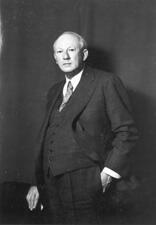
Here you will find contact information for Senator Byron Patton Harrison, including email address, phone number, and mailing address.
| Name | Byron Patton Harrison |
| Position | Senator |
| State | Mississippi |
| Party | Democratic |
| Status | Former Representative |
| Term Start | April 4, 1911 |
| Term End | December 31, 1941 |
| Terms Served | 8 |
| Born | August 29, 1881 |
| Gender | Male |
| Bioguide ID | H000265 |
About Senator Byron Patton Harrison
Byron Patton “Pat” Harrison (August 29, 1881 – June 22, 1941) was a Mississippi politician who served as a Democrat in the United States House of Representatives from 1911 to 1919 and in the United States Senate from 1919 until his death. Over the course of his congressional career, which spanned three decades, he became one of the most influential Southern Democrats of his era, noted for his oratory, his role in shaping national tax and trade policy, and his central part in the creation of the Social Security system.
Harrison was born on August 29, 1881, in Crystal Springs, Copiah County, Mississippi. His father, a Confederate veteran of the Civil War, died in 1885, leaving the family in modest circumstances. As a boy, Harrison sold newspapers to help supplement the family income, an early experience that acquainted him with public life and politics. He attended local schools and graduated as class valedictorian from Crystal Springs High School in 1899. That same year he enrolled for a summer term at the University of Mississippi, then transferred to Louisiana State University in Baton Rouge on a baseball scholarship. After two years at LSU, financial difficulties forced him to leave college, and he briefly pursued semi-professional baseball, pitching for the Pickens, Mississippi, team in the “Old Tomato League” summer circuit.
Following his stint in semi-professional baseball, Harrison moved to Leakesville, Mississippi, where he embarked on a career in education. He taught in the local schools and later became principal of the high school. While working as an educator, he read law and prepared for the bar examination. In 1902 he passed the Mississippi State Bar and opened a law practice, marking the beginning of his legal and political career. His early years at the bar coincided with the consolidation of one-party Democratic rule in Mississippi, a political environment that would shape his rise to public office.
Harrison entered elective office in 1906, when he was chosen district attorney for the Second Judicial District of Mississippi. In 1908 he moved to Gulfport, Mississippi, continuing to serve as district attorney on the Mississippi Gulf Coast until his election to Congress. The 1910 campaign for the U.S. House of Representatives introduced him statewide as a skilled orator and witty debater, a reputation he maintained throughout his political life. Newspaper editor Clayton Rand later described Harrison’s oratory as “an eloquence that flowed like a babbling brook through a field of flowers.” He won a seat in the U.S. House of Representatives in 1911 and was re-elected three times, serving from March 4, 1911, to March 3, 1919. One of the youngest members of the House, he quickly made his mark as an effective debater against Republican tariff and tax policies and became a favored ally of Democratic President Woodrow Wilson. Harrison strongly supported Wilson’s New Freedom program and backed the administration’s policies toward Mexico and Germany as the United States moved toward and then entered World War I.
In 1918 Harrison challenged incumbent U.S. Senator James K. Vardaman, a bitter opponent of President Wilson. In recognition of Harrison’s steadfast support, Wilson personally endorsed him in the Democratic primary, which in Mississippi was the decisive contest in an era when African American voters had been largely disenfranchised by the state constitution of 1890 and related discriminatory practices. Emphasizing his loyalty to Wilson and his differences with Vardaman, Harrison secured a majority of the white Democratic electorate and won the Senate seat. He entered the Senate on March 4, 1919, and was subsequently re-elected three times in what was effectively a one-party state; he ran unopposed for his third term in 1930. During his Senate career he became known as the “Gadfly of the Senate” for his sharp, often humorous critiques of Republican policies, particularly on tariffs and taxation. At the same time, like most Southern senators of his generation, he opposed federal civil rights legislation. In 1922 he became the first senator to use extended discussion of the Senate Journal as a filibuster tactic against the Dyer Anti-Lynching Bill, exploiting the rule that the reading of the Journal could not be suspended without unanimous consent, and contributing to the bill’s ultimate withdrawal.
Harrison’s influence expanded significantly during the New Deal. He served on the Senate Finance Committee and became its chairman in 1933, holding that powerful post from 1933 to 1941 during the Seventy-third through Seventy-seventh Congresses. In that capacity he was one of the three or four key figures behind the creation of the Social Security system in 1935, working closely with the Roosevelt administration to shape the landmark legislation. He also championed low tariffs and reciprocal trade agreements, aligning himself with the administration’s efforts to liberalize international trade. Harrison played a major role in steering much of the New Deal recovery program through the Senate, including the National Recovery Administration (NRA), the Social Security Act, and Roosevelt’s tax program. His effectiveness and liberal reputation within the Democratic caucus, combined with his personal popularity, made him a central figure in Senate deliberations and in the distribution of patronage and federal resources.
Harrison’s prominence extended into national party politics. In the 1928 presidential election he broke with much of the white Southern political establishment by openly supporting New York Governor Al Smith, the Democratic nominee, and campaigning for him across the South despite widespread anti-Catholic sentiment among white Southerners. At the 1932 Democratic National Convention, Harrison played a pivotal role by helping to swing the Mississippi delegation to Franklin D. Roosevelt on the crucial third ballot, a move that contributed to Roosevelt’s nomination and helped cement Harrison’s welcome status at the White House. Within Mississippi, his political relationships were complex. A former law partner and supporter of Theodore G. Bilbo, he nonetheless became embroiled in a long-running rivalry with Bilbo, whose base among tenant farmers and race-baiting demagoguery clashed with Harrison’s image as a representative of the state’s planter and business elite. In the 1936 Senate campaign, Stewart C. “Sweep Clean” Broom, a supporter and former ally of Bilbo, unexpectedly aided Harrison by urging “Bilbo folks” to support Harrison’s re-election to save Bilbo “from his own blunder,” even as Bilbo himself backed Martin Sennett Conner against Harrison.
In 1937 Harrison sought the position of Senate majority leader after the post became vacant. Widely expected to win, he faced stiff competition from Senator Alben W. Barkley of Kentucky. Preliminary vote counts suggested a near tie. Harrison’s campaign manager appealed to Bilbo, then the junior senator from Mississippi, to support his fellow Mississippian. Bilbo, who deeply resented Harrison and the interests he represented, responded that he would vote for Harrison only if personally asked. Harrison refused, reportedly saying, “Tell the son of a bitch I wouldn’t speak to him even if it meant the presidency of the United States.” President Roosevelt, despite Harrison’s loyal support for the New Deal, ultimately sent a letter endorsing Barkley. When the Democratic caucus ballots were counted, Harrison lost the majority leader race by a single vote, 37 to 38, a defeat that underscored both his national stature and the intensity of intra-party rivalries. In 1941, during the Seventy-seventh Congress, he was chosen President pro tempore of the Senate, reflecting the high regard in which he was held by his colleagues.
Harrison remained active in the Senate until his final illness. On June 16, 1941, he underwent surgery for an intestinal obstruction in Washington, D.C. Complications followed, and he died six days later, on June 22, 1941, while still in office. His death brought to a close a congressional career that had begun in the House of Representatives in 1911 and continued uninterrupted in the Senate from 1919. Over eight terms in Congress—four in the House and three full and part of a fourth in the Senate—Byron Patton Harrison contributed significantly to the legislative process during a transformative period in American history, leaving a particular imprint on social insurance, tax and trade policy, and the internal politics of the Democratic Party.