Representative Byron Lindberg Johnson
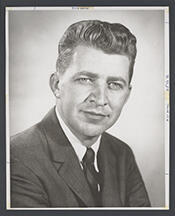
Here you will find contact information for Representative Byron Lindberg Johnson, including email address, phone number, and mailing address.
| Name | Byron Lindberg Johnson |
| Position | Representative |
| State | Colorado |
| District | 2 |
| Party | Democratic |
| Status | Former Representative |
| Term Start | January 7, 1959 |
| Term End | January 3, 1961 |
| Terms Served | 1 |
| Born | October 12, 1917 |
| Gender | Male |
| Bioguide ID | J000119 |
About Representative Byron Lindberg Johnson
Byron Lindberg Johnson (October 12, 1917 – January 6, 2000) was an American educator, economist, and politician who served one term as a U.S. Representative from Colorado from 1959 to 1961. A member of the Democratic Party, he contributed to the legislative process during this single term in office, representing Colorado’s Second Congressional District and participating in the democratic process at a significant period in American history.
Johnson was born in Chicago, Illinois, where all four of his grandparents were Swedish immigrants, giving him a strong Scandinavian heritage. He grew up in the Midwest and graduated from Oconomowoc High School in Oconomowoc, Wisconsin, in 1933. He then attended the University of Wisconsin–Madison, earning a Bachelor of Arts degree in 1938. He continued his studies at the same institution, receiving a Master of Arts degree in 1940 and a Ph.D. in 1947. In October 1938 he married Catherine (Kay) Teter of Milwaukee, Wisconsin, marking the beginning of a long personal partnership that paralleled his academic and public careers.
Trained as an economist, Johnson began his professional career with the Wisconsin State Board of Health, where he served as an economist from 1938 to 1942. During World War II he moved into federal service in Washington, D.C., working as a staff member for the U.S. Bureau of the Budget from 1942 to 1944. He then joined the Social Security Administration, serving on its staff from 1944 to 1947, a period in which the federal social insurance system was expanding and consolidating its role in American public life. In 1947 he entered academia as a professor at the University of Denver, a position he held until 1956, combining teaching and research with an increasing interest in housing, community development, and public policy.
While at the University of Denver, Johnson became a co‑founder and organizer of the Mile High Housing Association, a cooperative housing membership group formed by university faculty members who were then living in temporary postwar accommodations. The association acquired land in Arapahoe County, just southeast of Denver, and developed 32 homes on South Dahlia Lane. These homes, designed by architect Eugene Sternberg—whose own residence on South Dahlia Lane was next door to Johnson’s—reflected the influence of Frank Lloyd Wright, with design elements reminiscent of Wright’s Pope‑Leighey House in Virginia. Johnson and his family moved into their South Dahlia Lane home in February 1951. In 1954 he further demonstrated his commitment to innovative housing solutions by launching and organizing a church‑sponsored housing project for the elderly, Senior Homes of Colorado, located on East Kentucky Circle in Denver, which opened its doors to residents in 1958.
Johnson’s formal political career in Colorado began in the state legislature. He served as a member of the Colorado House of Representatives from 1955 to 1956. In 1956 he sought national office as a candidate for election to the Eighty‑fifth Congress but was unsuccessful. He then served as an assistant to Colorado Governor Steve McNichols from 1957 to 1958, gaining additional experience in state executive administration and policy formation. These roles helped establish his reputation within Colorado’s Democratic Party and prepared him for his subsequent service in the U.S. Congress.
In 1958 Johnson was elected as a Democrat to the Eighty‑sixth Congress, serving from January 3, 1959, to January 3, 1961. He represented Colorado’s Second Congressional District, which at that time comprised all of northeastern Colorado except for the City and County of Denver. During his single term in the U.S. House of Representatives, he represented the interests of his constituents and participated in the legislative process at a time marked by Cold War tensions and domestic economic and social change. He was an unsuccessful candidate for reelection to the Eighty‑seventh Congress in 1960, ending his tenure in the House after one term.
After leaving Congress, Johnson remained active in national and international public affairs. He served as a delegate to the Democratic National Conventions of 1960 and 1968, reflecting his continued influence within the party. From 1961 to 1964 he worked for the U.S. Agency for International Development (USAID), contributing to American foreign assistance and development programs. He was then appointed a consultant for the International Cooperation Administration from 1964 to 1965, further extending his involvement in international economic and development policy.
Johnson returned to academic life in Colorado in 1965, when he was appointed a professor at the University of Colorado. He held this position until his retirement, after which he was designated professor emeritus. His commitment to higher education also took a governance form: in 1970 he was elected to the University of Colorado Board of Regents for a six‑year term and was re‑elected in 1976, serving a total of twelve years in that capacity. During this period he also made another attempt to return to Congress, running unsuccessfully for election to the Ninety‑third Congress in 1972.
In addition to his academic and political work, Johnson played a role in regional transportation planning and oversight. He served as a member of the board of the Regional Transportation District (RTD) in Denver, Colorado, from 1982 to 1984. Within the RTD board he was elected vice chairman in 1983 and chairman in 1984, positions that placed him at the center of decisions regarding public transit and regional mobility in the Denver metropolitan area. These later public service roles complemented his long-standing interests in urban development, housing, and public infrastructure.
Byron Lindberg Johnson died on January 6, 2000, in Englewood, Colorado. He was buried at Fairmount Cemetery in Denver. At the time of his death he held the title of professor emeritus at the University of Colorado, capping a career that combined scholarship, public administration, housing innovation, state and national legislative service, and long-term engagement in Colorado’s civic and educational institutions.