Representative Byron Foster Ritchie
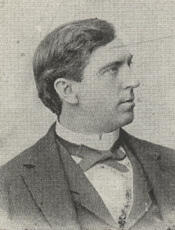
Here you will find contact information for Representative Byron Foster Ritchie, including email address, phone number, and mailing address.
| Name | Byron Foster Ritchie |
| Position | Representative |
| State | Ohio |
| District | 9 |
| Party | Democratic |
| Status | Former Representative |
| Term Start | August 7, 1893 |
| Term End | March 3, 1895 |
| Terms Served | 1 |
| Born | January 29, 1853 |
| Gender | Male |
| Bioguide ID | R000272 |
About Representative Byron Foster Ritchie
Byron Foster Ritchie (January 29, 1853 – August 22, 1928) was an American lawyer and Democratic politician who served one term as a U.S. Representative from Ohio from 1893 to 1895. He was born in the mid-nineteenth century, a period of rapid political and economic change in the United States, and grew up in a family with an established tradition of public service. His father, James Monroe Ritchie, also served one term in Congress, providing an early example of national legislative service that would later be reflected in Byron Ritchie’s own career.
Ritchie pursued the study of law and entered the legal profession, establishing himself as an attorney before entering national politics. His legal training and practice prepared him for the complexities of legislative work and the interpretation of federal statutes, and it placed him within the professional and civic networks that often served as a pathway to elective office in the late nineteenth century. Through his work as a lawyer, he became familiar with the concerns of clients and communities in Ohio, experience that informed his later role as a representative of his district.
A member of the Democratic Party, Ritchie was elected to the United States House of Representatives and served in the Fifty-third Congress, holding office from 1893 to 1895 as a Representative from Ohio. His single term in Congress coincided with a significant period in American history marked by economic turmoil, including the Panic of 1893, and intense national debates over monetary policy, tariffs, and labor unrest. During this time, Ritchie contributed to the legislative process as part of the Democratic majority in the House, participating in the democratic process and representing the interests of his constituents in Ohio. His service reflected both his party’s priorities and the particular needs of the district that sent him to Washington.
Ritchie’s congressional tenure placed him among a generation of lawmakers grappling with the transition of the United States toward a more industrial and urban society. As a member of the House of Representatives, he took part in deliberations and votes that shaped federal policy during a time of economic challenge and political realignment. Although he served only one term, from 1893 to 1895, his work in Congress formed a notable chapter in a family legacy of public service that spanned two generations, linking his career with that of his father, James Monroe Ritchie.
After leaving Congress, Ritchie returned to private life and to his profession as a lawyer, resuming the legal career that had preceded his election. In the years following his congressional service, he remained part of the civic and professional fabric of his community, his experience in national office adding to his stature as a public figure in Ohio. He lived through the turn of the century and the profound changes of the early twentieth century, carrying with him the perspective of a former legislator who had served during a formative era in American political and economic history.
Byron Foster Ritchie died on August 22, 1928. His life encompassed the post–Civil War period, the Gilded Age, and the early decades of the modern United States, and his career as a lawyer and one-term Democratic representative from Ohio, together with the parallel service of his father in Congress, secured his place in the historical record of American public life.