Representative Byron Nicholson Scott
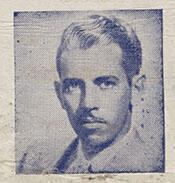
Here you will find contact information for Representative Byron Nicholson Scott, including email address, phone number, and mailing address.
| Name | Byron Nicholson Scott |
| Position | Representative |
| State | California |
| District | 18 |
| Party | Democratic |
| Status | Former Representative |
| Term Start | January 3, 1935 |
| Term End | January 3, 1939 |
| Terms Served | 2 |
| Born | March 21, 1903 |
| Gender | Male |
| Bioguide ID | S000165 |
About Representative Byron Nicholson Scott
Byron Nicholson Scott (March 21, 1903 – December 21, 1991) was an American educator, lawyer, and Democratic politician who served as the second United States Representative for California’s 18th congressional district for two terms, from 1935 to 1939. His service in Congress occurred during a significant period in American history, in the midst of the New Deal era, when he contributed to the legislative process and represented the interests of his California constituents in the House of Representatives.
Scott was born on March 21, 1903, in Council Grove, Morris County, Kansas. He was raised in Council Grove and attended the town’s public schools. After completing his early education, he enrolled at the University of Kansas in Lawrence, where he pursued undergraduate studies and graduated in 1924. His formative years in Kansas, marked by public schooling and higher education at a major state university, laid the foundation for his later careers in teaching, public service, and the law.
Following his graduation from the University of Kansas, Scott began his professional life as an educator. He moved to Tucson, Arizona, where he taught in the public schools from 1924 until 1926. He then relocated to California and joined the public school system in Long Beach as a teacher. While teaching in Long Beach, he continued his own education, attending the University of Southern California and earning a master’s degree in 1930. Scott remained in the Long Beach public schools until 1934, when his growing interest in public affairs led him into active politics.
Scott’s political career began in California Democratic Party circles. In 1934 he served as a delegate to the California Democratic state convention, and that same year he became a candidate for the United States House of Representatives from California’s recently formed 18th congressional district. After securing the Democratic nomination, he ran against Republican William Brayton in the general election. Scott won the seat by capturing 56.3 percent of the vote to Brayton’s 43.2 percent, thereby entering the Seventy-fourth Congress. During this period he became associated with the End Poverty in California (EPIC) movement led by Upton Sinclair. Newspapers referred to him as California’s “EPIC Congressman” because of his support for Sinclair and the EPIC economic program advanced during the 1934 California gubernatorial campaign. He had been the keynote speaker at the first meeting of the Wilmington EPIC Club on June 8, 1934, and he campaigned for Congress on EPIC’s reform platform.
As a member of the House of Representatives, Scott served two consecutive terms from 1935 to 1939, representing California’s 18th district during the Seventy-fourth and Seventy-fifth Congresses. In June 1936 he was a delegate to the Democratic National Convention held at Convention Hall in Philadelphia, Pennsylvania, from June 23 to June 27, where the party renominated President Franklin D. Roosevelt and Vice President John Nance Garner. Later that year he ran for re-election and was returned to Congress with an increased margin, defeating Republican challenger James F. Collins by more than 18,000 votes in a 58.9 percent to 41.0 percent contest. Throughout his tenure, Scott participated in the democratic process in Washington, D.C., aligning with the New Deal–era Democratic majority and working on behalf of his district’s interests during a time of economic recovery and expanding federal programs.
Scott’s congressional career came to a close following the 1938 elections. In a closely contested race, he was challenged by Republican Thomas M. Eaton, who defeated him by a margin of only 342 votes, or approximately 0.3 percent. After leaving Congress in January 1939, Scott remained active in public service in California. For the next two years he served as secretary of the California Highway Commission, contributing to the administration and development of the state’s transportation infrastructure. He sought to return to Congress in 1940 but was defeated by Republican Ward Johnson, who won the seat by nearly a 10 percent majority. Scott then spent 1941 and 1942 in the construction business before being called back to federal service during World War II. During the war he served on President Franklin D. Roosevelt’s War Production Board in Washington, D.C., where he worked until the end of the conflict in 1945, participating in the federal government’s effort to coordinate industrial production for the war.
After World War II, Scott turned to the study and practice of law. He enrolled in the National University School of Law in Washington, D.C., where he pursued legal studies and earned a Bachelor of Laws degree in 1949. That same year he was admitted to the bar in the District of Columbia and established a law practice in Washington. Over the next several decades he built a career as an attorney, often engaged in matters touching on federal employment, loyalty, and civil liberties during the early Cold War period. From 1953 to 1955 he represented U.S. Treasury official William Henry Taylor before the International Organization Employees Loyalty Board, which reviewed allegations of disloyalty among employees of international organizations. In 1954 he served as counsel for U.S. Treasury official George A. Eddy during congressional loyalty and security hearings related to investigations into Eddy’s superior, former Treasury official Harry Dexter White.
In 1959 Scott played a notable role in the early legal struggle for gay rights when he represented astronomer and federal employee Frank Kameny in Kameny’s lawsuit against the Secretary of the Army. Kameny had been dismissed from government service “for homosexuality” and challenged the federal government’s ban on homosexual employees. After the Department of Justice obtained summary judgment against Kameny, Scott represented him on appeal. Although the appeal was unsuccessful, Scott provided Kameny with a sample petition for a writ of certiorari, which Kameny used—working on his own—to file with the United States Supreme Court. The case became the first gay rights matter formally presented to the Supreme Court, though the Court denied certiorari. Decades later, on June 29, 2009, John Berry, Director of the Office of Personnel Management, formally apologized to Kameny on behalf of the United States government; Kameny’s filings and related papers, including materials from this litigation, are preserved in the Library of Congress.
Scott continued his legal practice in Washington, D.C., until his retirement in 1979. Following his retirement, he resided in Sun City, California. He lived there quietly for more than a decade until his death on December 21, 1991, at the age of 88.