Representative Byron Gray Stout
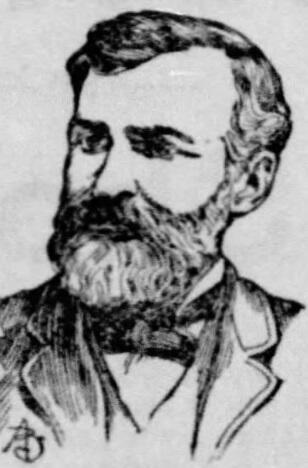
Here you will find contact information for Representative Byron Gray Stout, including email address, phone number, and mailing address.
| Name | Byron Gray Stout |
| Position | Representative |
| State | Michigan |
| District | 6 |
| Party | Democratic |
| Status | Former Representative |
| Term Start | December 7, 1891 |
| Term End | March 3, 1893 |
| Terms Served | 1 |
| Born | January 12, 1829 |
| Gender | Male |
| Bioguide ID | S000980 |
About Representative Byron Gray Stout
Byron Gray Stout (January 12, 1829 – June 19, 1896) was an American lawyer, educator, banker, and Democratic politician from the state of Michigan who served in both houses of the Michigan Legislature and later in the United States House of Representatives. He was born in Richmond, Ontario County, New York, on January 12, 1829. In 1831, when he was still a young child, he moved with his parents to Michigan, part of the broader westward migration of New England and New York families into the Old Northwest. He was raised and educated in Michigan, attending the common schools that formed the basis of public education in the state during its early years.
Stout pursued higher education at the University of Michigan in Ann Arbor, one of the leading institutions in the region, and graduated in 1851. After completing his university studies, he read law, following the customary practice of legal apprenticeship in the mid-nineteenth century. Before entering full-time legal or political work, he became involved in education. In 1853 he was appointed superintendent of Pontiac High School in Pontiac, Michigan, and in 1854 he served as principal of the same institution, reflecting an early commitment to public instruction and local civic affairs.
Stout’s political career began in state government. He was elected to the Michigan House of Representatives and served in the sessions of 1855 and 1857. During his second term, in 1857, he was chosen speaker of the Michigan House of Representatives, a position that placed him at the center of legislative leadership during a period of growing national tension over slavery and sectional issues. He advanced to the upper chamber of the state legislature as a member of the Michigan Senate in 1860, where he served as president pro tempore. His prominence in state politics led to his candidacy for Governor of Michigan in 1862. Running as a Democrat during the Civil War, he was defeated by the incumbent Republican governor, Austin Blair, who was closely associated with the Union war effort.
In addition to his state legislative service, Stout developed a parallel career in business and finance. Prior to 1869, he engaged in private banking, an occupation that would later inform his leadership in the financial sector. At the same time, he remained active in national political affairs. In 1866 he was a member of the National Union Convention at Philadelphia, a gathering that sought to build support for President Andrew Johnson’s Reconstruction policies. He served as a delegate to the Democratic National Convention in 1868, and again in 1880 and 1888, participating in the selection of Democratic presidential nominees and in the formulation of party platforms during the turbulent Reconstruction and post-Reconstruction eras.
Stout twice sought election to the United States House of Representatives from Michigan’s 5th congressional district. He was the Democratic candidate in 1868 and again in 1870, but on both occasions he was defeated by the Republican incumbent, Omar D. Conger, reflecting the strong Republican dominance in Michigan in the decades following the Civil War. Despite these setbacks, Stout remained a significant figure in state Democratic politics and continued his professional activities in law and banking.
In 1890, Stout returned to the federal electoral arena and was elected as a Democrat from Michigan’s 6th congressional district to the Fifty-second Congress. He served a single term in the U.S. House of Representatives from March 4, 1891, to March 3, 1893. His election marked a period in which Democrats made some gains in traditionally Republican states amid economic and political discontent. During his term, he participated in the legislative work of the House at a time when issues such as tariff policy, monetary questions, and agricultural distress were prominent in national debate. He chose not to be a candidate for reelection in 1892 and returned to private life at the close of his term.
After leaving Congress, Stout resumed his involvement in banking and local affairs in Oakland County, Michigan. From 1893 until his death in 1896, he served as president of the Oakland County Bank, a position that underscored his longstanding engagement with finance and his standing in the business community of Pontiac. His leadership in the bank continued until his final illness.
Byron G. Stout died in Pontiac, Michigan, on June 19, 1896. He was interred in Oak Hill Cemetery in Pontiac, where many of the city’s prominent nineteenth-century citizens are buried. His career reflected the trajectory of a midwestern Democratic politician who combined legal, educational, and financial pursuits with service in both state and national legislatures during a formative period in Michigan and United States political history.