Representative Christopher Cox
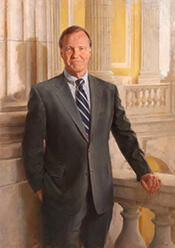
Here you will find contact information for Representative Christopher Cox, including email address, phone number, and mailing address.
| Name | Christopher Cox |
| Position | Representative |
| State | California |
| District | 48 |
| Party | Republican |
| Status | Former Representative |
| Term Start | January 3, 1989 |
| Term End | January 3, 2007 |
| Terms Served | 9 |
| Born | October 16, 1952 |
| Gender | Male |
| Bioguide ID | C000830 |
About Representative Christopher Cox
Charles Christopher Cox (born October 16, 1952) is an American attorney, educator, and politician who served as a Republican member of the United States House of Representatives from California from 1989 to 2005 and as the 28th chairman of the U.S. Securities and Exchange Commission (SEC) from 2005 to 2009. Over nine terms in Congress, he held senior leadership roles in the House majority, chaired several key committees, and authored significant legislation affecting securities law, the Internet, and U.S. foreign policy. Earlier in his career he served on the White House staff in the Reagan Administration, and after leaving government in 2009 he returned to private law practice and to service as a director, trustee, and advisor to several for-profit and nonprofit organizations.
Cox was born in 1952 and grew up in the Midwest, later attending the University of Southern California (USC), where he was a soccer player and completed his undergraduate studies. He went on to earn a Master of Business Administration and a Juris Doctor from Harvard University, completing his legal education before embarking on a career that combined law, teaching, and business. From 1977 to 1978, immediately after law school, he served as a law clerk to Judge Herbert Choy of the U.S. Court of Appeals for the Ninth Circuit, gaining early exposure to federal appellate practice. In October 1978, while in Hawaiʻi on the island of Molokaʻi, he was seriously injured in an off-road Jeep accident in the rainforest and was paralyzed from the waist down. He eventually regained the ability to walk but wore a harness of steel bars and leather straps for six months, and he continues to have two metal screws in his back. According to a 2005 Fortune magazine profile, he has been in chronic pain since the accident and cannot sit for extended periods, working instead at a special desk that allows him to stand.
Following his clerkship, Cox joined the international law firm Latham & Watkins in 1977, where he practiced until 1986. He rose from associate to partner and ultimately became Partner in Charge of the Corporate Department in the firm’s Orange County, California, office, while also serving on the firm’s national management. His practice focused on corporate and securities matters during a period of rapid growth in the Southern California and national markets. In 1982–1983 he took a leave of absence from Latham & Watkins to teach federal income tax at Harvard Business School, reflecting a long-standing interest in tax and economic policy. In 1984 he co-founded Context Corporation, a private enterprise that produced daily English-language reproductions of the Soviet state-controlled newspaper Pravda. The company’s publication, which had no connection to the Soviet government, was used primarily by U.S. universities and government agencies and was eventually distributed in 26 countries, providing Western readers with direct access to Soviet media.
Cox’s early public service at the national level came in the Reagan Administration, where he served on the White House staff as a lawyer and policy aide. Among other assignments, he conducted research for the Administration on proposals for a constitutional convention to advance a balanced budget amendment. He represented the White House at hearings on the possible release of John Hinckley Jr. from St. Elizabeth’s Hospital following Hinckley’s attempted assassination of President Ronald Reagan, and he led the vetting and research effort that resulted in the recommendation of Northwestern University School of Law Dean David Ruder to President Reagan for appointment as SEC chairman in 1987. Drawing on his background as a former USC soccer player, Cox also worked with the United States Soccer Federation on its bid to bring the 1994 FIFA World Cup to the United States. According to contemporaneous accounts, he prepared in record time an executive order directing federal agencies to provide necessary waivers of laws and regulations to support the bid; President Reagan signed the order, and on July 5, 1988, the United States was awarded the tournament. In appreciation, the U.S. team presented Cox with the first jersey signed by all 22 members. Outside of government and law, he made an unusual public appearance as a contestant on the NBC game show “Password Plus,” where in 1980 he won $5,400 over multiple appearances.
Cox was elected to the U.S. House of Representatives as a Republican from California in 1988 and took office on January 3, 1989. He served nine consecutive terms, remaining in the House until his resignation on August 2, 2005, to become SEC chairman, for a total of 17 years in Congress. During this period he represented his Orange County–area district through major national developments, including the end of the Cold War, the post–Cold War realignment, and the early years of the global war on terrorism. He participated actively in the legislative process, representing the interests of his constituents while also playing a prominent role in national policy debates. In 1989, Polish President Lech Wałęsa joined Cox in Washington, D.C., at a ceremony marking enactment of Cox’s legislation establishing the Polish-American Enterprise Fund. Incorporated into the Support for Eastern European Democracy (SEED) Act, his initiative matched U.S. foreign aid with venture capital in newly free countries of the former Warsaw Pact. Together with the Baltic-American Enterprise Fund, the Hungarian-American Enterprise Fund, and seven other enterprise funds in Central and Eastern Europe and the former Soviet Union, this legislation sought to support market-based economic development; Cox’s work in this area was aided by his fluency in Russian.
Over the course of his House career, Cox was appointed to several significant bipartisan commissions and authored or co-authored notable legislation. In 1994 President Bill Clinton appointed him to the Bipartisan Commission on Entitlement and Tax Reform, which in 1995 issued a unanimous report warning that the United States could not sustain entitlement programs consuming an ever-increasing share of the federal budget. Among his legislative achievements was the Internet Tax Freedom Act of 1998, which prohibited federal, state, and local governments from taxing Internet access and barred Internet-only levies such as email taxes, bit taxes, and bandwidth taxes, thereby shaping the early fiscal environment of the commercial Internet. In 1997, working with Representative Barney Frank of Massachusetts as his chief co-sponsor, Cox authored legislation to privatize the National Helium Reserve, then $1.4 billion in debt to taxpayers; by 2004 this was the third-largest privatization in U.S. history, surpassing the value of the 1988 Conrail privatization. He also wrote the Private Securities Litigation Reform Act of 1995, aimed at curbing abusive securities lawsuits while protecting investors, which became law over President Clinton’s veto—the only statute enacted during that administration over a presidential veto.
Within the House Republican Conference, Cox held a series of leadership and committee posts that placed him at the center of policy formation. For 10 of his 17 years in Congress, from 1995 to 2005, he served in the House majority leadership as chairman of the House Republican Policy Committee, the fifth-ranking elected leadership position behind the Speaker, Majority Leader, Majority Whip, and chair of the House Republican Conference. He chaired the Select Committee on U.S. National Security and Military/Commercial Concerns with the People’s Republic of China, which produced what became known as the “Cox Report,” a high-profile examination of Chinese espionage and security failures at several U.S. national laboratories. He was also chairman of the Select Committee on Homeland Security, the precursor to the permanent House Committee on Homeland Security, and later chaired the standing House Committee on Homeland Security itself. In addition, he served as chairman of the Task Force on Capital Markets and the Task Force on Budget Process Reform. When Congress created the Bipartisan Study Group on Enhancing Multilateral Export Controls in 1999, Cox was named co-chairman; the group’s unanimous 2001 report recommended a comprehensive modernization of U.S. export control systems. In the spring of 2001, President George W. Bush considered Cox for nomination to the U.S. Court of Appeals for the Ninth Circuit, but Cox withdrew from consideration after one of his home-state senators, Barbara Boxer, objected based on his perceived conservatism; the seat was later filled by Judge Carlos Bea.
On June 2, 2005, President George W. Bush nominated Cox to be chairman of the Securities and Exchange Commission. The Senate unanimously confirmed him on July 29, 2005, and he was sworn in on August 3, 2005, the day after his resignation from Congress. Shortly after assuming the chairmanship, Cox was diagnosed with thymoma, a rare cancer of the thymus gland, and in January 2006 he underwent surgery to remove a tumor from his chest. He returned to work after several weeks of recovery, and when the cancer recurred a decade later he again underwent surgery and treatment and was subsequently given a clean bill of health. During his SEC tenure he also engaged in public and academic outreach, delivering the commencement address at Northeastern University in Boston in May 2008 and receiving the University of Southern California’s highest alumni honor, the Asa V. Call Achievement Award, in April 2008.
Cox’s chairmanship coincided with the onset and escalation of the global financial crisis of 2007–2008, during which he played a central role in federal responses to market turmoil. The Housing and Economic Recovery Act of 2008, enacted in July of that year, gave him one of five seats on the Federal Housing Finance Oversight Board, which advises the director of the Federal Housing Finance Agency on strategies and policies concerning the safety and soundness of Fannie Mae, Freddie Mac, and the Federal Home Loan Banks. In September 2008, after Congress passed and President Bush signed the Emergency Economic Stabilization Act of 2008, Cox became a member of the newly established Financial Stability Oversight Board, charged with overseeing the $700 billion Troubled Asset Relief Program (TARP). Under his leadership, the SEC in mid-September 2008 imposed a series of permanent and emergency restrictions on short selling in response to the liquidity crisis. The Commission banned abusive “naked” short selling by eliminating an options market maker exception and adopting Rule 10b-21, a new antifraud provision specifically targeting intentional failures to deliver shares. It also temporarily curtailed short selling in 799 financial stocks amid concerns that rumors and aggressive short selling were destabilizing major financial institutions.
As the crisis unfolded, Cox moved to end the SEC’s voluntary program for consolidated supervision of investment bank holding companies, which had been instituted in 2004 under Chairman William Donaldson and then–Director of Market Regulation Annette Nazareth. On September 26, 2008, he terminated the program, calling it “fundamentally flawed from the beginning” because participation was voluntary and the SEC lacked authority over hundreds of unregulated subsidiaries of firms such as Goldman Sachs, Morgan Stanley, Merrill Lynch, Lehman Brothers, and Bear Stearns. A report by the SEC inspector general, prepared after the near-failure of Bear Stearns in March 2008, found serious deficiencies in the program but did not conclude that they caused Bear Stearns’s collapse. Cox used his testimony before Congress in 2008 to urge lawmakers to grant the SEC statutory authority to regulate investment bank holding companies and to close broader regulatory gaps, including the then-unregulated $60 trillion credit default swap market, where no regulator had authority even to require minimum disclosure. He also focused on the role of credit rating agencies in the crisis. After the first-time SEC registration of the major rating agencies in September 2007 under newly enacted legislation, he ordered a 10‑month examination that uncovered weaknesses in their rating practices for mortgage-backed securities and raised questions about their impartiality. The SEC reported these findings to Congress in July 2008 and, on December 3, 2008, adopted a series of rules to address conflicts of interest, disclosure, internal controls, and business practices at rating agencies, with the aim of improving the quality and transparency of ratings for collateralized debt obligations and residential mortgage-backed securities.
In public statements near the end of his SEC tenure, Cox defended the Commission’s approach during the crisis as deliberate and measured. In a December 2008 interview with The Washington Post, he stated that the SEC’s “greatest contribution” had been to avoid impulsive rule changes and instead to follow an orderly process that took account of unintended consequences and gave market participants adequate notice. He acknowledged that the Commission’s temporary three-week ban on short selling of financial stocks had been adopted reluctantly, under strong pressure from other policymakers who feared imminent failures of major institutions, and later told Reuters that preliminary analysis by the SEC’s Office of Economic Analysis suggested the ban had produced several unintended market consequences. He said that, with the benefit of hindsight, “on balance the Commission would not do it again.” Cox stepped down as SEC chairman on January 20, 2009, at the close of the Bush Administration.
Following his retirement from government service in 2009, Cox returned to the private practice of law and to a portfolio of roles in the corporate and nonprofit sectors. Drawing on his experience in Congress, at the SEC, and in the White House, he has served as a director and trustee of various companies and institutions and as an advisor on legal, financial, and policy matters. Throughout his post-government career he has remained engaged in public affairs and financial regulation debates, while his earlier experiences—as a practicing attorney, teacher, entrepreneur, legislator, and regulator—have continued to inform his contributions to business and civic life.