Senator Caesar Augustus Rodney
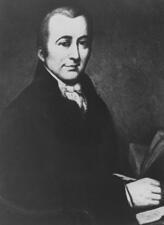
Here you will find contact information for Senator Caesar Augustus Rodney, including email address, phone number, and mailing address.
| Name | Caesar Augustus Rodney |
| Position | Senator |
| State | Delaware |
| Party | Republican |
| Status | Former Representative |
| Term Start | October 17, 1803 |
| Term End | January 29, 1823 |
| Terms Served | 3 |
| Born | January 4, 1772 |
| Gender | Male |
| Bioguide ID | R000377 |
About Senator Caesar Augustus Rodney
Caesar Augustus Rodney (January 4, 1772 – June 10, 1824) was an American lawyer, legislator, cabinet officer, diplomat, and member of the Democratic-Republican Party, who became one of Delaware’s most prominent early national statesmen. A native of Dover in the Delaware Colony, he was the son of Thomas Rodney and Elizabeth Fisher and the nephew of Caesar Rodney, the signer of the Declaration of Independence later depicted on the Delaware state quarter. He spent his early years in a family deeply involved in public affairs, an environment that helped shape his own long career in law and politics.
Rodney pursued formal education at the University of Pennsylvania, from which he graduated in 1789. He then studied law in Philadelphia under Joseph B. McKean and was admitted to the bar in 1793. After admission, he established a legal practice in Wilmington and New Castle, Delaware, where he worked for several years and quickly gained a reputation as a capable advocate. Rodney married Susan Hunn, daughter of Captain John Hunn, and the couple made their home at “Cool Springs” in Wilmington, which served as both a family residence and a base for his growing legal and political activities.
Rodney entered public life in the Delaware General Assembly as a State Representative, serving six consecutive terms from the 1797 session through the 1802 session. In the state legislature he emerged as a leader of the Jeffersonian faction, later known as the Democratic-Republican Party, at a time when Delaware politics were sharply contested between Federalists and their Republican opponents. His work in the General Assembly laid the foundation for his subsequent national career and aligned him closely with the policies and political philosophy of Thomas Jefferson and James Madison.
Encouraged by Jefferson to challenge the powerful Federalist James A. Bayard for Delaware’s at-large seat in the United States House of Representatives, Rodney ran a vigorous campaign and was elected by a narrow margin of fifteen votes. He served one term in the U.S. House from March 4, 1803, until March 3, 1805. During this period he was a member of the influential Committee on Ways and Means and gained national prominence as one of the impeachment managers appointed in January 1804 to prepare and prosecute the articles of impeachment against John Pickering, judge of the United States District Court for New Hampshire. Pickering was charged with conduct unbecoming a judge, and the outcome of the proceedings was widely viewed as significant for the independence of the federal judiciary. In December 1804 Rodney again served as an impeachment manager, this time in the high-profile case against Supreme Court Associate Justice Samuel Chase. Although he was defeated for reelection in 1804 by Bayard, in another closely contested race, the two men—despite being vigorous political opponents—remained personally friendly throughout their careers. In 1806, in one of his notable private legal engagements, Rodney appeared before the Mayor’s Court of Philadelphia to defend the Philadelphia Cordwainers against a common-law conspiracy charge brought by retail shoe merchants in response to the journeymen’s efforts to organize for better wages and hours; he was ultimately unsuccessful in securing their acquittal.
On January 20, 1807, President Thomas Jefferson appointed Rodney Attorney General of the United States. He held this cabinet post through the remainder of Jefferson’s administration and for nearly three years of President James Madison’s first term. As Attorney General, Rodney participated in the prosecution during the second treason trial of former Vice President Aaron Burr, one of the most notable criminal proceedings of the early republic. Despite his central role in the administration’s legal affairs, Rodney became dissatisfied when he was passed over for appointment to the U.S. Supreme Court and resigned from the office of Attorney General on December 5, 1811. During the War of 1812 he continued his public service in a military capacity, serving as captain of a rifle corps that became the Delaware 1st Artillery. This unit served at Fort Union in Wilmington, on the Canadian frontier, and took part in the defense of Baltimore in 1814.
After the war, Rodney returned to elective office in Delaware, serving in the Delaware State Senate for three sessions from 1815 through 1817. His experience and national standing also drew him into foreign policy. In 1817 President James Monroe selected Rodney, along with John Graham and Theodorick Bland, for a special diplomatic mission to South America known as the South American Commission of 1817–1818. Appointed to lead the commission, Rodney was charged with investigating whether the newly formed South American republics should be recognized by the United States. He strongly advocated such recognition and, with Graham, published his findings in 1819 as Reports on the Present State of the United Provinces of South America. This work is widely regarded as having influenced the thinking that later found expression in the Monroe Doctrine.
Rodney resumed congressional service in the 1820s. In 1820 he was again elected to the U.S. House of Representatives from Delaware and served from March 4, 1821, until January 24, 1822, when he resigned after being chosen by the Delaware General Assembly as a United States Senator. Elections in Delaware at that time were held on the first Tuesday of October, with members of the General Assembly taking office on the first Tuesday of January. State Representatives were elected for one-year terms, U.S. Representatives for two-year terms beginning March 4, and U.S. Senators, also chosen by the General Assembly, for six-year terms beginning March 4. In Rodney’s case, the General Assembly had failed to fill the Senate position for nearly a year before his selection. Caesar Augustus Rodney served as a Senator from Delaware in the United States Congress from 1803 to 1823 according to contemporary accounts, and during this significant period in American history he contributed to the legislative process over three terms in office. During his brief year of documented service in the Senate before his resignation on January 29, 1823, he was Delaware’s only Democratic-Republican U.S. Senator, representing the interests of his constituents and participating actively in the nation’s democratic processes.
Rodney’s work on the South American Commission and his advocacy for recognition of the new republics led directly to his final diplomatic appointment. In 1823 he was named United States Minister Plenipotentiary to the United Provinces of the Río de la Plata, now Argentina. He resigned his Senate seat on January 29, 1823, to accept this post and took up residence in Buenos Aires, where he continued to advance U.S. interests and maintain relations with the emerging South American nation. Caesar Augustus Rodney died in Buenos Aires on June 10, 1824, while still in office as minister. He was initially buried in the British Cemetery in the Victoria district of Buenos Aires, and his remains were later moved to a crypt at St. John’s Cathedral in that city, located in the peristyle at the entrance to the cathedral.