Representative Caleb Rodney Layton
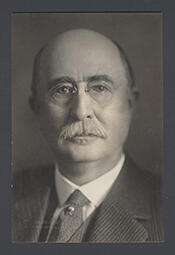
Here you will find contact information for Representative Caleb Rodney Layton, including email address, phone number, and mailing address.
| Name | Caleb Rodney Layton |
| Position | Representative |
| State | Delaware |
| District | At-Large |
| Party | Republican |
| Status | Former Representative |
| Term Start | May 19, 1919 |
| Term End | March 3, 1923 |
| Terms Served | 2 |
| Born | September 8, 1851 |
| Gender | Male |
| Bioguide ID | L000151 |
About Representative Caleb Rodney Layton
Caleb Rodney Layton (September 8, 1851 – November 11, 1930) was an American physician and politician from Georgetown, in Sussex County, Delaware. A member of the Republican Party, he served two terms as U.S. Representative from Delaware from 1919 to 1923, contributing to the legislative process during a significant period in American history. As a member of the House of Representatives, he participated in the democratic process and represented the interests of his constituents during the 66th and 67th Congresses.
Layton was born at Long Farm, near Frankford, Delaware, the son of Samuel Henry Layton and Elizabeth Long Layton. He was named for his great-grandfather, Caleb Rodney, who had served as governor of Delaware, and was the grandson of Caleb Sipple Layton, who had been a Delaware congressman and Secretary of State of Delaware. His father was a farmer who also held several local offices, including Sheriff, Justice of the Peace, and Clerk of the Court of Sussex County. This family background placed Layton within a longstanding tradition of public service in Delaware and helped shape his early interest in politics and civic affairs.
Layton received his early education at Georgetown Academy in Georgetown, Delaware. He then attended Amherst College in Massachusetts, from which he graduated in 1873. Pursuing a career in medicine, he enrolled in the medical school of the University of Pennsylvania in Philadelphia and received his medical degree in 1876. In 1906 he married Anna Elizabeth Sipple, and they had three children: Rachel Sipple Layton, Daniel John Layton, and Caleb Sipple Layton. His son Daniel J. Layton would later become Attorney General of Delaware and subsequently Chief Justice of the Delaware Supreme Court, extending the family’s prominence in the state’s public life.
After completing his medical education, Layton returned to Sussex County and settled in Georgetown, where he began the practice of medicine. Alongside his medical career, he quickly became active in Republican politics. His first formal political position was as Secretary of the Republican County Committee, a post he held from 1876 to 1888. He later emerged as a leader in the Union (Addicks) Republican faction, serving as Chairman of the Union Republican Party County Committee from 1896 to 1901. During this period he was also one of Delaware’s ten delegates to the Republican National Conventions in 1896, 1900, and 1904, participating in the selection of national party leadership and presidential nominees. From 1897 until 1905 he further influenced public opinion as editor of the Union Republican, a Georgetown newspaper.
Withdrawing completely from his medical practice as his public responsibilities expanded, Layton was appointed Delaware Secretary of State in 1901 and served in that office until 1905. He then moved into federal service as an auditor for the U.S. Department of State in Washington, D.C., a position he held for four years. Returning to Delaware politics, he became a member of the Progressive Republican Party state committee from 1912 until 1918, reflecting the era’s internal divisions within the Republican Party and his alignment with reform-oriented elements in state and national politics.
Layton was elected to the U.S. House of Representatives in the general election held on the first Tuesday after November 1, 1918, defeating incumbent Democratic Representative Albert F. Polk. U.S. Representatives at that time took office on March 4, and Layton began his first two-year term on March 4, 1919, serving in the Republican majority in the 66th Congress during the closing months of the Woodrow Wilson administration and the immediate post–World War I period. He won reelection in 1920, defeating Democrat James R. Clements, and served in the 67th Congress during the administration of President Warren G. Harding. His service in Congress, which extended from March 4, 1919, until March 3, 1923, coincided with major national debates over postwar readjustment, economic policy, and civil rights.
In the 1922 election, Layton sought a third term but was defeated by Democrat William H. Boyce, a retired judge from Georgetown. His defeat was closely tied to his vote against the Dyer Anti-Lynching Bill, a landmark piece of civil rights legislation strongly supported by African American activists and their allies. Alice Dunbar Nelson, an African American political activist and founder of the Anti-Lynching Crusaders, led an intensive voter registration and mobilization effort in Delaware, assisting approximately 12,000 new voters who supported the bill to register. Layton ultimately lost the election by about 7,000 votes, a margin roughly equal to the number of Black voters who cast their ballots for his opponent in protest of Layton’s stance on the anti-lynching measure.
After leaving Congress in March 1923, Layton resumed the practice of medicine in Georgetown, Delaware, returning to the profession in which he had first established himself nearly half a century earlier. He continued to live in Georgetown until his death on November 11, 1930. Caleb Rodney Layton was buried in St. Paul’s Episcopal Churchyard in Georgetown, closing a life that combined medical service, party leadership, state office, and two terms in the United States House of Representatives, and that extended a multigenerational tradition of public service in Delaware.