Representative Caleb Blood Smith
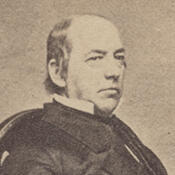
Here you will find contact information for Representative Caleb Blood Smith, including email address, phone number, and mailing address.
| Name | Caleb Blood Smith |
| Position | Representative |
| State | Indiana |
| District | 4 |
| Party | Whig |
| Status | Former Representative |
| Term Start | December 4, 1843 |
| Term End | March 3, 1849 |
| Terms Served | 3 |
| Born | April 16, 1808 |
| Gender | Male |
| Bioguide ID | S000519 |
About Representative Caleb Blood Smith
Caleb Blood Smith (April 16, 1808 – January 7, 1864) was a United States Representative from Indiana, the 6th United States Secretary of the Interior, and a district judge of the United States District Court for the District of Indiana. He served as a Representative from Indiana in the United States Congress from 1843 to 1849, completing three terms as a member of the Whig Party and contributing to the legislative process during a significant period in American history.
Smith was born on April 16, 1808, in Boston, Massachusetts. In 1814 he moved with his parents to Ohio, where he spent his youth. He attended Miami University in Oxford, Ohio, from 1825 to 1826, and later studied at Cincinnati College (now the University of Cincinnati). In 1828 he read law and was admitted to the bar, beginning a legal career that would underpin his later political and judicial service. Smith became a Freemason in Warren Lodge No. 15 at Connersville, Indiana, in 1829, an affiliation that would remain important throughout his life and culminate in his leadership within the Grand Lodge of Indiana.
After completing his legal studies, Smith entered private practice in Connersville, Fayette County, Indiana, in 1828, where he practiced law until 1843. He quickly became active in public affairs and journalism, founding and editing the Indiana Sentinel in 1832. His prominence in local and state politics grew as he was elected to the Indiana House of Representatives, in which he served from 1832 to 1837 and again from 1840 to 1841. During this period he rose to a position of leadership, serving as Speaker of the Indiana House in 1836. In 1837 he was appointed Commissioner to collect assets and adjust debts for the State of Indiana, reflecting the confidence placed in his administrative and legal abilities. Within the Masonic fraternity, he advanced to serve as Grand Master of the Grand Lodge of Indiana in 1837. His former home in Connersville, also known as Elmhurst, later became the home of Connersville Masonic Lodge No. 15 when it went into operation there in 1940, and the house is listed on the National Register of Historic Places. Today, the highest award presented by the Grand Lodge of Indiana is the Caleb B. Smith Medal of Honor, commemorating his Masonic and civic contributions.
Smith first sought national office as an unsuccessful candidate for the 27th United States Congress in 1841. He was subsequently elected as a Whig from Indiana’s 4th congressional district to the United States House of Representatives, serving in the 28th, 29th, and 30th Congresses from March 4, 1843, to March 3, 1849. During his three terms in Congress, he participated actively in the democratic process and represented the interests of his Indiana constituents at a time of growing sectional tension in the United States. In the 30th Congress he served as Chairman of the Committee on Territories, placing him at the center of debates over the organization and governance of western territories in the years leading up to the Compromise of 1850.
At the conclusion of his House service in 1849, Smith was appointed by President Zachary Taylor as a member of the board of commissioners to adjust claims against Mexico, a body created to settle financial claims arising from the Mexican–American War. He served on this commission from 1849 to 1851. After completing this work, he resumed private legal practice, this time in Cincinnati, Ohio, where he practiced from 1851 to 1859. As national tensions increased in the late 1850s, Smith remained engaged in efforts to preserve the Union. In 1861 he served as a member of the Peace Convention held in Washington, D.C., an extraconstitutional gathering of delegates from various states that sought, unsuccessfully, to devise means to prevent the impending American Civil War.
With the election of Abraham Lincoln, Smith—by then identified with the emerging Republican coalition despite his Whig background—was appointed by President Lincoln as the 6th United States Secretary of the Interior. He held this cabinet post from March 5, 1861, to January 1, 1863, overseeing a department often referred to as “the Department of Everything Else” for its wide-ranging responsibilities. Smith, however, had limited personal interest in the administrative burdens of the office, and his declining health further constrained his activity. As a result, he delegated many of his responsibilities to Assistant Secretary of the Interior John Palmer Usher. When Lincoln presented the draft of the Emancipation Proclamation to his cabinet, the conservative Smith reportedly considered resigning upon its public announcement, but he ultimately accepted the President’s decision and remained in office until his transition to the judiciary.
On December 16, 1862, President Lincoln nominated Smith to a seat on the United States District Court for the District of Indiana, to fill the vacancy created by the death of Judge Elisha Mills Huntington. The United States Senate confirmed his nomination on December 22, 1862, and he received his commission the same day. Smith’s judicial service was brief; he served on the federal bench until his death in Indianapolis, Marion County, Indiana, on January 7, 1864. His tenure as a district judge nonetheless capped a long career in law and public service that had encompassed state legislation, national lawmaking, cabinet leadership, and federal adjudication.
The circumstances surrounding Smith’s burial and final resting place have been the subject of unusual historical inquiry and local legend. He was first buried at Greenlawn Cemetery in Indianapolis, as Crown Hill Cemetery had not yet opened. His wife, Elizabeth B. Watton Smith—whose surname has sometimes been misspelled “Walton,” though the correct spelling is Watton—later paid for a choice plot in Crown Hill Cemetery and arranged for his body to be moved there. She feared that southern dissenters, including groups such as the Sons of Liberty, might desecrate his grave as Confederate sympathizers moved northward, and she was also concerned about local youths knocking over grave markers in Greenlawn. Although there is a mausoleum at Crown Hill associated with the family, Smith is not buried there. An investigation in 1977, including the opening of the mausoleum, confirmed that only his wife and child were interred within.
That same year, further efforts were made to locate Smith’s remains. John Walker, a resident of Connersville, Indiana, and a researcher with a particular interest in President Lincoln and his cabinet, obtained permission from Smith family descendants—Norvella Thomas Copes and Nancy S. Hurley—as well as from the city of Connersville, to excavate the Smith-Watton lot in the Connersville City Cemetery. The excavation, conducted in November 1977, revealed the remains of Smith’s son-in-law, William Watton Smith, but not those of Caleb B. Smith. Earlier and later correspondence had already hinted at the mystery of his burial. A letter dated April 24, 1936, from Louis J. Bailey, Chief Librarian of the Queens Borough Public Library in New York, to a Miss Dunn, a librarian in Connersville, inquired about the location of Smith’s body and discussed records from Greenlawn Cemetery, possible misspellings of the Watton name, and the transfer of remains to Crown Hill. In the late twentieth century, Lincoln Memorial University also inquired about Smith’s burial in a letter to John Walker. Walker later produced a 55-page research paper, completed in 2009, compiling newspaper articles, letters, family accounts, and prior research. This study advanced various possibilities, including a burial in another person’s grave, a secret midnight reinterment, and other conjectures, but the precise location of Smith’s body remains unknown.