Representative Caleb Tompkins
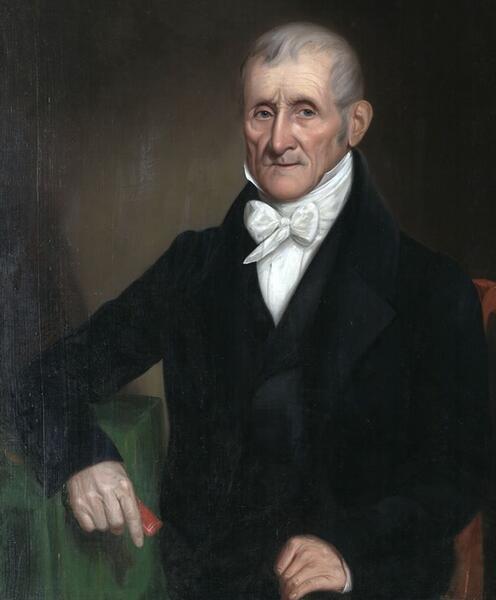
Here you will find contact information for Representative Caleb Tompkins, including email address, phone number, and mailing address.
| Name | Caleb Tompkins |
| Position | Representative |
| State | New York |
| District | 3 |
| Party | Republican |
| Status | Former Representative |
| Term Start | December 1, 1817 |
| Term End | March 3, 1821 |
| Terms Served | 2 |
| Born | December 22, 1759 |
| Gender | Male |
| Bioguide ID | T000303 |
About Representative Caleb Tompkins
Caleb Tompkins (December 22, 1759 – January 1, 1846) was a U.S. Representative from New York and the brother of Vice President Daniel D. Tompkins. He was born on December 22, 1759, in Scarsdale, in what was then the Province of New York, during the colonial period. He was a member of a prominent New York family that would become influential in the early political life of the United States, most notably through his younger brother, Daniel D. Tompkins, who later served as governor of New York and as vice president under President James Monroe.
Tompkins came of age during the era of the American Revolution, a period that shaped the political and civic outlook of many future public officials. While detailed records of his formal education are limited, his subsequent legal and political career indicates that he received the training and preparation typical of aspiring lawyers and public men of his generation in New York. Growing up in Westchester County, he was exposed to both the legal profession and public affairs, which would guide his later work in law, local government, and national politics.
Before entering Congress, Tompkins established himself in New York as a lawyer and local public official. He became active in the civic life of Westchester County, where he was engaged in legal practice and public service. His involvement in local affairs and his family’s growing prominence in state politics helped position him for higher office. As the new nation’s political parties began to take shape in the early nineteenth century, he aligned himself with the Democratic-Republican Party, often referred to at the time simply as the Republican Party, which was the dominant political organization in New York during much of his public life.
Tompkins was elected as a member of the Republican Party to the United States House of Representatives from New York, serving two terms in Congress. His service in the U.S. House occurred during a significant period in American history, as the young republic continued to define its institutions, expand its territory, and navigate domestic and international challenges. In Congress, he participated in the legislative process and the broader democratic experiment, representing the interests of his New York constituents and contributing to debates over national policy in an era marked by the maturation of the federal government and the evolution of party politics.
After his tenure in Congress, Tompkins continued to be associated with public life in New York, reflecting the pattern of many early nineteenth-century legislators who moved between federal and state or local responsibilities. His legal background and his experience in national affairs sustained his standing as a respected figure in his community. Although overshadowed in historical memory by the higher national office attained by his brother, his own career illustrates the role of mid-level legislators and local leaders in consolidating the institutions of the early United States.
Caleb Tompkins died on January 1, 1846, in Scarsdale, New York, the community where he had been born more than eight decades earlier. His long life spanned from the final decades of British colonial rule through the Revolution and into the antebellum period of American history. Remembered as a Republican Party representative from New York who served two terms in Congress and as the brother of Vice President Daniel D. Tompkins, he occupied a place within the broader network of early American public servants who helped shape the political landscape of both New York and the nation.