Representative Calvin M. Dooley
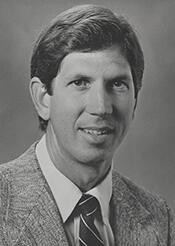
Here you will find contact information for Representative Calvin M. Dooley, including email address, phone number, and mailing address.
| Name | Calvin M. Dooley |
| Position | Representative |
| State | California |
| District | 20 |
| Party | Democratic |
| Status | Former Representative |
| Term Start | January 3, 1991 |
| Term End | January 3, 2005 |
| Terms Served | 7 |
| Born | January 11, 1954 |
| Gender | Male |
| Bioguide ID | D000424 |
About Representative Calvin M. Dooley
Calvin M. Dooley (born January 11, 1954) is an American politician who served as a member of the United States House of Representatives from 1991 to 2005. A member of the Democratic Party, he represented the 17th and 20th congressional districts of California during seven terms in office. His service in Congress occurred during a significant period in American history, and as a member of the House of Representatives he participated in the democratic process and represented the interests of his Central Valley constituents.
Dooley was born in Visalia, California, and grew up on his parents’ farm several miles east of Hanford, in the state’s agriculturally rich San Joaquin Valley. He attended local public schools and graduated from Hanford Union High School in 1972. Raised in a farming environment, he developed an early familiarity with agricultural issues that would later shape his academic pursuits and policy interests.
After high school, Dooley enrolled at the University of California, Davis, where he studied agricultural economics. He received his bachelor’s degree in agricultural economics in 1977. Following several years in the workforce, he pursued graduate studies in business and management, earning a master’s degree in management from Stanford University in 1987. This combination of agricultural and management training provided him with a foundation for both his early professional activities and his later legislative work on economic and agricultural matters.
Before entering Congress, Dooley worked as a rancher, continuing his close connection to agriculture and the farming community of the Central Valley. He then moved into public service at the state level, serving as an administrative assistant to California State Senator Rose Ann Vuich from 1987 to 1990. In this role, he gained experience in legislative processes, constituent services, and state policy, positioning him for his own run for elective office.
In 1990, Dooley sought election to the U.S. House of Representatives from what was then California’s 17th Congressional District. He won the Democratic primary and went on to face six-term Republican incumbent Chip Pashayan in the general election. Although Pashayan had been reelected with 71 percent of the vote in 1988, his standing was weakened by the House banking scandal, and Dooley defeated him in November by just over nine percentage points. Following the 1990 census and subsequent redistricting, his district was renumbered as the 20th District in 1992 and redrawn as a Latino-majority district centered in the Central Valley. He was easily reelected that year and five more times thereafter, serving continuously from January 3, 1991, to January 3, 2005. Over the course of his seven terms, he faced only one truly serious reelection challenge, when Republican Rich Rodriguez held him to 53 percent of the vote.
During his congressional career, Dooley was identified as a “New Democrat,” and his voting record was generally considered moderate, reflecting both his party affiliation and the centrist tendencies common among Democrats representing the Central Valley. He focused on issues important to his largely agricultural district, including farm policy, trade, and economic development, while also engaging in broader national debates. On October 10, 2002, he was among the 81 House Democrats who voted in favor of authorizing the invasion of Iraq; he later stated that he regretted this vote. His tenure in Congress spanned the presidencies of George H. W. Bush, Bill Clinton, and George W. Bush, and he participated in legislative deliberations on domestic policy, foreign affairs, and budgetary matters during a period marked by the end of the Cold War, economic expansion in the 1990s, and the post–September 11 era.
In 2004, Dooley announced that he would retire from Congress at the end of his seventh term and not seek reelection. He endorsed his chief of staff, Lisa Quigley, as his preferred successor in the 20th District. However, much of the state Democratic establishment rallied behind Jim Costa, a former state legislator from the Fresno area. The resulting primary contest between Quigley and Costa was contentious; Costa ultimately prevailed in the Democratic primary, effectively securing the seat in the strongly Democratic district and succeeding Dooley in the House.
After leaving Congress in January 2005, Dooley transitioned to leadership roles in national trade associations representing major sectors of American industry. He became president and chief executive officer of the Food Products Association (FPA), a Washington-based trade group representing food manufacturers. Following a merger of the FPA with the Grocery Manufacturers Association (GMA), he assumed the same roles—president and CEO—at GMA, continuing his involvement in food industry policy, regulatory affairs, and advocacy. In September 2008, he was appointed chief executive officer of the American Chemistry Council, the principal trade association for American chemical companies. In that capacity, he represented the interests of the chemical industry in federal policy discussions, regulatory matters, and public outreach. He announced his retirement from the American Chemistry Council in 2018, concluding more than a decade of leadership in national trade organizations.
Dooley is married to the former Linda Phillips, who serves as head of the Bryce Harlow Foundation in Washington, D.C., an organization focused on professional advocacy and public affairs. The couple have two daughters, one of whom serves on the Charlottesville City School Board in Virginia. Through his post-congressional career and family’s public service, Dooley has remained connected to public policy and civic life beyond his years in elected office.