Representative Cameron A. Morrison
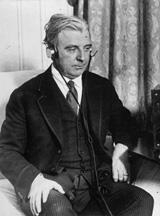
Here you will find contact information for Representative Cameron A. Morrison, including email address, phone number, and mailing address.
| Name | Cameron A. Morrison |
| Position | Representative |
| State | North Carolina |
| District | 10 |
| Party | Democratic |
| Status | Former Representative |
| Term Start | December 13, 1930 |
| Term End | January 3, 1945 |
| Terms Served | 2 |
| Born | October 5, 1869 |
| Gender | Male |
| Bioguide ID | M000993 |
About Representative Cameron A. Morrison
Cameron A. Morrison (October 5, 1869 – August 20, 1953) was an American politician who served North Carolina at both the state and federal levels during the first half of the twentieth century. He was born in Richmond County, North Carolina, to Daniel Morrison, who had reluctantly fought for the Confederacy during the Civil War and later joined the Republican Party. Initially, Morrison inherited his father’s Republican affiliation and, at the age of 21, was elected to the state Republican Committee in 1890. Within a year, however, he shifted his allegiance to the Democratic Party, a change that would shape the rest of his political life. His early years were marked by his immersion in the partisan and racial politics of the post-Reconstruction South.
Morrison’s education was typical of a young man of his region and era, though the surviving record emphasizes his political rather than academic formation. Coming of age in a state still grappling with the aftermath of the Civil War and Reconstruction, he absorbed the dominant Democratic ideology that was consolidating power in North Carolina at the turn of the century. His rapid ascent into party leadership circles reflected both his political ambition and the opportunities available to white Democrats in the period of disfranchisement and segregation.
In 1898, Morrison participated in the Wilmington insurrection of 1898, a violent coup d’état carried out by white supremacists in Wilmington, North Carolina. During this event, white mobs expelled Black and white Republican and Populist officeholders, destroyed Black-owned property and businesses, including the city’s only Black newspaper, and killed an estimated 60 to more than 300 people. In the aftermath, Governor Daniel Lindsay Russell was forced to flee Wilmington for Raleigh. Morrison boarded Russell’s train in Maxton, North Carolina, in the company of a small band of Red Shirts and warned the governor that a more hostile group of Red Shirts awaited him farther along the route, advising Russell to hide in the baggage car to avoid being lynched. In 1900, Morrison was elected to the North Carolina Senate, serving one term and further entrenching himself in the state’s Democratic establishment.
Morrison’s statewide prominence culminated in his election as the 55th governor of North Carolina. With the backing of U.S. Senator Furnifold Simmons and the use of race-baiting tactics by political ally A. D. Watts, he defeated O. Max Gardner in the 1920 Democratic primary for governor, and in the general election he prevailed over Republican nominee John J. Parker. Inaugurated on January 12, 1921, he served as governor from 1921 to 1925. Known as “the Good Roads governor,” Morrison strongly supported the creation of a modern highway system, championing extensive road-building programs that reshaped transportation in North Carolina. His administration also increased funding for public education and undertook various governmental reforms, even as he opposed the teaching of the theory of evolution in public schools, reflecting the cultural conflicts of the era.
Morrison’s federal career began with his appointment to the United States Senate from North Carolina following the death of Senator Lee S. Overman. He served in the Senate from 1930 to 1932, aligning with the Democratic Party during a period of deepening economic crisis at the outset of the Great Depression. His tenure in the Senate was cut short when he lost the Democratic primary runoff to Robert R. Reynolds, ending his initial period of service in Congress. Nonetheless, his involvement in national politics continued, and he remained a significant figure within North Carolina’s Democratic ranks.
Cameron A. Morrison later served as a Representative from North Carolina in the United States Congress. He was elected to the United States House of Representatives and served one term from 1943 to 1945. A member of the Democratic Party, Morrison contributed to the legislative process during this period and participated in the democratic governance of the nation during World War II. His service in the House of Representatives occurred during a significant period in American history, and he represented the interests of his North Carolina constituents in the national legislature. Although earlier accounts sometimes described his congressional career as encompassing two terms, his tenure in the House in fact extended for a single term, after which he again sought higher office. In 1944, he ran in the Democratic primary for a U.S. Senate seat but was defeated by Clyde R. Hoey.
Morrison’s personal life was marked by both tragedy and prominence. His first marriage was to Lottie May Tomlinson, with whom he had four children; only one child, Angelia Lawrance Morrison, survived infancy. Tomlinson died in 1919, leaving Morrison a widower just before his gubernatorial term. While serving as governor, he married his second wife, Sara Virginia Ecker Watts, the widow of industrialist George Washington Watts, in 1924. Their wedding ceremony took place at Harwood Hall. With his second wife, Morrison built Morrocroft, a large estate in Charlotte, North Carolina. In his will, or possibly before his death, he gave the back section of his personal property to the Black congregation of Sharon Road Methodist Church; the land is now believed to contain unmarked graves of Black parishioners.
In his later years, Morrison remained a figure of public recognition in North Carolina. He died on August 20, 1953, in Quebec City, Canada. His legacy has been commemorated and contested in the decades since his death. A ten-story residence hall on the campus of the University of North Carolina at Chapel Hill was named in his honor, and his Charlotte home, Morrocroft, was listed on the National Register of Historic Places in 1983. However, in 2020, a library in Charlotte and a residence hall at North Carolina A&T State University that had borne his name were renamed due to his documented ties to the Red Shirts and white supremacy. Morrison’s career thus stands as a significant, if deeply complex, chapter in the political and social history of North Carolina and the United States.