Representative Campbell Slemp
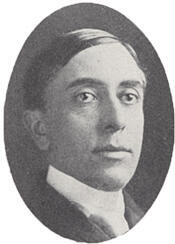
Here you will find contact information for Representative Campbell Slemp, including email address, phone number, and mailing address.
| Name | Campbell Slemp |
| Position | Representative |
| State | Virginia |
| District | 9 |
| Party | Republican |
| Status | Former Representative |
| Term Start | November 9, 1903 |
| Term End | March 3, 1909 |
| Terms Served | 3 |
| Born | December 2, 1839 |
| Gender | Male |
| Bioguide ID | S000485 |
About Representative Campbell Slemp
Campbell Slemp (December 2, 1839 – October 13, 1907) was a Virginia farmer, Confederate officer, state legislator, and Republican member of the United States House of Representatives, who represented Virginia’s 9th congressional district from 1903 until his death in 1907. Over the course of his public life he moved from Democratic and Readjuster affiliations into Republican leadership, ultimately becoming a key figure in federal patronage in Virginia during the early twentieth century. He served three terms in Congress as a member of the Republican Party, contributing to the legislative process during a significant period in American political and economic development.
Slemp was born near Turkey Cove in Lee County, Virginia, to Sebastian Smyth Slemp and his wife, the former Margaret Reasor, both from families long prominent in the region. He had an older brother, Henderson Clinton Slemp, and two elder sisters, Nervesta Overton Slemp Flanary and Alpha Slemp Habern. Raised in the rural southwest of the Commonwealth, he engaged early in agricultural work and land management. He attended Emory and Henry College in Emory, Virginia, but left his studies in 1859 upon the death of his father. Before the outbreak of the American Civil War, he farmed and tended to real estate investments in Lee County, establishing himself as a local landholder.
On July 25, 1861, Slemp married Nancy Brittain “Namie” Cawood. The couple had six children: Emma M. Slemp (1865–1889), Henry C. M. Slemp (born and died 1868), Susan Jane Slemp Newman (1869–1935), Campbell Bascom Slemp (1870–1943), William Moses Slemp (1873–1912), and Laura Alpha Drucilla Slemp (1877–1900). The family remained rooted in southwest Virginia, where Slemp’s agricultural and later political activities were centered, and his children—most notably C. Bascom Slemp—would continue his public legacy in the region and in national politics.
During the Civil War, Slemp volunteered for service in the Confederate States Army and joined Company A of the 21st Virginia Infantry Battalion, eventually becoming the company’s commanding officer. By November 1862 this unit had been consolidated into the 64th Virginia Mounted Infantry, a command charged primarily with defending the border region between Virginia, Tennessee, and Kentucky. Slemp rose from captain to lieutenant colonel and was promoted to colonel on December 14, 1862. His regiment helped guard the strategically vital Cumberland Gap and protected important Confederate resources, including the lead mines and salt works at Saltville, Virginia. In actions around Pound Gap in nearby Wise County, he was among the Confederate officers opposed by Union Colonel James A. Garfield, later a President of the United States, who forced a Confederate retreat.
The struggle for control of the Cumberland Gap formed a central part of Slemp’s wartime experience. After early Confederate efforts under General Felix Zollicoffer and subsequent Union attempts to secure the Gap, the position changed hands multiple times. In September 1863, during the nearly bloodless Battle of Cumberland Gap, Confederate General John W. Frazer surrendered approximately 2,300 men to a much smaller Union force under John F. De Courcy. Slemp and Major McDowell, however, managed to escape with many of their men and evacuated about 400 Confederates from the nearby Pinnacle. Later that year, Slemp was charged with dereliction of duty for his actions on November 7, 1863, in connection with moving captured wagons shortly after Union raiders had burned the 64th Virginia’s camp near Jonesville. Court-martialed in January 1864, he was removed from command and dismissed from the army, despite efforts by Virginia legislators to halt the proceedings and countercharges attempted by his lieutenant colonel, Auburn L. Pridemore, against General William “Grumble” Jones. Slemp weakened his own defense by slipping house arrest in Abingdon to return home. Nevertheless, he remained loyal to the Confederate cause until the end of the war, finally surrendering with others of the 64th Virginia and receiving his parole at Cumberland Gap, Tennessee, on May 2, 1865.
After the war, Slemp received a pardon and returned to his prewar occupation as a farmer in southwest Virginia. He resumed building his agricultural and real estate interests and gradually entered public life. During the turbulent era of Congressional Reconstruction and its aftermath, he aligned himself with the Readjuster movement led by former Confederate General William Mahone, which sought to “readjust” Virginia’s prewar debt and expand public services, including education. Although he had been a Democrat, Slemp became a Readjuster Democrat and then increasingly associated with the Republican Party as Mahone and his followers moved into Republican ranks. His older brother, Henry C. Slemp, had been elected to the Virginia Senate in 1875 and served one term, helping establish the family’s political presence in the region.
In 1879, voters in Lee County elected Campbell Slemp to the Virginia House of Delegates, where he served part-time and was re-elected once, participating in debates over debt, reconstruction policy, and regional development. He ran unsuccessfully for the state senate in 1883. By the late 1880s he had become a recognized Republican leader in Virginia. In 1889 he made an unsuccessful bid for lieutenant governor on Mahone’s ticket, which lost decisively in that year’s statewide elections. Despite this setback, Slemp remained active in national politics, serving as a presidential elector for Republican candidates Benjamin Harrison and later William McKinley, thereby strengthening his ties to the national Republican Party and to federal officeholders.
In 1903, Slemp’s long engagement in regional and party politics culminated in his election to the United States House of Representatives from Virginia’s 9th congressional district, often called the “Fighting Ninth” because of its closely contested elections and frequent party shifts. Running as a Republican, he defeated two-term Democratic incumbent William F. Rhea, who himself had unseated two-term Republican James A. Walker, the last commander of the Stonewall Brigade, in 1898. Slemp took his seat in the Fifty-eighth Congress and was re-elected to the Fifty-ninth and Sixtieth Congresses, serving from March 4, 1903, until his death on October 13, 1907. During his tenure in the House of Representatives, he participated in the legislative process on behalf of his constituents at a time of rapid industrial growth and political realignment in the South.
As a Republican congressman from a predominantly Democratic state, Slemp occupied a pivotal role in federal appointments and patronage. President Theodore Roosevelt, a fellow Republican, allowed him to exercise significant influence over federal patronage in Virginia between 1903 and 1907, making him a central figure in the distribution of federal positions and resources in the Commonwealth. During these years, the Norfolk and Western Railway expanded its operations and textile mills developed within his district, contributing to the economic transformation of southwest Virginia. Slemp’s control of patronage and his advocacy for regional development helped consolidate Republican strength in parts of the Ninth District, even as the Democratic Party remained dominant statewide.
Campbell Slemp died unexpectedly at his home in Big Stone Gap, Wise County, Virginia, on Sunday, October 13, 1907, while still serving in Congress. He was interred in the family cemetery in Lee County, Virginia. Following his death in office, his son Campbell Bascom Slemp was selected to fill the vacant congressional seat and subsequently won re-election several times, serving as the United States Representative for Virginia’s 9th district from 1907 to 1922. The younger Slemp later established the Slemp Foundation and the Southwest Virginia Museum, further entrenching the family’s legacy in the region. Campbell Slemp’s career, spanning Confederate military service, Readjuster and Democratic politics, and ultimately Republican leadership in Congress, placed him among the notable Virginia officeholders who died in office in the early twentieth century.