Representative Candice S. Miller
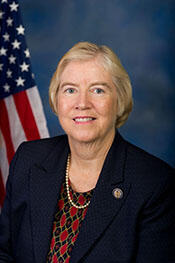
Here you will find contact information for Representative Candice S. Miller, including email address, phone number, and mailing address.
| Name | Candice S. Miller |
| Position | Representative |
| State | Michigan |
| District | 10 |
| Party | Republican |
| Status | Former Representative |
| Term Start | January 7, 2003 |
| Term End | January 3, 2017 |
| Terms Served | 7 |
| Born | May 7, 1954 |
| Gender | Female |
| Bioguide ID | M001150 |
About Representative Candice S. Miller
Candice Sue Miller (née McDonald; born May 7, 1954) is an American politician from Michigan and a longtime member of the Republican Party who has held local, county, state, and federal office. Over a career spanning more than four decades, she has served as Harrison Township Supervisor, Macomb County Treasurer, Michigan Secretary of State, and U.S. Representative for Michigan’s 10th congressional district, and since 2017 has served as the Public Works Commissioner of Macomb County. She was inducted into the Michigan Women’s Hall of Fame in 2015 in recognition of her trailblazing role as one of the most prominent women in Michigan politics.
Miller began her public service career at the local level in Macomb County. She was first elected to the Harrison Township board of commissioners and, in 1980, was elected Harrison Township Supervisor, becoming both the first woman and the youngest person ever to hold that position. Her early tenure in township government established her reputation as a hands-on local official and introduced her to the regional issues of infrastructure, public services, and development that would remain central to her later work. In her first bid for federal office, she ran for Congress in Michigan’s 12th congressional district, challenging five-term Democratic incumbent David Bonior, but was unsuccessful in that race.
Miller’s political breakthrough came at the county level. In 1992, she scored a major upset by defeating Democratic incumbent Adam Nowakowski to become Macomb County Treasurer. This victory was historically significant: it was the first win for a Republican in a countywide office in Macomb County in more than 60 years, and she became the first woman ever elected to the position of Macomb County Treasurer. She served as treasurer from 1993 to 1995, focusing on county fiscal management and taxpayer services. Her success in that role propelled her to statewide office.
In 1994, Miller was elected Michigan Secretary of State, taking office in 1995 and serving until 2003. She was the first woman ever elected to the position of Secretary of State in Michigan. During her tenure, she oversaw the state’s motor vehicle and driver licensing systems and election administration, and she became widely known for efforts to modernize branch office operations and improve customer service. Her reelections reflected broad statewide support, and her service as Secretary of State further raised her profile within the Republican Party and among Michigan voters.
Miller was elected to the United States House of Representatives in 2002 and served seven terms, from January 3, 2003, to January 3, 2017, representing Michigan’s 10th congressional district. Her district, a border district in Michigan’s “Thumb” region, included the Blue Water Bridge in Port Huron—the second-busiest border crossing on the northern tier—Selfridge Air National Guard Base, Coast Guard stations at Selfridge, Port Huron, and Harbor Beach, the CN Rail Tunnel (the busiest rail artery in the United States), and key interstate corridors I‑94 and I‑69. As a member of the House of Representatives, Candice S. Miller participated in the legislative process during seven terms in office, representing the interests of her constituents during a significant period in American history marked by the post‑9/11 security environment, the wars in Iraq and Afghanistan, and the Great Recession.
During her congressional service, Miller held several influential committee assignments. She served on the House Armed Services Committee in the early 2000s, including during the 2003 invasion of Iraq, when she was part of a “war room” team that relayed information from the Bush administration to Republican members, the news media, and the public. In 2007 she was appointed to the House Committee on Transportation and Infrastructure, becoming the only member from Michigan on that committee. She served on the Subcommittee on Railroads, Pipelines, and Hazardous Materials, the Subcommittee on Water Resources and Environment, and the Subcommittee on Aviation, and later participated in the committee’s Public‑Private Partnership Special Panel. In that role, she focused on how public‑private partnerships could support infrastructure projects in Michigan, including the expanded Customs and Border Plaza at the Blue Water Bridge in Port Huron. Throughout her service on Transportation and Infrastructure, she advocated for the Great Lakes, playing a key role in the Water Resources Reform and Development Act (WRRDA) by securing a provision designating all Great Lakes ports and harbors as a single, comprehensive navigation system—the Great Lakes Navigation System—for federal budgeting purposes, thereby creating a unified front for Great Lakes facilities in the competition for federal funding.
Miller became particularly prominent in the area of homeland security. She joined the House Committee on Homeland Security in March 2008 and served as vice chair of the full committee from January 2011 until December 2016. From 2011 until February 2016, she chaired the Subcommittee on Border and Maritime Security and also served on the Subcommittee on Counterterrorism and Intelligence. In these roles, she oversaw issues related to border and port security, transportation security, critical infrastructure protection, cyber security, emergency preparedness, and other core missions of the Department of Homeland Security (DHS). As chair of the Subcommittee on Border and Maritime Security, she initiated legislative efforts to strengthen security along U.S. borders against international terrorist organizations, illegal immigration, drug and human smuggling, and exploitation of the visa process. During the 113th Congress, she sponsored legislation to formally authorize U.S. Customs and Border Protection (CBP) and clarify its security mission for the first time since DHS was created in 2002; the bill passed the House on July 28, 2014. She also authored legislation to allow DHS to suspend a country’s participation in the Visa Waiver Program if it failed to provide critical traveler information related to terrorism threats, and she advanced measures to increase oversight of DHS’s maritime security mission and to strengthen domestic maritime security in connection with U.S. trade. Reflecting the strategic nature of her district, she focused on building a stronger homeland security presence at Selfridge Air National Guard Base and on enhancing the security of airways, roadways, railways, waterways, and the region’s food and water supplies along the Northern Border.
In addition to her homeland security work, Miller played a central role in House administration and election oversight. In the 113th Congress she was appointed chair of the Committee on House Administration, a position she continued to hold in the 114th Congress. The committee, established in 1947, oversees federal elections and the day‑to‑day operations of the House of Representatives. Under her leadership, the House received consecutive “clean” audits, reflecting improvements in financial management and internal controls. She helped advance legislation to end the use of millions of dollars in taxpayer funding for political party nominating conventions, redirecting those funds to pediatric research. Working with House officers, she promoted the adoption of low‑cost digital tools to improve House operations and reduce expenses. She also oversaw the committee’s review of the Bauer‑Ginsberg Commission report, which emphasized local control of elections and offered recommendations to help local election administrators improve voting processes.
Miller’s legislative portfolio extended into environmental, energy, and technology policy. She served on the House Select Committee on Energy Independence and Global Warming, where she supported expanded offshore oil exploration and backed selling oil and gas leases to help fund research and development of alternative energy projects. In June 2013 she introduced the Great Lakes Navigation System Sustainability Act of 2013 (H.R. 2273), seeking to redefine how the Great Lakes were treated in competition for federal harbor maintenance funding and to create opportunities for recreational harbors to secure federal support. She co‑authored, with Representative Loretta Sanchez, the Biometric Exit Improvement Act of 2013 (H.R. 3141), requiring DHS to test and then implement a biometric exit system at airports and seaports nationwide to monitor the departure of foreign visitors. She also introduced H.R. 3487 in 2013 to extend through 2018 the Federal Election Commission’s authority to impose civil money penalties under a published fee schedule and to expand that authority to additional violations, enabling more efficient enforcement of campaign finance rules. In January 2014 she introduced the United States Customs and Border Protection Authorization Act (H.R. 3846), directing CBP to establish standard procedures for handling complaints against its personnel and to enhance officer and agent training. In 2015 she sponsored the Visa Waiver Program Improvement Act, intended to tighten security in the visa waiver system but criticized by some as creating two classes of Americans by disproportionately affecting citizens of Arab, Iranian, and Muslim descent.
Miller’s voting record and public positions reflected a generally conservative orientation with some notable emphases on security and fiscal issues. She signed Grover Norquist’s Taxpayer Protection Pledge, committing to oppose tax increases. She opposed the Homeowner Flood Insurance Affordability Act of 2013 (H.R. 3370), which passed the House in March 2014 to delay certain reforms to the National Flood Insurance Program. Arguing that Michigan residents were subsidizing more flood‑prone regions, she urged Michigan to consider opting out of the program, contending that premiums were being set by political considerations rather than actuarial risk. In December 2010 she condemned the leak of U.S. diplomatic cables and labeled WikiLeaks a terrorist organization. On April 26, 2012, she voted for the Cyber Intelligence Sharing and Protection Act (CISPA), a controversial bill to facilitate information sharing on cyber threats between the government and private sector; the measure passed the House but did not become law. During the 114th Congress, she was ranked the 71st most bipartisan member of the U.S. House of Representatives—and the most bipartisan House member from Michigan—by the Bipartisan Index of the Lugar Center and the McCourt School of Public Policy, which measures cross‑party co‑sponsorship of legislation.
Miller’s congressional career was not without controversy. During the 108th Congress, she was admonished by the House Ethics Committee for her conduct during a contentious Medicare prescription drug vote in November 2003. A 62‑page report by an investigative subcommittee found that she and House Majority Leader Tom DeLay had possibly violated House rules in their efforts to influence fellow Michigan Republican Representative Nick Smith. According to the report, Miller made comments during the roll call that appeared to be a “threat of retaliation” involving Smith’s son, Brad Smith, who was considering a run for Congress. Miller told investigators that, after seeing Smith’s “no” vote on the board, she approached him and, in a brief exchange lasting about ten seconds, said words to the effect of, “Well, I hope your son doesn’t come to Congress, or I’m not going to support your son, or something to that effect,” but that she did not ask him to change his vote. Smith, by contrast, recalled that she said something like, “If you don’t change your vote, I’ll get involved, and I’ll make sure Brad isn’t elected.” The Ethics Committee ultimately admonished her for the comments.
After choosing not to seek reelection to Congress in 2016, Miller returned to county‑level office. In 2016 she was elected Public Works Commissioner of Macomb County, taking office in 2017. In that role she has overseen the county’s water and sewer infrastructure, applying her long experience with public works, environmental protection, and regional planning to address aging systems and environmental challenges. Her service as Public Works Commissioner continues a career that began in township government and extended through county, statewide, and congressional office, marking her as one of the most enduring and influential Republican officeholders in modern Michigan history.