

On This Page
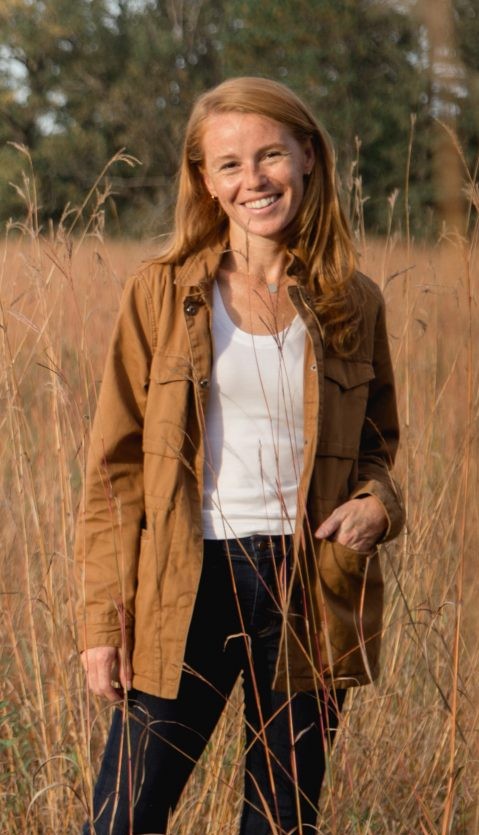
Meet Rebecca Cooke
As a small business owner and nonprofit leader, Rebecca Cooke has focused her career on building community and serving others. Born and raised on an Eau Claire dairy farm and appointed by Governor Tony Evers to the Wisconsin Economic Development Corporation, Rebecca knows the economic and social challenges facing the small towns and rural communities for which she’s fiercely advocated for, from the kitchen table to the board room. While Rebecca runs for Congress 7 days a week, she also waitresses. She believes we need more working class voices in Congress – folks who aren’t so far left or so far right but want work across the aisle to deliver for working families.
The Cooke Family Legacy of Service The Cooke family settled in the Independence area of newly-formed Buffalo County in 1856 and began generations of working Wisconsin land and serving their community and country. Early patriarch Chauncey Cooke was an abolitionist who joined the Union Army at 16 years old and fought in the Civil War. Those values of service run strong through Rebecca’s family as ancestors served America in both World Wars, her grandfather was a Marine in Korea before coming home to work a union job in Eau Claire’s paper mill, and her father served as a medic at Walter Reed Hospital, caring for wounded soldiers returning from Vietnam. Her brother continued that tradition, serving in the Navy before returning home to farm in Eau Claire and ultimately joining the Madison Fire Department.
Raised on an Eau Claire Dairy Farm Rebecca’s father took over the family dairy farm in Eau Claire after marrying her mother and continued on a decades long legacy. The youngest of three children, Rebecca began working on the farm and helping her mom with chores at a young age. Like most Wisconsin farm families, money was always tight. Rebecca’s parents were frugal and both had side jobs off the farm to support their family of five. Yet they were still a family that would give the shirts off their backs to help their neighbors – the first to the door with a casserole, volunteering as Sunday school teachers, hosting exchange students from across the world and giving opportunities to farm workers who needed a second chance.
Putting the Values of Service to Work Rebecca’s parents taught her to be a servant leader and emphasized the values of hard work, personal responsibility, honesty, and loyalty. She learned to show up for people because it is the right thing to do, not because of what was in it for her. Growing up showing cattle at fairs throughout the state, Rebecca became active in 4-H and later served as president of her club through high school.
Starting a Business and Investing in Her Community Rebecca went to work electing Democrats to public office around the country before coming home to Eau Claire and using her savings to open a small retail business – Red’s Mercantile – that sourced goods from independent makers locally and throughout the country. Looking to help other local entrepreneurs she founded the Red Letter Grant in 2016, a nonprofit that supports and empowers female entrepreneurs by providing start-up capital, technical assistance and authentic networking opportunities throughout a ten county region of western Wisconsin. The Red Letter Grant has aided in the launch over over 50 small businesses throughout Western Wisconsin. Governor Tony Evers took notice of Rebecca’s business leadership and activism in the entrepreneurship ecosystem by making her the youngest appointee to the Wisconsin Economic Development Corporation, where she was a vocal member of the board and co-chair of the newly formed Entrepreneurship & Innovation committee. Rebecca works with other business leaders and members of both parties to provide opportunities for Wisconsin residents. Now, Rebecca is running for Congress to better serve communities across Wisconsin, put people first and provide more opportunities for success, and will be a relentless fighter for our way of life.
Healing our Healthcare System Wisconsin residents need healthcare relief now – especially on the heels of major hospital closures in Western Wisconsin. We can’t wait for a sweeping bill when people are struggling to have check-ups covered and to pay for monthly prescriptions. As a small business owner who relies on the exchange for my healthcare coverage, I know firsthand the limitations of our current system. Here’s how I think we start to fix it: Expand Medicare to cover vision, dental and hearing – the very things that deteriorate as we age. Address antitrust issues in the healthcare system that put the power in a few major corporations and provide consumers with little choice. Take on prescription drug companies, ensuring Seniors can get the drugs they need at prices negotiated through Medicare and that drug companies can’t inflate their prices based on brand or speciality of the drug. Work to improve the Affordable Care Act and healthcare exchange as it exists by providing more tax credits to lower premiums, creating more options on the exchange and simplifying the process to make obtaining health insurance less confusing. Annually lower the age that Seniors can start receiving Medicare benefits – each year expanding the number of Americans covered by Medicare. Increase the Medicare and Medicaid reimbursement rates for hospitals so we can continue providing critical care in our rural communities.
Creating an Economy Built for Working Families People’s pocketbooks are hurting – prices have been rising at the gas pump and the grocery store. It can be tough to make your mortgage or rent payment and have enough money leftover for the essentials. Here’s how I intend to ease those burdens: Take on corporations that are price gouging consumers at the gas pump, and at the grocery store. Expansion of federal community block grants that offer dollars for affordable housing projects, particularly in rural communities in west central Wisconsin where current housing is aging out or doesn’t accommodate growing populations. Tax credits to organizations willing to build low-income and mixed-income housing projects throughout the region to address our lack of affordable housing. Help families buy their first home by deferring property tax payments for first-time home buyers for up to five years. A constituent-centered office with case workers on staff that are seasoned in working to address the issues of constituents. It’s also having a Chief of Staff based in the District, putting the needs of CD-3 first. Child care incubators that provide training and dollars to incentivize start-up in our small towns and rural communities. Increasing the federal minimum wage to $15 an hour – which is just the start for creating living wages in our state – with a rolling implementation plan starting with corporate players first, midsize businesses and then small businesses.
Fighting for Wisconsin’s Original Entrepreneur – the Farmer I grew up on a farm in Eau Claire that raised registered dairy cattle – Prairie Belle Holsteins. I lived at the fair each summer showing cows in 4-H throughout the region. My family has had a farm in this district for 150 years so when we had to sell our cows because of the price of milk and competition with larger dairies, it wasn’t just losing a job or a business, but a part of our identity and way of life. My family now raises angus beef cattle. Here’s how I intend to protect our livelihood and the heritage of agriculture in this District: Address breakdowns within our supply chain – from the farmer to processors to the retailer. Ensure tax incentives and subsidies are created for small to midsize farms, not just for bigger ag. Our farmers, from dairy to beef to pork producers, are not getting their fair share. Enforce antitrust laws that are impacting the ability for farmers to compete with growing conglomerates. These corporate conglomerates are robbing us of our farming traditions. Restructure the Farm Bill with a greater focus on agriculture and the farming community itself versus the bulky package it has become. Incentivize formation of rural cooperatives that have a proven history of bridging the gap and ensure smaller farmers see a greater share of profit. Work closely and convene quarterly with key partners like UW-Extension, WEDC’s Office of Rural Prosperity, the Wisconsin Farmers Union and the Farm Bureau to remain tapped into the issues affecting the ag community within this region and to inform federal policy making. Provide federal funding to individuals looking to purchase vacant farmsteads to jumpstart our dairy industry and provide new training for folks who didn’t inherit land and skills, but want to learn and earn it.
Expand export markets for all commodities. Continue to advocate for funding for important ag pipeline programs like 4-H and FFA within our school districts and counties.
Ensuring Seniors Age with Dignity When my mom had a heart attack, she needed quadruple bypass surgery and left the hospital with a six-figure bill. If it wasn’t for Medicare, there’s no way our family could afford a bill like that. From the cost of critical care to prescription drugs to assisted living we can all agree we want our parents and grandparents to age with dignity. Here’s how I intend to support the people who raised us, our parents, grandparents, church moms and neighbors: Repeal the tax on Social Security for Seniors who are already receiving benefits. Scrap the cap on Social Security so that higher earners are paying their fair share and keeping the program solvent for all of us. Expand Medicare to include vision, dental and hearing coverage. Stand-up to pharmaceutical companies and their outrageous drug prices. Lower the cost-burden of long-term care facilities and predatory beneficiaries. Increase access to long-term care facilities in rural communities and provide tax incentives so Seniors can stay in the communities where their families live and that they’ve called home for decades.
Strengthening the Working Class and Empowering Unions I come from a union family – my brother is a union firefighter in Madison and my sister works for the teacher’s union in Minnesota. I know first hand the issues workers are facing from stagnant wages to stifled organizing efforts. Workers in this state are still feeling the harmful effects of right to work and Act 10 that decimated the power of unions and working class people. Here’s how I intend to work with union leaders to continue restoring power in the labor movement: Work to pass the PRO Act. I will not be an idle advocate for workers rights, but active, and will rally my colleagues to get it passed. Support Davis-Bacon prevailing wage protections and working to ensure that every federally funded project that comes to my District has a project labor agreement attached to it. Eliminate IRAPs that undermine the integrity of Registered Apprenticeship Programs. Build authentic relationships with the labor community that keep an open door policy and offer quarterly, consistent opportunities to meet with me in District to discuss legislation and regional issues the labor community faces.
Protecting Reproductive Health Freedoms As a college student, I relied on organizations like Planned Parenthood as my healthcare option for annual exams. I am a firm believer that every person should have the right to make the best decision for themselves about if, when, and how to start or grow a family, free from political or governmental interference. In Congress, I will always protect reproductive healthcare and the personal freedoms of all Wisconsinites. You can count on me to: Make decisions based on scientific evidence rather than politics. Unabashedly support the upholding of Roe vs. Wade. Ensure our two regional Planned Parenthoods in western Wisconsin remain open, federally funded and that Planned Parenthood locations nationwide remain federally supported. Advocate for ending the Hyde Amendment, which prohibits abortion coverage for individuals on Medicaid or Medicare. Support federal programs that improve and increase access to family planning services.
Strengthening our Education System I am a proud product of Eau Claire public schools – a Sherman Star, DeLong Knight and North High Huskie. We’re seeing greater teacher shortages across Wisconsin and learning shortfalls in our classrooms. In rural communities, funding issues are only exacerbated further – with less funding in the classroom and teachers starting and leaving at alarming rates.
Here’s what I’m looking to accomplish: Increase funding to early childhood education like Head Start and preschool. Address our teacher shortage crisis by offering pay increases and signing bonuses. Work with state legislators to advocate for removing the cost of living pay increases, but having salary commensurate with experience in the classroom and increased each year by industry standard set by unions, not 1-2% annually. Treat student loans like mortgage rates, offering the opportunity to refinance when interest rates decline. Advocate for change with funding formulas at the state level to redistribute funding where it needs to be (i.e. poorest districts currently get the least, should get the most). Expand resources to support the mental health of students and teachers in schools. Double the value of Pell Grants for low to moderate income families. Create a work study pipeline that is rooted in community and connection with employers – not just to the university, in order to offer real world experiences for students.
Improving Water Quality and Investing in Clean Energy From roundtables in rural corners of this district to downtown discussions in Eau Claire, La Crosse or Point – it’s clear that climate change and the environment are top of mind for constituents – what kind of legacy are we leaving for our children and grandchildren? In Congress I will: Draw federal funds for investment in green energy projects that harness our natural resources like wind, solar and hydro energy. Ensure that as we build new clean infrastructure, we’re relying on union workers to build our future. Support research for implementation of small modular nuclear power that will ensure our grid remains reliable and creates a greater mix of energy resources to draw upon. Work with regional stakeholders and policy makers to rapidly address the PFAS issue in our water – including more testing, remediation and research. Forge relationships and build coalitions with Wisconsin farmers to address issues with run-off that directly impacts water ways creating issues with nitrates and algae blooms. Invest in mass transit – like the elusive high-speed rail we’ve been working to connect west central Wisconsin to bigger marketplaces – increasing tourism and lowering emissions from commutes. Regulate our biggest corporate polluters. Each one of us individually can do our part, but we’ve got to crack down on blighted areas starting in this District and beyond.
Keeping Main Streets Strong As an entrepreneur, I know what it’s like to put it all on the line and start a small business with personal savings and elbow grease. We know that the shops, restaurants and small businesses that flank our Main Streets are the lifeblood of communities throughout west central Wisconsin. To keep our commerce centers bustling, here’s what I’ll do: Build coalitions of small business owners that I meet with on a quarterly basis to keep an open dialog on restoring WI mainsteets and cultivating a vibrant start-up scene. Create a regional fund that seeds dollars for second stage growth – investing more deeply in start-ups that are ready to grow, create more jobs and manufacture in Wisconsin. Enforce antitrust laws on larger corporate players who don’t play by the same rules as main street and enjoy tax loopholes.