Senator Carey Estes Kefauver
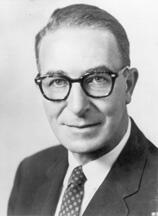
Here you will find contact information for Senator Carey Estes Kefauver, including email address, phone number, and mailing address.
| Name | Carey Estes Kefauver |
| Position | Senator |
| State | Tennessee |
| Party | Democratic |
| Status | Former Representative |
| Term Start | January 3, 1939 |
| Term End | December 31, 1963 |
| Terms Served | 8 |
| Born | July 26, 1903 |
| Gender | Male |
| Bioguide ID | K000044 |
About Senator Carey Estes Kefauver
Carey Estes Kefauver (July 26, 1903 – August 10, 1963) was an American politician from Tennessee who became one of the most prominent liberal Democrats of the mid‑twentieth century. A member of the Democratic Party, he served in the U.S. House of Representatives from 1939 to 1949 and in the U.S. Senate from 1949 until his death in 1963. Over the course of eight terms in Congress—five in the House and three in the Senate—he contributed significantly to the legislative process, particularly in the areas of antitrust policy, consumer protection, and crime investigation. He was the winner of most of the 1952 Democratic Party presidential primaries, though he was not nominated at the convention, and in 1956 he was selected at the Democratic National Convention to be the running mate of presidential nominee Adlai Stevenson.
Kefauver was born in Madisonville, Tennessee, the son of local hardware merchant Robert Cooke Kefauver and Phredonia Bradford Estes. His father’s service as mayor of Madisonville introduced him to politics at an early age and helped shape his interest in public affairs. The elder Kefauver remained an active and enthusiastic supporter of his son’s political career, assisting in campaigns until his death in 1958 at the age of 87. Growing up in a small East Tennessee town, Kefauver was exposed to the concerns of rural merchants and farmers, experiences that later informed his advocacy for the Tennessee Valley Authority and other New Deal programs.
Kefauver attended the University of Tennessee, where he played tackle and guard on the college football team and earned a Bachelor of Arts degree in 1924. After graduation, he taught mathematics and coached football for a year at a high school in Hot Springs, Arkansas. He then enrolled at Yale Law School, where he distinguished himself academically and received an LL.B. degree cum laude in 1927. Following law school, he returned to Tennessee and practiced law in Chattanooga for the next twelve years, initially with the firm of Cooke, Swaney & Cooke and later as a partner in Sizer, Chambliss & Kefauver. His work as attorney for the Chattanooga News drew him into local political issues and sharpened his interest in reform and public service.
In 1935, Kefauver married Nancy Pigott, born January 21, 1911, in Helensburgh, Dumbartonshire, United Kingdom, the daughter of British-American engineer Sir Stephen Pigott. A graduate of the Glasgow School of Art with a promising career as an artist, she redirected her efforts after their marriage to work diligently and effectively in her husband’s political campaigns. The couple raised four children, one of them adopted. Nancy Kefauver remained an important political partner throughout his career and later became known in her own right as a cultural figure; she died on November 20, 1967. Meanwhile, Kefauver’s own first bid for elective office came in 1938, when he sought a seat in the Tennessee Senate. Although he lost that race, he briefly served in 1939 as Finance and Taxation Commissioner under newly elected Governor Prentice Cooper, gaining administrative experience in state government.
Kefauver entered national politics in 1939 when Congressman Sam D. McReynolds of Tennessee’s 3rd congressional district, which included Chattanooga, died in office. Kefauver was elected as a Democrat to succeed him in the U.S. House of Representatives and went on to win reelection to five terms, serving from 1939 to 1949. Serving during President Franklin D. Roosevelt’s administration, he distinguished himself from most of Tennessee’s largely conservative Democratic delegation by becoming a staunch supporter of the New Deal. He strongly backed the Tennessee Valley Authority, and he was best known in this period for successfully rebuffing efforts by Tennessee Senator Kenneth McKellar to gain political control over the agency. In the House, Kefauver began to manifest a deep concern over the growing concentration of economic power in the United States, focusing much of his legislative work on congressional reform and anti-monopoly measures. He chaired the House Select Committee on Small Business, which in 1946 investigated economic concentration in American industry, and that same year he introduced legislation to close loopholes in the Clayton Antitrust Act. In a May 1948 article in the American Economic Review, he urged greater resources for the Justice Department’s Antitrust Division and the Federal Trade Commission, advocated new laws to ease the prosecution of large corporations, and called for broader public awareness of the dangers of monopolies.
In 1948, Kefauver sought the Democratic nomination for the U.S. Senate, challenging incumbent Senator Tom Stewart and confronting the powerful political machine of former Congressman and Memphis mayor E. H. Crump, the dominant figure in Tennessee’s Democratic Party. Crump and his allies attacked Kefauver as a “fellow traveler” and accused him of working for “pinkos and communists” with the stealth of a raccoon. In a televised speech in Memphis responding to these charges, Kefauver donned a coonskin cap and declared, “I may be a pet coon, but I’m not Boss Crump’s pet coon.” Backed by influential editor Edward J. Meeman of the Memphis Press-Scimitar and by the liberal Nashville Tennessean, which served as a focal point for anti-Crump sentiment, Kefauver defeated Stewart in the Democratic primary. Given the Democratic Party’s dominance in Tennessee at the time, the primary victory was tantamount to election, and his success is widely regarded as marking the beginning of the end of the Crump machine’s statewide influence. After winning both the primary and the general election, Kefauver adopted the coonskin cap—first given to him by journalist Drue Smith—as his campaign trademark and wore it in every subsequent race.
As a U.S. Senator from 1949 until his death in 1963, Kefauver became nationally known as a crusader for consumer protection, antitrust enforcement, and government reform. Although he admitted later that he had difficulty at first adjusting to the idea of racial integration and in 1960 resisted proposals to limit cross-examination of Black complainants in voting rights cases, he generally supported the civil rights program and consistently backed organized labor and other causes considered liberal in the South at the time. His progressive positions created a permanent bloc of opposition within Tennessee, but he retained a strong statewide constituency that admired his independence and integrity, even among citizens whose views were less liberal than his own. In the early 1950s, he gained national prominence by leading a widely publicized Senate investigation into organized crime, conducted through the Senate Special Committee to Investigate Crime in Interstate Commerce. The televised hearings, often referred to as the “Kefauver Committee” hearings, brought him into homes across the country and established his reputation as a determined foe of corruption and racketeering.
Kefauver twice sought the Democratic nomination for President of the United States. In 1952, he entered the presidential primaries and, wearing his now-famous coonskin cap, campaigned vigorously, including traveling by dogsled through the snow in New Hampshire. Running against incumbent President Harry S. Truman in the New Hampshire primary, he scored an upset victory that contributed to Truman’s decision to withdraw from the race. Kefauver went on to win 12 of the 15 Democratic primaries that year, losing only two to “favorite son” candidates and one, Florida, to leading Southern Democrat Richard Russell. He received approximately 3.1 million primary votes, while Illinois Governor Adlai Stevenson, who would become the party’s nominee, received only about 78,000. However, because most convention delegates were still chosen by party leaders rather than through primaries, Kefauver arrived at the Democratic National Convention short of the majority needed for nomination. Despite leading on the early ballots, he ultimately lost to Stevenson, who was drafted by party leaders after delivering an acclaimed keynote address. Stevenson went on to lose the general election in a landslide to Republican nominee Dwight D. Eisenhower.
In 1956, Kefauver again entered the Democratic presidential primaries, this time directly challenging Stevenson. On March 13, 1956, he defeated Stevenson in the New Hampshire primary by a vote of 21,701 to 3,806, and a week later he again bested Stevenson in the Minnesota primary, winning 245,885 votes to Stevenson’s 186,723. He also won the Wisconsin primary, and by April it appeared that he might replicate his strong primary performance of 1952. However, Stevenson, now an announced candidate, secured more endorsements, raised substantially more funds, and defeated Kefauver in key contests in Oregon, Florida, and California, ultimately winning more total primary votes. After a decisive loss in the California primary, Kefauver suspended his campaign. At the Democratic National Convention that summer, Stevenson again secured the presidential nomination but chose to leave the selection of his running mate to the delegates. Although Stevenson personally favored Senator John F. Kennedy of Massachusetts, he did not intervene in the balloting, and the convention chose Kefauver as the vice-presidential nominee. The Stevenson–Kefauver ticket lost the November election to the Eisenhower–Nixon Republican ticket by an even larger margin than Stevenson’s defeat in 1952. Kefauver, however, continued to hold his U.S. Senate seat throughout these campaigns and returned to his legislative work after the election.
In his later Senate years, Kefauver focused increasingly on antitrust policy, consumer protection, and the regulation of emerging industries. In 1957, he was named chair of the U.S. Senate Antitrust and Monopoly Subcommittee of the Senate Judiciary Committee, a position he held until his death. Under his leadership, the subcommittee conducted extensive investigations into the concentration of economic power in sectors such as automobiles, pharmaceuticals, and communications. He also pursued concerns about the influence of television on youth, leading an investigation into television and juvenile delinquency in the mid‑1950s that expanded into a more intensive probe in the early 1960s, as public anxiety grew over juvenile violence and its possible connection to violent television programming. Kefauver voted in favor of the 24th Amendment to the U.S. Constitution, which prohibited the poll tax in federal elections, reflecting his general support for civil rights reforms despite earlier reservations on specific procedural issues.
One of Kefauver’s most enduring legislative achievements came in the field of drug regulation. In 1962, drawing on years of hearings and investigations into the pharmaceutical industry, he introduced legislation that became the Kefauver–Harris Drug Control Act. The law imposed significant new controls on drug manufacturers, requiring them to disclose side effects to physicians, to allow their products to be marketed as generic drugs after a period of patent protection, and to demonstrate that their drugs were both effective and safe before approval and on demand. When President John F. Kennedy signed the Kefauver–Harris Act, he publicly commended Kefauver, noting that the long hearings the senator had conducted enabled the administration and Congress to respond effectively when drug safety became a matter of intense public concern.
Carey Estes Kefauver remained in office until his death on August 10, 1963. His congressional service, spanning from his election to the House in 1939 through his tenure in the Senate until 1963, coincided with a transformative era in American politics, encompassing the New Deal, World War II, the early Cold War, and the beginnings of the civil rights movement. Throughout this period, he participated actively in the democratic process and represented the interests of his Tennessee constituents while gaining a national reputation as an advocate of liberal reform, a critic of economic concentration, and a persistent champion of consumer and voter protections.