Representative Carl George Bachmann
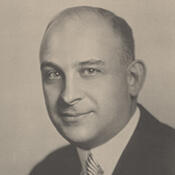
Here you will find contact information for Representative Carl George Bachmann, including email address, phone number, and mailing address.
| Name | Carl George Bachmann |
| Position | Representative |
| State | West Virginia |
| District | 1 |
| Party | Republican |
| Status | Former Representative |
| Term Start | December 7, 1925 |
| Term End | March 3, 1933 |
| Terms Served | 4 |
| Born | May 14, 1890 |
| Gender | Male |
| Bioguide ID | B000012 |
About Representative Carl George Bachmann
Carl George Bachmann (May 14, 1890 – January 22, 1980) was an American lawyer and Republican politician who served four terms as a United States Representative from West Virginia from 1925 to 1933. Representing the First Congressional District and based in Wheeling, he participated actively in the legislative process during a significant period in American history, including the late 1920s and the onset of the Great Depression. Over the course of his four terms in office, he represented the interests of his constituents in the U.S. House of Representatives and rose to a leadership position within his party.
Bachmann was born in Wheeling, Ohio County, West Virginia, as the son of Charles F. and Sophia Bachmann. Three of his grandparents were German immigrants, reflecting the strong German-American presence in the Wheeling area at the time. He attended local schools and graduated in 1908 from the Linsly Institute, a prominent preparatory school in Wheeling. He then pursued higher education at Washington and Jefferson College in Pennsylvania, where he studied for two years before transferring to West Virginia University. At West Virginia University he completed his undergraduate studies and was a member of the Phi Sigma Kappa fraternity, participating in campus life and building the professional and social connections that would support his later legal and political career.
After earning his undergraduate degree, Bachmann continued at West Virginia University to study law, graduating from its law school in 1915. That same year he was admitted to the bar and commenced the practice of law in Wheeling. On July 14, 1914, prior to completing his legal education, he married Susan Louise Smith. The couple established their home in Wheeling and had three children: Charles F., Gilbert S., and Susan Jane. Bachmann’s early professional years were thus marked by the simultaneous development of his legal practice, his family life, and his growing involvement in public affairs.
Bachmann’s entry into public service came through the legal system of Ohio County. In 1917 he was appointed assistant prosecuting attorney for Ohio County, a position that gave him experience in criminal law and local administration. His performance in that role led to his election as prosecuting attorney in 1920. He served as prosecuting attorney from January 1921 to December 1924, gaining public visibility and a reputation as an able lawyer and public official. This county-level experience provided the foundation for his subsequent bid for national office.
In November 1924, Bachmann was elected as a Republican to the United States House of Representatives from West Virginia’s First Congressional District. He took his seat in March 1925 and served continuously until March 1933, encompassing four consecutive terms in Congress. During this period he contributed to the legislative process as a member of the House of Representatives, participating in debates and votes on national policy during a transformative era that included the prosperity of the 1920s and the economic crisis that began in 1929. From 1931 to 1933, during the Seventy-second Congress, he served as the House Minority Whip, a key leadership position for the Republican Party in the chamber. In that capacity he helped organize party strategy and maintain party discipline at a time when Republicans were in the minority. His congressional service came to an end when he was defeated for reelection in 1932, amid the sweeping political realignments associated with the Great Depression and the rise of the New Deal coalition.
After leaving Congress, Bachmann returned to his legal practice in Wheeling and remained active in civic and political life. His continued engagement in local affairs culminated in his election as mayor of Wheeling in 1947. As mayor, he served from 1947 until 1951, overseeing municipal governance in the post–World War II period, when cities such as Wheeling were adjusting to economic changes, population shifts, and the demands of modern urban administration. His tenure as mayor extended his long record of public service at both the local and national levels.
Carl George Bachmann spent his later years in Wheeling, where he had been born and where he had built his legal and political career. He died there on January 22, 1980. He was interred in Greenwood Cemetery in Wheeling, closing a life closely tied to the city and region he represented and served for decades in various public capacities.