Representative Carl Richard Chindblom
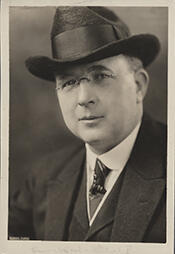
Here you will find contact information for Representative Carl Richard Chindblom, including email address, phone number, and mailing address.
| Name | Carl Richard Chindblom |
| Position | Representative |
| State | Illinois |
| District | 10 |
| Party | Republican |
| Status | Former Representative |
| Term Start | May 19, 1919 |
| Term End | March 3, 1933 |
| Terms Served | 7 |
| Born | December 21, 1870 |
| Gender | Male |
| Bioguide ID | C000361 |
About Representative Carl Richard Chindblom
Carl Richard Chindblom (December 21, 1870 – September 12, 1956) was a U.S. Representative from Illinois who served seven consecutive terms in the United States Congress from 1919 to 1933. A member of the Republican Party, he represented his Illinois constituents during a period of profound political, economic, and social change in the United States, contributing to the legislative process through his work in the House of Representatives.
Chindblom’s congressional service began at the close of World War I and extended through the Roaring Twenties into the early years of the Great Depression. First elected to the Sixty-sixth Congress, he took office on March 4, 1919, at a time when the nation was grappling with postwar readjustment, debates over international engagement, and domestic reform. He was subsequently reelected to six additional terms, serving continuously until March 3, 1933. Over these seven terms, he participated in deliberations on economic policy, infrastructure, and social issues that shaped the interwar period, and he consistently worked to represent the interests and concerns of his Illinois district within the broader national legislative agenda.
As a Republican, Chindblom served during an era when his party held significant influence in federal policymaking for much of the 1920s. His tenure spanned the administrations of Presidents Woodrow Wilson, Warren G. Harding, Calvin Coolidge, and Herbert Hoover, placing him at the center of congressional debates over tariff policy, business regulation, and federal responses to changing economic conditions. In the House of Representatives, he took part in the democratic process through committee work, floor debate, and the consideration of legislation affecting both his state and the nation.
Chindblom’s time in Congress concluded in 1933, as the country transitioned into the New Deal era under President Franklin D. Roosevelt. Leaving office at the end of his seventh term, he closed a fourteen-year period of continuous federal legislative service that had begun in the immediate aftermath of World War I and ended amid the search for solutions to the economic crisis of the Great Depression. His career in the House reflected both the stability and the upheaval of the early twentieth century, as he navigated shifting political currents while maintaining his role as a Republican representative from Illinois.
Carl Richard Chindblom died on September 12, 1956. His years in Congress, from 1919 to 1933, marked him as a significant participant in the federal legislative branch during a transformative era in American history, and his service stands as part of the broader record of Illinois’s representation in the United States House of Representatives.