Senator Carl T. Curtis
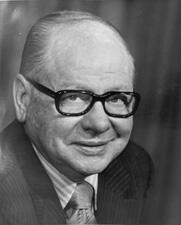
Here you will find contact information for Senator Carl T. Curtis, including email address, phone number, and mailing address.
| Name | Carl T. Curtis |
| Position | Senator |
| State | Nebraska |
| Party | Republican |
| Status | Former Representative |
| Term Start | January 3, 1939 |
| Term End | January 3, 1979 |
| Terms Served | 20 |
| Born | March 15, 1905 |
| Gender | Male |
| Bioguide ID | C001006 |
About Senator Carl T. Curtis
Carl Thomas Curtis (March 15, 1905 – January 24, 2000) was an American attorney and Republican politician from the state of Nebraska who served in the United States Congress for four decades. Over the course of his career, he represented Nebraska in the United States House of Representatives from 1939 to 1954 and in the United States Senate from 1955 to 1979, making him one of the most enduring political figures in his state’s history. He remains the second longest-serving Senator from Nebraska and was a prominent participant in the legislative process during a significant period in American history.
Curtis was born on March 15, 1905, near Minden in Kearney County, Nebraska. He grew up in a rural environment typical of early twentieth-century Nebraska, an upbringing that shaped his understanding of agricultural and small-town concerns that would later inform his legislative priorities. Orphaned at a young age, he was raised by relatives, an experience that contributed to his reputation for personal resilience and self-reliance. His early life in the Great Plains during a time of economic and social change gave him firsthand insight into the challenges facing farmers and rural communities.
After attending public schools in Nebraska, Curtis pursued legal studies and prepared for a career in law. He read law in the traditional manner of the time rather than attending a formal law school, studying under established attorneys and completing the requirements for admission to the bar. He was admitted to the bar of Nebraska and began practicing as an attorney, establishing himself professionally before entering public life. His legal training and experience as a practicing lawyer provided the foundation for his later work on legislation and his approach to statutory interpretation and constitutional issues.
Curtis’s political career at the national level began with his election as a Republican to the United States House of Representatives in 1938, taking office on January 3, 1939. He served continuously in the House from 1939 to 1954, a period that spanned the end of the Great Depression, World War II, and the early years of the Cold War. During these twelve terms in Congress, he contributed to the legislative process on issues ranging from wartime mobilization and postwar adjustment to domestic economic policy and the emerging national debate over social welfare programs. As a member of the Republican Party, he was identified with fiscally conservative and anti-communist positions that were central to his party’s platform in the mid-twentieth century.
In 1954, Curtis was elected to the United States Senate from Nebraska, assuming office on January 3, 1955. He served in the Senate until January 3, 1979, completing four full terms and becoming the second longest-serving Senator in Nebraska’s history. His Senate tenure coincided with some of the most consequential developments of the twentieth century, including the civil rights movement, the expansion of federal social programs, the Vietnam War, and the height of the Cold War. As a senator, he participated in the democratic process by debating and voting on major national legislation, representing the interests of his Nebraska constituents while aligning with the broader priorities of the Republican Party. Over these years, he became known as a reliable conservative voice, particularly on matters of taxation, federal spending, and the scope of federal authority.
Curtis’s service in Congress from 1939 to 1979 placed him at the center of American political life for forty years. He served under multiple presidents from both parties and witnessed the transformation of the federal government’s role in economic and social affairs. Throughout his long tenure, he maintained a reputation as a diligent legislator who closely attended to the concerns of his state, especially agriculture, rural development, and business regulation. His extended service in both the House and Senate gave him seniority and influence within the Republican caucus and on key committees, allowing him to shape policy over an extended period.
After leaving the Senate in 1979, Curtis retired from elective office but remained a respected elder statesman within Nebraska Republican circles and among former colleagues in Washington. He continued to be consulted on political and legislative matters and remained engaged in public affairs, drawing on his decades of experience in Congress. Carl Thomas Curtis died on January 24, 2000, closing a life that spanned nearly the entire twentieth century and a public career that left a lasting imprint on Nebraska’s representation in the federal government.