Representative Carl Thomas Durham
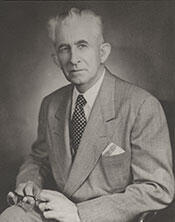
Here you will find contact information for Representative Carl Thomas Durham, including email address, phone number, and mailing address.
| Name | Carl Thomas Durham |
| Position | Representative |
| State | North Carolina |
| District | 6 |
| Party | Democratic |
| Status | Former Representative |
| Term Start | January 3, 1939 |
| Term End | January 3, 1961 |
| Terms Served | 11 |
| Born | August 28, 1892 |
| Gender | Male |
| Bioguide ID | D000571 |
About Representative Carl Thomas Durham
Carl Thomas Durham (August 28, 1892 – April 29, 1974) was an American politician and a member of the Democratic Party who served as a United States Representative from North Carolina from 1939 to 1961. Over the course of 11 consecutive terms in the House of Representatives, he contributed to the legislative process during a significant period in American history and represented the interests of his constituents in North Carolina.
Durham was born on August 28, 1892, in White Cross, Orange County, North Carolina. He grew up in the rural Piedmont region of the state, an area shaped by agriculture and small communities at the turn of the twentieth century. His early life in this environment helped form the local and regional perspectives that later informed his public service and political career.
Durham attended the public schools of Orange County and later pursued higher education at the University of North Carolina at Chapel Hill. Although he did not complete a degree, his time at the university exposed him to broader political and social ideas and provided a foundation for his later involvement in civic affairs. Following his studies, he worked in the private sector and became engaged in local matters, building a reputation that would support his entry into public life.
Before his election to Congress, Durham was active in local government and community leadership in Chapel Hill and Orange County. He served on the Chapel Hill Board of Aldermen and took part in various civic initiatives, gaining experience in public administration and local policymaking. This early career in municipal affairs allowed him to develop practical knowledge of governance and constituent service, which he carried with him to the national stage.
Durham was elected as a Democrat to the Seventy-sixth Congress and took office on January 3, 1939. He would be reelected ten times, serving continuously until January 3, 1961. His years in Congress spanned the end of the Great Depression, World War II, the early Cold War, and the beginnings of the modern civil rights era. During this time, he participated in the democratic process as a member of the House of Representatives, contributing to debates and legislation that reflected both national priorities and the concerns of his North Carolina district. As a long-serving member, he gained seniority and influence, and he was involved in shaping policy in areas that affected his constituents, including economic development and postwar adjustment.
Throughout his congressional service, Durham remained aligned with the Democratic Party’s positions of his era and worked within the party’s caucus to advance legislation. His extended tenure in the House made him part of the institutional continuity of Congress during a period of rapid change in domestic and international affairs. He was known for his attention to the needs of his district and for his steady participation in the legislative process over more than two decades.
Durham chose not to seek renomination in 1960 and concluded his service in Congress on January 3, 1961, after 11 terms in office. In his later years, he returned to private life in North Carolina, remaining a respected former public official whose career had spanned some of the most consequential decades of the twentieth century. Carl Thomas Durham died on April 29, 1974, in Chapel Hill, North Carolina, leaving a legacy as a long-serving representative who took part in guiding the nation through war, recovery, and the early years of the Cold War.