Senator Carl Atwood Hatch
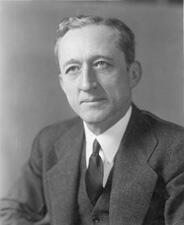
Here you will find contact information for Senator Carl Atwood Hatch, including email address, phone number, and mailing address.
| Name | Carl Atwood Hatch |
| Position | Senator |
| State | New Mexico |
| Party | Democratic |
| Status | Former Representative |
| Term Start | October 10, 1933 |
| Term End | January 3, 1949 |
| Terms Served | 3 |
| Born | November 27, 1889 |
| Gender | Male |
| Bioguide ID | H000334 |
About Senator Carl Atwood Hatch
Carl Atwood Hatch (November 27, 1889 – September 15, 1963) was a United States senator from New Mexico and later a United States district judge of the United States District Court for the District of New Mexico. A member of the Democratic Party, he served in the United States Senate from 1933 to 1949, contributing to the legislative process during three terms in office, and subsequently held federal judicial office until his death.
Hatch was born on November 27, 1889, in Kirwin, Phillips County, Kansas, the son of Esther Shannon (Ryan) and Harley Atwood Hatch. He attended the public schools of Kansas and Oklahoma, reflecting his family’s movement within the Great Plains region at the turn of the twentieth century. Pursuing a legal education, he enrolled at the Cumberland School of Law, then part of Cumberland University in Lebanon, Tennessee (now part of Samford University), where he received a Bachelor of Laws degree in 1912. That same year he was admitted to the bar, beginning a legal career that would lead him into state and federal public service.
After his admission to the bar in 1912, Hatch entered private practice in El Dorado, Oklahoma, where he practiced law from 1912 to 1916. In 1916 he relocated to Clovis, New Mexico, establishing a practice in what would become his long-term home state. His early legal work was soon complemented by public responsibilities. From 1917 to 1918 he served as an assistant attorney general for the State of New Mexico, gaining experience in statewide legal affairs during the World War I era. He then served as Collector of Internal Revenue for the State of New Mexico from 1919 to 1922, administering federal tax laws in the state during the early years of the modern federal income tax system.
Hatch’s judicial career began at the state level when he was appointed a judge of the New Mexico District Court for the Ninth Judicial District, serving from 1923 to 1929. In this capacity he presided over a broad range of civil and criminal matters in eastern New Mexico, further solidifying his reputation in the state’s legal community. After leaving the state bench, he returned to private practice in Clovis from 1929 to 1933. During this period he also contributed to the regulation and standards of the legal profession in New Mexico as a member of the state board of bar examiners from 1930 to 1933. His growing prominence in Democratic Party circles was reflected in his service as a presidential elector in 1932, participating in the Electoral College that followed the national election that brought Franklin D. Roosevelt to the presidency.
Hatch’s congressional service began during a significant period in American history, amid the New Deal response to the Great Depression. He was appointed on October 10, 1933, as a Democrat to the United States Senate from New Mexico to fill the vacancy caused by the resignation of Senator Sam G. Bratton. He was subsequently elected on November 6, 1934, to complete the term, and then reelected in 1936 and again in 1942. He served continuously from October 10, 1933, to January 3, 1949, representing the interests of his New Mexico constituents through the New Deal, World War II, and the early postwar years. He was not a candidate for renomination in 1948, choosing instead to conclude his Senate career at the end of his third term.
During his tenure in the Senate, Hatch became best known nationally as the author of the “Hatch Act” of 1939 and 1940, landmark legislation that restricted certain federal employees from engaging in specified political activities. The act was designed to protect the integrity of the federal civil service and to limit partisan influence over government employees, and it has remained a central statute in American campaign and ethics law. In addition to his authorship of this legislation, Hatch held important committee leadership roles. He served as Chairman of the Committee on Privileges and Elections during the 77th Congress, overseeing matters related to contested elections and the qualifications of senators. He also served as Chairman of the Committee on Public Lands and Surveys during the 77th, 78th, and 79th Congresses, a position of particular importance to a Western state such as New Mexico, where federal land policy, natural resources, and public domain issues were central to economic and social development.
Following his Senate service, Hatch transitioned to the federal judiciary. He was nominated by President Harry S. Truman on January 13, 1949, to a seat on the United States District Court for the District of New Mexico vacated by Judge Colin Neblett. The United States Senate confirmed his nomination on January 17, 1949, and he received his commission on January 21, 1949. As a district judge, Hatch presided over federal trial matters in New Mexico during a period of postwar growth, Cold War–era federal enforcement, and expanding federal jurisdiction. He became Chief Judge of the United States District Court for the District of New Mexico in 1954 and served in that capacity until 1963, overseeing the administration of the court and guiding its work through a decade of significant legal and social change.
Hatch assumed senior status on April 5, 1963, reducing his caseload while remaining a member of the federal bench. His service as a United States district judge terminated on September 15, 1963, upon his death in Albuquerque, New Mexico. He was interred in Fairview Park Cemetery. Over the course of his career—as a practicing attorney, state judge, United States senator, and federal district judge—Carl Atwood Hatch played a sustained role in the legal and political life of New Mexico and the nation, particularly through his authorship of the Hatch Act and his long service in both the legislative and judicial branches of the federal government.