Representative Carl Wood Riddick
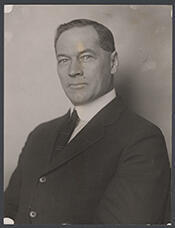
Here you will find contact information for Representative Carl Wood Riddick, including email address, phone number, and mailing address.
| Name | Carl Wood Riddick |
| Position | Representative |
| State | Montana |
| District | 2 |
| Party | Republican |
| Status | Former Representative |
| Term Start | May 19, 1919 |
| Term End | March 3, 1923 |
| Terms Served | 2 |
| Born | February 25, 1872 |
| Gender | Male |
| Bioguide ID | R000237 |
About Representative Carl Wood Riddick
Carlos Wood Riddick (February 25, 1872 – July 9, 1960), also known in congressional records as Carl Wood Riddick, was an American politician, newspaperman, rancher, and businessman who served as a Republican member of the United States House of Representatives from Montana. He represented Montana’s 2nd congressional district for two terms, serving in Congress from 1919 to 1923, and contributed to the legislative process during a significant period in American history.
Riddick was born on February 25, 1872, in Wells, Faribault County, Minnesota. He spent his formative years in the Midwest and was educated in the public schools of Michigan. Pursuing higher education, he attended Albion College in Albion, Michigan, and later Lawrence University in Appleton, Wisconsin. He came from a family engaged in public and civic life; his sister, Florence Riddick Boys (1873–1963), became known as a journalist, suffragist, and state official in Indiana, reflecting a broader family involvement in public affairs and reform movements of the era.
Before entering Montana politics, Riddick established himself in journalism and local public life in the Midwest. From 1899 to 1910, he served as editor of the Winamac Republican, a newspaper in Winamac, Indiana. In this role he was closely connected to Republican Party politics and public discourse at the turn of the twentieth century, shaping and reflecting local political opinion through his editorial work. His years in journalism provided him with experience in public communication and partisan organization that would later inform his political career.
After leaving the newspaper business, Riddick moved west and settled in Montana, where he became a rancher and entered local government. He served as county assessor of Fergus County, Montana, gaining administrative and fiscal experience at the county level. His work as a rancher and local official helped him build a base of support among rural constituents and acquainted him with the economic and land-use issues that were central to Montana’s political life in the early twentieth century.
Riddick’s congressional career began amid a major reorganization of Montana’s representation in the U.S. House of Representatives. In 1918, Montana’s at-large congressional district, which had elected two separate members, was abolished and replaced by two single-member districts, the 1st and 2nd congressional districts. One of the at-large incumbents, John M. Evans, chose to run in the new 1st district, while the other, Jeannette Rankin, declined to seek re-election to the House and instead ran for the U.S. Senate. Riddick ran as the Republican nominee in the newly created 2nd congressional district and was narrowly elected over the Democratic nominee, Harry B. Mitchell, taking office on March 4, 1919. He was re-elected in 1920 by a wide margin over M. McCusker, serving two full terms in the House from 1919 to 1923. As a member of the House of Representatives during the post–World War I period, he participated in the democratic process and represented the interests of his Montana constituents during a time of economic adjustment and political change.
Rather than seek a third term in the House, Riddick became a candidate for the United States Senate in 1922, aiming to succeed retiring Senator Henry L. Myers. In the Republican primary he defeated State Attorney General Wellington D. Rankin, securing his party’s nomination. In the general election, however, he was defeated by the Democratic nominee, Burton K. Wheeler, by a wide margin. This loss effectively ended his career in elective office, and he did not return to Congress thereafter.
Following his departure from electoral politics, Riddick remained active in public affairs and business. He moved to the Washington, D.C., area, where he served as president of the National Republic, a magazine published in the capital that reflected Republican perspectives on national issues. He also engaged in real estate and community development, operating a home development at Sylvan Shores in South River, Maryland. In his later years he divided his time between Maryland and Florida. His family continued to be involved in public life; his son, Merrill K. Riddick, became an aviator and a perennial political candidate.
Carlos Wood Riddick died on July 9, 1960, in Fort Lauderdale, Florida. He was interred at Hillcrest Memorial Cemetery in Annapolis, Maryland. His career spanned journalism, local administration, ranching, national legislative service, and political publishing, marking him as a figure who bridged regional and national Republican politics in the early twentieth century.