Representative Carlos Bee
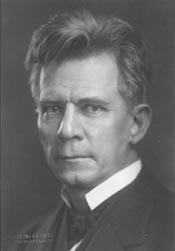
Here you will find contact information for Representative Carlos Bee, including email address, phone number, and mailing address.
| Name | Carlos Bee |
| Position | Representative |
| State | Texas |
| District | 14 |
| Party | Democratic |
| Status | Former Representative |
| Term Start | May 19, 1919 |
| Term End | March 3, 1921 |
| Terms Served | 1 |
| Born | July 8, 1867 |
| Gender | Male |
| Bioguide ID | B000303 |
About Representative Carlos Bee
Carlos Bee (July 8, 1867 – April 20, 1932) was an American attorney and Democratic politician who served as a U.S. Representative from Texas from 1919 to 1921. He was born into a prominent Southern political family as the son of Hamilton P. Bee, a Confederate general and Texas political figure, and the great-grandson of Thomas Bee, a noted South Carolina politician and judge during the Revolutionary and Federal periods. This lineage placed him within a longstanding tradition of public service that spanned multiple generations and regions of the American South.
Bee’s early life was shaped by the post–Civil War environment in which his family’s political and military legacy remained influential. Growing up in Texas, he was exposed to public affairs and legal matters through his father’s career and connections. This background helped direct him toward the study of law and a professional life in the legal field. His family’s established role in public life provided both a model and a network that would later support his own entry into politics.
Pursuing a legal education, Bee prepared for the bar and entered the practice of law in Texas. As an attorney, he developed a reputation for his professional competence and engagement with civic issues, which in turn increased his visibility within Democratic Party circles. His legal career formed the foundation of his public life, giving him experience in statutory interpretation, advocacy, and the practical workings of government that would later inform his legislative service.
Building on his legal and civic standing, Bee became active in Democratic Party affairs in Texas during the early twentieth century, a period when the party dominated state politics. His involvement in party organization and public issues positioned him as a viable candidate for national office. By the late 1910s, amid shifting national concerns following World War I, he emerged as a Democratic nominee for the U.S. House of Representatives, reflecting both his personal qualifications and his party’s confidence in his leadership.
Carlos Bee was elected as a Democrat to the United States House of Representatives and served one term in Congress from 1919 to 1921, representing a Texas district during a significant period in American history. His tenure coincided with the immediate postwar era, when the nation was addressing the consequences of World War I, the transition to a peacetime economy, and evolving domestic policies. As a member of the House of Representatives, Bee participated in the legislative process, contributed to debates, and represented the interests of his Texas constituents within the broader framework of Democratic Party priorities. Although he served only a single term, his work in Congress formed the apex of his public career at the federal level.
After leaving Congress in 1921, Bee returned to private life and resumed his work as an attorney in Texas. He remained identified with the Democratic Party and with the tradition of public service that characterized his family, continuing to be regarded as a figure of experience and standing in legal and political circles. His later years were spent in the state whose interests he had represented in Washington, maintaining his professional activities until his health and age curtailed his work.
Carlos Bee died on April 20, 1932. His life and career reflected the continuity of a Southern political family whose influence extended from the Revolutionary era through the early twentieth century. As an attorney and as a Democratic U.S. Representative from Texas from 1919 to 1921, he contributed to the legislative process during a transformative period in American history and upheld the public-service legacy associated with the Bee family name.