Representative Carlos Curbelo
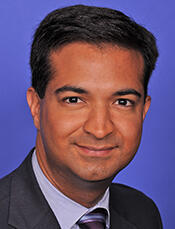
Here you will find contact information for Representative Carlos Curbelo, including email address, phone number, and mailing address.
| Name | Carlos Curbelo |
| Position | Representative |
| State | Florida |
| District | 26 |
| Party | Republican |
| Status | Former Representative |
| Term Start | January 6, 2015 |
| Term End | January 3, 2019 |
| Terms Served | 2 |
| Born | March 1, 1980 |
| Gender | Male |
| Bioguide ID | C001107 |
About Representative Carlos Curbelo
Carlos Luis Curbelo (born March 1, 1980) is an American politician and public affairs professional who represented Florida’s 26th congressional district in the U.S. House of Representatives from January 3, 2015, to January 3, 2019. A member of the Republican Party, he served two terms in Congress during a significant period in American political history, participating in the legislative process and representing a South Florida district that included parts of Miami-Dade and the Florida Keys. In 2018 he was narrowly defeated for re-election by Democrat Debbie Mucarsel-Powell.
Curbelo was born in Miami, Florida, the son of Cuban exiles who had settled in the state after leaving Cuba. Raised in a community deeply shaped by the Cuban diaspora and Cold War politics, he attended Belen Jesuit Preparatory School in Miami, an institution known for its rigorous academics and emphasis on civic engagement. He went on to the University of Miami, where he earned both a bachelor’s degree and a master’s degree in public administration, training that would later inform his work in government, policy, and public service.
Before entering elective office, Curbelo built a career in politics and public affairs. He served as a state director for U.S. Senator George LeMieux of Florida, gaining experience in federal legislative issues and constituent services. He also founded Capitol Gains, a government and public relations firm, through which he worked on communications and policy strategy. These roles helped establish his profile in Florida Republican circles and provided a platform for his later bids for public office.
Curbelo’s first elected position was on the Miami-Dade County Public Schools Board, where he represented the 7th district. He won the seat in 2010, succeeding Ana Rivas Logan, and served on the board from 2010 until 2015. During his tenure, he participated in overseeing one of the largest public school systems in the United States, dealing with issues of budgeting, standards, and educational policy. He was succeeded on the school board by Lubby Navarro when he left to take his seat in Congress. His school board service, combined with his background in public administration, helped shape his views on education policy and local governance.
In the 2014 election cycle, Curbelo ran for the U.S. House of Representatives in Florida’s 26th congressional district as a Republican. In the general election he defeated the incumbent Democrat, Joe Garcia, by a margin of 52 percent to 48 percent, and took office on January 3, 2015. He was re-elected in 2016 after running unopposed in the Republican primary and again facing Garcia in the general election, this time winning with 53 percent of the vote. During his time in Congress, Curbelo developed a reputation as a moderate Republican, often described as willing to break with his party on high-profile issues including abortion and women’s health, climate change, environmental protection, immigration, and government spending. According to McClatchy, he took “lonely stands” on several of these topics, and the Bipartisan Index created by The Lugar Center and the McCourt School of Public Policy ranked him the fourth most bipartisan member of the U.S. House of Representatives during the first session of the 115th Congress.
In the 115th Congress, Curbelo served on the influential House Committee on Ways and Means, including the Subcommittee on Human Resources and the Subcommittee on Oversight. He was active in several caucuses, including the United States Congressional International Conservation Caucus, the Republican Main Street Partnership, the Climate Solutions Caucus, and the U.S.-Japan Caucus. Along with Ileana Ros-Lehtinen, he was one of two Republican members of the Congressional LGBT Equality Caucus in the 115th Congress. His legislative interests included higher education affordability and climate policy; among the legislation he sponsored were the Affordable College Textbook Act (H.R. 3840, 115th Congress) and the Market Choice Act (H.R. 6463, 115th Congress), the latter proposing a market-based approach to reducing greenhouse gas emissions. As of September 2018, he had voted with the Republican Party 86.3 percent of the time in the 115th Congress, reflecting both his general alignment with his party and his willingness to diverge on select issues.
Curbelo’s policy positions, as summarized by the non-partisan organization Vote Smart in its 2016 analysis, indicated that he generally supported anti-abortion legislation, opposed increases in the income tax, and opposed mandatory minimum sentences for non-violent drug offenders. He supported lowering taxes as a means of promoting economic growth and opposed requiring states to adopt federal education standards. He backed construction of the Keystone Pipeline, supported government funding for the development of renewable energy, and supported federal regulation of greenhouse gas emissions. He voted to repeal the Affordable Care Act, opposed requiring immigrants who were unlawfully present to return to their country of origin before becoming eligible for citizenship, supported same-sex marriage, favored increased American intervention in Iraq and Syria beyond air support, and supported allowing individuals to divert a portion of their Social Security taxes into personal retirement accounts. These positions placed him within the pro–free enterprise, small-government wing of the Republican Party, while also distinguishing him on issues such as climate policy and LGBT rights.
Curbelo’s efforts to engage with Hispanic and bipartisan constituencies sometimes met resistance. In November 2017 he sought to join the Congressional Hispanic Caucus, which at the time consisted of Democratic members of Congress. After he made a presentation to the group, a majority of caucus members voted to deny him admission, citing his vote to repeal the Affordable Care Act and his initial failure to cosponsor the DREAM Act, although he stated he would support legislation to assist undocumented youth brought to the United States as children. In January 2018, the Congressional Hispanic Caucus’s political arm endorsed Democrat Debbie Mucarsel-Powell in her campaign to unseat him. The Miami Herald editorial board criticized the caucus’s decision to exclude him, calling it a “short-sighted, spiteful move” and arguing that the caucus should be explicit that it was an exclusive Democratic organization if it would not admit Hispanic Republicans such as Curbelo.
In 2018, Curbelo faced Mucarsel-Powell in what became one of the most closely watched and heavily funded House races in Florida. His district had been carried by Hillary Clinton in the 2016 presidential election, making it a prime target for Democrats seeking to flip Republican-held seats. Curbelo was significantly outspent, as the Democratic Congressional Campaign Committee invested nearly $7.2 million in the race—its largest expenditure in any House contest that year—and House Majority PAC spent about $2.5 million. In the November 6, 2018, general election, Mucarsel-Powell defeated Curbelo with 50.9 percent of the vote to his 49.1 percent. Reflecting on his defeat and the broader direction of his party, Curbelo stated that the Republican Party “has to understand that if we’re going to have a small government, free enterprise party in America, that Trumpism isn’t the future for such a party.” After leaving Congress at the end of his term in January 2019, he remained known as a prominent moderate Republican voice on issues such as climate change, immigration, and bipartisan cooperation.