Resident Commissioner Carlos A. Romero-Barcelo
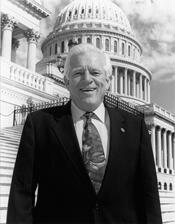
Here you will find contact information for Resident Commissioner Carlos A. Romero-Barcelo, including email address, phone number, and mailing address.
| Name | Carlos A. Romero-Barcelo |
| Position | Resident Commissioner |
| State | Puerto Rico |
| District | At-Large |
| Party | Democratic |
| Status | Former Representative |
| Term Start | January 5, 1993 |
| Term End | January 3, 2001 |
| Terms Served | 4 |
| Born | September 4, 1932 |
| Gender | Male |
| Bioguide ID | R000417 |
About Resident Commissioner Carlos A. Romero-Barcelo
Carlos Antonio Romero Barceló (September 4, 1932 – May 2, 2021) was a Puerto Rican politician who served as Resident Commissioner of Puerto Rico in the United States Congress from 1993 to 2001 and as governor of Puerto Rico from 1977 to 1985. A member of the New Progressive Party (PNP) in Puerto Rico and aligned with the Democratic Party in the United States, he was the second governor to be elected from the PNP and became a prominent advocate for Puerto Rican statehood over several decades of public service. He was born in San Juan, Puerto Rico, into a family deeply involved in the island’s political life. His grandfather, Antonio R. Barceló, was a leading figure in the Union Party and an advocate of Puerto Rican independence in the early twentieth century, while his mother, Josefina Barceló, was the first woman to preside over a major political party in Puerto Rico, providing him with an early and enduring exposure to public affairs and partisan leadership.
Romero Barceló received his early education in Puerto Rico before pursuing higher studies in the mainland United States. He attended Phillips Exeter Academy in New Hampshire and later enrolled at Yale University, where he completed his undergraduate education. Following Yale, he studied law at the University of Puerto Rico School of Law, earning his law degree and being admitted to the bar. His legal training and family background in politics helped shape his interest in public service, and he soon became active in the emerging New Progressive Party, which advocated for Puerto Rico’s admission as a state of the United States.
Romero Barceló’s formal political career began at the municipal level. In 1969 he was elected Mayor of San Juan, the capital and largest city of Puerto Rico, a position he held until 1977. As mayor, he presided over a period of urban development and modernization in San Juan, gaining island-wide visibility and consolidating his role as a leading figure within the PNP. His tenure in the city’s executive office positioned him as a natural candidate for higher office and set the stage for his subsequent election as governor.
In 1976, Romero Barceló was elected governor of Puerto Rico and took office in January 1977, becoming the second governor to be elected from the New Progressive Party. He served two consecutive four-year terms, from 1977 to 1985. His administration focused on economic development, public works, and the advancement of the statehood cause, while navigating the broader economic and political challenges facing Puerto Rico in the late 1970s and early 1980s. As governor, he worked to strengthen ties with the federal government and to increase Puerto Rico’s visibility in national discussions about territorial status and economic policy.
After leaving the governorship in 1985, Romero Barceló remained a central figure in Puerto Rican politics and within the PNP. In the 1992 elections, he successfully sought the post of Resident Commissioner of Puerto Rico, the island’s non-voting representative in the United States House of Representatives. He was elected to the 103rd and 104th United States Congresses and relocated to Washington, D.C., to carry out his duties. He was subsequently re-elected to the 105th and 106th Congresses, serving continuously as Resident Commissioner from January 3, 1993, to January 3, 2001. During these two terms in office, he participated in the legislative process, represented the interests of his Puerto Rican constituents, and aligned with the Democratic Party in Congress.
Romero Barceló’s congressional service occurred during a significant period in American and Puerto Rican political history, marked by debates over territorial status, economic policy, and federal tax treatment of the island. As Resident Commissioner, he campaigned vigorously for Puerto Rican statehood and used his position to press for changes in federal law affecting the island. He successfully proposed to Congress the derogation of Section 936 of the U.S. Internal Revenue Code, a tax provision that had granted incentives to U.S. corporations operating in Puerto Rico, arguing that its reform was necessary for a more sustainable economic framework. He also endorsed and supported the so‑called Young Project, federal legislation that sought to call a referendum to resolve Puerto Rico’s political status, reflecting his long-standing commitment to achieving a definitive status decision for the territory.
In 2000, Romero Barceló sought a further term as Resident Commissioner but was defeated by Popular Democratic Party (PPD) candidate Aníbal Acevedo Vilá, bringing his congressional service to a close at the end of the 106th Congress. He attempted a political comeback in 2003 by seeking his party’s nomination once again for the Resident Commissioner post, but he was defeated in the PNP primary by Luis Fortuño. After this setback, he retired from electoral politics, though he remained active in public life and partisan affairs. He continued to participate in New Progressive Party activities, engaged with the Puerto Rico Democratic Party and the broader United States Democratic Party, and was involved in civic and advocacy organizations, including membership in the League of United Latin American Citizens.
In his later years, Romero Barceló remained a vocal figure in discussions about Puerto Rico’s political future, voting rights, and the island’s relationship with the federal government, drawing on his long experience as mayor, governor, and Resident Commissioner. He died on May 2, 2021, leaving a legacy as one of the most prominent and enduring political leaders of his generation in Puerto Rico, whose career spanned municipal, territorial, and federal office and reflected the island’s evolving debate over status and self-government.