Representative Carroll Dudley Kearns
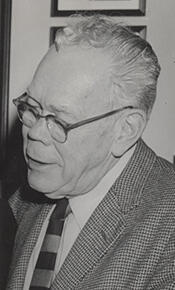
Here you will find contact information for Representative Carroll Dudley Kearns, including email address, phone number, and mailing address.
| Name | Carroll Dudley Kearns |
| Position | Representative |
| State | Pennsylvania |
| District | 24 |
| Party | Republican |
| Status | Former Representative |
| Term Start | January 3, 1947 |
| Term End | January 3, 1963 |
| Terms Served | 8 |
| Born | May 7, 1900 |
| Gender | Male |
| Bioguide ID | K000032 |
About Representative Carroll Dudley Kearns
Carroll Dudley Kearns (May 7, 1900 – June 11, 1976) was a Republican member of the U.S. House of Representatives from Pennsylvania who served eight consecutive terms in Congress from 1947 to 1963. He was born in Youngstown, Ohio, the son of Patrick Henry and Ida May (née Carroll) Kearns. In 1901 he moved with his parents to New Castle, Pennsylvania, where he was raised and began the long association with western Pennsylvania that would later define his political career.
Kearns pursued an extensive and varied education that combined military training, music, and pedagogy. In 1918 he was a student in the Army Reserve Officers’ Training Corps at the University of Pittsburgh. He then attended the Chicago Musical College in Chicago, Illinois, earning a Bachelor of Music degree in 1921 and later a Doctor of Music degree in 1948. He undertook special studies at Pennsylvania State College in State College, Pennsylvania, in 1932 and 1933. He received a Bachelor of Science degree from Westminster College in New Wilmington, Pennsylvania, in 1933, and went on to earn a Master of Education degree from the University of Pittsburgh in 1938. On August 30, 1933, he married Nora Mary Lynch in New Castle, Pennsylvania.
Before entering national politics, Kearns built a career that combined construction, education, and the performing arts. He was engaged in the construction business in Chicago from 1925 through 1929, gaining experience in private enterprise and urban development. Concurrently and thereafter, from 1924 through 1947, he taught school and engaged in educational work in supervisory and administrative positions in both Illinois and Pennsylvania. In addition to his educational and administrative responsibilities, he pursued a musical career as a concert artist and conductor, reflecting the formal musical training he had received in Chicago and contributing to cultural life in the communities where he lived and worked.
Kearns entered national public service as a member of the Republican Party and was elected as a Representative from Pennsylvania to the Eightieth Congress and to the seven succeeding Congresses, serving from January 3, 1947, to January 3, 1963. His service in Congress occurred during a significant period in American history, encompassing the early Cold War, the Korean War, and the beginnings of the modern civil rights movement. As a member of the House of Representatives, he participated in the democratic process and represented the interests of his Pennsylvania constituents, bringing to his legislative work a background in education, business, and the arts.
During his congressional tenure, Kearns developed particular influence in the field of education and labor policy. He served as the ranking minority member on the United States House Committee on Education and Labor during the Eighty-sixth and Eighty-seventh Congresses, a role that placed him at the center of debates over federal education initiatives, labor standards, and workplace conditions. In civil rights matters, he voted in favor of the Civil Rights Act of 1957 and the Civil Rights Act of 1960, supporting landmark legislation aimed at protecting voting rights and strengthening federal enforcement of civil rights. He voted “present” on the proposed Twenty-fourth Amendment to the U.S. Constitution, which would abolish the poll tax in federal elections, reflecting a more cautious stance on that particular constitutional change.
Kearns’s congressional career came to an end when he was an unsuccessful candidate for renomination in 1962, concluding sixteen years of continuous service in the House of Representatives. After leaving Congress, he returned to private life and became engaged in manufacturing from 1963 to 1970, remaining active in the economic life of Pennsylvania and drawing on his earlier experience in business and administration.
Carroll Dudley Kearns died on June 11, 1976, at Meadville City Hospital in Meadville, Pennsylvania. His long career in education, music, business, and public service, including eight terms in the U.S. House of Representatives, reflected a broad range of professional interests and a sustained commitment to representing the people of Pennsylvania during a transformative era in American political and social history.