Representative Case Broderick
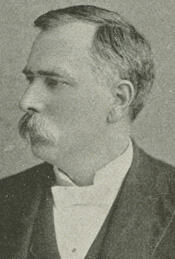
Here you will find contact information for Representative Case Broderick, including email address, phone number, and mailing address.
| Name | Case Broderick |
| Position | Representative |
| State | Kansas |
| District | 1 |
| Party | Republican |
| Status | Former Representative |
| Term Start | December 7, 1891 |
| Term End | March 3, 1899 |
| Terms Served | 4 |
| Born | September 23, 1839 |
| Gender | Male |
| Bioguide ID | B000856 |
About Representative Case Broderick
Case Broderick (September 23, 1839 – April 1, 1920) was an American politician and jurist who served as Associate Justice of the Idaho Territorial Supreme Court from 1884 to 1888 and as a U.S. Representative from Kansas from 1891 to 1899. A member of the Republican Party, he contributed to the legislative process during four consecutive terms in the United States House of Representatives, representing the interests of his Kansas constituents during a significant period in American history.
Broderick was born on September 23, 1839, near Marion, Grant County, Indiana, the son of Samuel Broderick and Mary (Snider or Snyder) Broderick. He attended the common schools in Indiana and grew up in a family that would produce several notable public figures. He was a cousin of David Colbreth Broderick, who became a prominent politician in Washington, D.C., New York, and California, and of Andrew Kennedy of California, who also attained national political prominence. In 1858, at the age of nineteen, he moved to Holton, in what was then Kansas Territory, where he engaged in agricultural pursuits. On August 23, 1860, he married Mary Ann Ewbank in Jackson County, Kansas Territory. She had been born in Dearborn County in southeastern Indiana on May 12, 1831, and died on November 13, 1888.
During the American Civil War, Broderick enlisted in the Union Army, entering service as a private in the 2nd Kansas Light Artillery Battery on May 27, 1863. He served in that unit until the close of the conflict and was mustered out at Leavenworth, Kansas, on August 11, 1865. Following his military service, he returned to Holton, where he continued his involvement in local affairs and began to prepare for a career in the law.
Broderick studied law in Holton with an established firm and was admitted to the bar in 1870. He commenced the practice of law in Holton and quickly became active in Republican Party politics. He was elected mayor of Holton in 1874 and again in 1875, reflecting his growing influence in local government. From 1876 to 1880 he served as prosecuting attorney of Jackson County, Kansas, and subsequently was elected to the Kansas Senate, where he served two terms from 1880 to 1884. His legislative and legal experience at the state level helped establish his reputation as a capable lawyer and public servant.
On March 18, 1884, President Chester A. Arthur nominated Broderick to be Associate Justice of the Idaho Territorial Supreme Court. He was confirmed by the United States Senate six days later and moved to Boise in the Idaho Territory to assume his judicial duties. He served the full four-year term and, after its expiration, continued in office until his successor arrived on August 10, 1888. Several days later he returned to Holton, Kansas, where he resumed the practice of law, bringing back with him the experience gained from service on a territorial high court.
Broderick was elected as a Republican to the Fifty-second and to the three succeeding Congresses, serving as a U.S. Representative from Kansas from March 4, 1891, to March 3, 1899. His eight years in the House of Representatives coincided with a transformative era in American politics and economics, and he participated in the democratic process as a member of the majority Republican Party for much of his tenure. Throughout his four terms in office, he represented Kansas in national deliberations and contributed to the legislative work of Congress. In 1898 he was an unsuccessful candidate for renomination, bringing his congressional career to a close at the end of the Fifty-fifth Congress.
After leaving Congress, Broderick again engaged in the practice of law in Holton. In his later years he gradually retired from active legal work and devoted his time to farming and livestock interests in the surrounding area. He remained a respected figure in his community until his death in Holton on April 1, 1920. Case Broderick was interred in Holton Cemetery, Holton, Kansas.