Representative Cecil Rhodes King
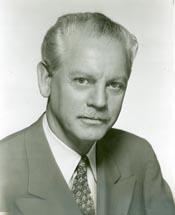
Here you will find contact information for Representative Cecil Rhodes King, including email address, phone number, and mailing address.
| Name | Cecil Rhodes King |
| Position | Representative |
| State | California |
| District | 17 |
| Party | Democratic |
| Status | Former Representative |
| Term Start | January 3, 1941 |
| Term End | January 3, 1969 |
| Terms Served | 14 |
| Born | January 13, 1898 |
| Gender | Male |
| Bioguide ID | K000196 |
About Representative Cecil Rhodes King
Cecil Rhodes King (January 13, 1898 – March 17, 1974) was an American businessman and Democratic politician who represented California in the United States House of Representatives for fourteen consecutive terms. He served as the first member of the House from California’s 17th congressional district from August 25, 1942, to January 3, 1969, and earlier in the 77th Congress by completing the unexpired term of his predecessor. Over nearly twenty-seven years in Congress, he played a significant role in mid‑twentieth‑century legislative developments, particularly in taxation, social insurance, and civil rights.
King was born on January 13, 1898, at Fort Niagara in Niagara County, New York. When he was ten years old, he moved with his family to Los Angeles, California, where he was raised. He attended the public schools of Los Angeles, receiving his primary and secondary education in the city that would later form the core of his political base. His early relocation to Southern California placed him in a rapidly growing urban region that would shape his later interests in economic development and social policy.
During World War I, King enlisted in the United States Army and served as a private from 1917 to 1918. His wartime service, at the lowest enlisted rank, coincided with the nation’s first large-scale overseas military engagement and exposed him to the concerns of ordinary servicemembers. After his discharge, he returned to Southern California and entered local business, establishing himself as a businessman in the Los Angeles area. This experience in private enterprise informed his later work on taxation and economic legislation.
King’s formal political career began in the California State Assembly, where he became a member in 1933. He served in the Assembly until 1942, with the exception of the year 1936, participating in state-level lawmaking during the New Deal era. In 1940 he was a delegate from California to the Democratic National Convention held at Chicago Stadium in Chicago, Illinois, aligning himself with the national Democratic Party at a time of major federal expansion and wartime preparation.
King’s entry into Congress followed the death of Representative Lee E. Geyer, the incumbent from California’s 17th congressional district, who died in Washington, D.C., on October 11, 1941. King was elected as a Democrat to the 77th United States Congress in a special election on August 25, 1942, to serve out Geyer’s unexpired term. Later that year, he ran unopposed in the general election for a full term and received 92,260 votes, 99.8 percent of the total. From that point he served continuously in the House of Representatives from 1941–1942 through January 1969, representing his California constituents throughout World War II, the postwar era, and the Great Society period.
Throughout his congressional career, King was closely identified with tax and social insurance policy. He became a member of the powerful House Committee on Ways and Means and served on that committee during twelve of his thirteen subsequent terms, with the sole exception of the 80th Congress (1947–1948). In the early 1950s he chaired a House subcommittee that investigated tax irregularities, reflecting his prominence in fiscal oversight. He was also among the earliest and most persistent advocates of a national health insurance program for the elderly; he was one of the first members of Congress to engage with the issue that became Medicare and carried on the legislative battle throughout the 1950s and 1960s until President Lyndon B. Johnson signed the Medicare Act into law on July 30, 1965.
Electorally, King enjoyed strong and often overwhelming support in his district. After running unopposed in 1942, he again ran unopposed in the 1944 House elections, capturing 147,217 votes, nearly 100 percent of the total. In 1946 he was again unopposed and received 110,654 votes, or 99.4 percent. He continued to be a dominant figure in his district, running unopposed in both 1948 and 1950 and capturing 99.9 percent of the vote in each election. He remained active in national party affairs, serving again as a California delegate to the Democratic National Convention at Chicago Stadium in July 1944 and as an alternate delegate to the 1948 Democratic National Convention. In 1952 he faced his first competitive re‑election contest, defeating Republican challenger Robert Finch by nearly 11 percent of the vote. Thereafter he returned to wide margins of victory, winning more than 60 percent of the vote in every biennial election from 1954 through 1966.
King’s legislative record placed him in support of major civil rights and voting rights measures of the mid‑twentieth century. He voted in favor of the Civil Rights Acts of 1957, 1960, 1964, and 1968, as well as the 24th Amendment to the United States Constitution, which abolished the poll tax in federal elections, and the Voting Rights Act of 1965. His votes aligned him with the national Democratic coalition that advanced federal protections for African American voting rights and equal treatment under the law during the civil rights era.
After nearly twenty-seven years in the House of Representatives, King chose not to be a candidate for re‑election in 1968 to the 91st Congress. His retirement opened the way for his successor, Democrat Glenn M. Anderson, who won the seat in a closely contested race decided by a margin of about two percentage points. King then withdrew from public office and spent his later years in California.
Cecil Rhodes King died of a stroke on March 17, 1974, at a nursing home in Inglewood, California, at the age of 76. He was interred in Inglewood Park Cemetery in Inglewood. His long tenure in Congress, marked by influential work on tax policy, early and sustained advocacy for Medicare, and consistent support for civil rights legislation, left a significant imprint on mid‑century federal policymaking and on the representation of his Southern California district.