Representative Chalmers P. Wylie
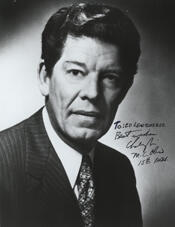
Here you will find contact information for Representative Chalmers P. Wylie, including email address, phone number, and mailing address.
| Name | Chalmers P. Wylie |
| Position | Representative |
| State | Ohio |
| District | 15 |
| Party | Republican |
| Status | Former Representative |
| Term Start | January 10, 1967 |
| Term End | January 3, 1993 |
| Terms Served | 13 |
| Born | November 23, 1920 |
| Gender | Male |
| Bioguide ID | W000781 |
About Representative Chalmers P. Wylie
Chalmers Pangburn Wylie (November 23, 1920 – August 14, 1998) was an American politician and lawyer from Ohio who served in various public offices in that state before serving thirteen terms as a member of the United States House of Representatives from 1967 to 1993. A member of the Republican Party, he contributed to the legislative process during a lengthy congressional career that spanned a significant period in modern American history, representing the interests of his Ohio constituents in the House of Representatives.
Wylie was born in Norwich, Muskingum County, Ohio, and grew up in Pataskala, a small community east of Columbus. He attended public schools and went on to study at Otterbein College in Westerville, Ohio, and at Ohio State University in Columbus. Following his undergraduate studies, he enrolled at Harvard Law School, where he earned his Juris Doctor degree in 1948, preparing for a career in law and public service.
During World War II, Wylie enlisted in the United States Army as a private and served in Europe with the 30th Infantry Division. Over the course of his military service he rose to the rank of first lieutenant. After the war he remained active in the U.S. Army Reserve, ultimately attaining the rank of lieutenant colonel. His wartime and reserve service formed an important part of his background and informed his later work on veterans’ and defense-related issues.
After completing his legal education, Wylie embarked on a career in law and state and local government. He served as assistant city attorney of Columbus, Ohio, from 1949 to 1950, and was elected city attorney of Columbus, serving from 1953 to 1956. At the state level, he was assistant attorney general of Ohio from 1951 to 1954. In 1957 he became administrator of the Bureau of Workman’s Compensation for the State of Ohio and in the same year was appointed first assistant to the Governor of Ohio. He was also elected president of the Ohio Municipal League, reflecting his growing prominence in municipal and state affairs. In addition to his public positions, Wylie maintained a private law practice beginning in 1957, which he continued alongside portions of his public service.
Wylie entered elective state office when he was elected to the Ohio state legislature, where he served three terms from 1961 to 1967. In the General Assembly he gained legislative experience and built a reputation that helped propel him to national office. In 1966 he was elected as a Republican to the United States House of Representatives, beginning his first term on January 3, 1967. He would go on to serve thirteen consecutive terms, remaining in Congress until January 3, 1993. His tenure in the House coincided with major developments in American political life, including the Vietnam War era, the civil rights movement’s legislative aftermath, the Watergate period, the Reagan administration, and the end of the Cold War. Throughout these years, he participated in the democratic process as a voting member of the House and worked on legislation affecting both his district and the nation.
During his congressional service, Wylie became involved in a number of notable legislative and appropriations issues. In July 1985, during appropriations discussions concerning the Library of Congress, he successfully offered a motion in the House to reduce the Library’s budget by $103,000, the exact amount used to produce the braille edition of Playboy magazine with federal funds. This action led to the discontinuation of the braille edition, following an earlier, unsuccessful effort in 1981 by Senator Mack Mattingly to remove sections of the magazine. In 1986, however, Judge Thomas Hogan of the federal district court ruled that Congress’s action violated the First Amendment, and production of the Playboy braille edition resumed in January 1987. Wylie’s role in this episode drew national attention to questions of federal funding, censorship, and constitutional protections.
After leaving Congress in 1993, Wylie resumed the private practice of law in Columbus, Ohio, continuing his legal career until his death. He died in Columbus on August 14, 1998. He was interred at Saint Joseph Cemetery in Lockbourne, Ohio. In recognition of his long record of public service and his connection to veterans’ issues, the Department of Veterans Affairs named the Chalmers P. Wylie VA Ambulatory Care Center in Columbus in his honor, commemorating his contributions to his state, his country, and the legislative process over more than four decades of public life.