Representative Charles Marley Anderson
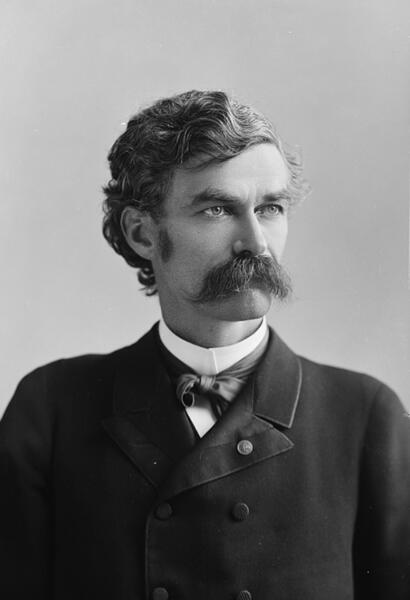
Here you will find contact information for Representative Charles Marley Anderson, including email address, phone number, and mailing address.
| Name | Charles Marley Anderson |
| Position | Representative |
| State | Ohio |
| District | 4 |
| Party | Democratic |
| Status | Former Representative |
| Term Start | December 7, 1885 |
| Term End | March 3, 1887 |
| Terms Served | 1 |
| Born | January 5, 1845 |
| Gender | Male |
| Bioguide ID | A000185 |
About Representative Charles Marley Anderson
Charles Marley Anderson (January 5, 1845 – December 28, 1908) was an American Civil War veteran and a Democratic member of the United States House of Representatives from Ohio’s Fourth Congressional District. Serving a single term in Congress from 1885 to 1887, he represented his constituents during a significant period in American political and economic development in the late nineteenth century.
Born on January 5, 1845, Anderson came of age in the decades leading up to the Civil War, a time of mounting sectional tension and rapid change in the United States. His early life unfolded in the antebellum Midwest, where questions of union, slavery, and national identity were increasingly at the forefront of public debate. These formative years in Ohio, a key state in national politics, helped shape his outlook and later public service.
With the outbreak of the Civil War, Anderson entered military service and became part of the vast citizen army that preserved the Union. As an American Civil War veteran, he shared the experience of many men of his generation who saw combat or served in support roles during the conflict between 1861 and 1865. His wartime service not only marked him personally but also provided a foundation of public respect and credibility that would later support his entry into political life.
After the war, Anderson returned to civilian pursuits in Ohio, where he established himself within the professional and civic life of his community. In the postwar decades, Ohio was a center of industrial growth, transportation development, and party politics, and Anderson’s activities reflected the broader engagement of veterans in public affairs. As a member of the Democratic Party in a state often closely contested between Democrats and Republicans, he became part of the organizational and electoral efforts that shaped local and state politics in the Gilded Age.
Anderson was elected as a Democrat to the Forty-ninth Congress, representing Ohio’s Fourth District in the United States House of Representatives from March 4, 1885, to March 3, 1887. His service in Congress occurred during a significant period in American history, marked by debates over tariffs, monetary policy, veterans’ issues, and federal regulation of commerce. As a member of the House of Representatives, Charles Marley Anderson participated in the legislative process, contributed to deliberations on national policy, and represented the interests of his constituents in Ohio, bringing to his work the perspective of a Civil War veteran and Midwestern Democrat.
During his single term, Anderson took part in the democratic process at the federal level, working within the committee and floor procedures that structured congressional action in the late nineteenth century. Although he served only one term, from 1885 to 1887, his tenure coincided with the administration of President Grover Cleveland and with efforts by Democrats to assert their policy priorities after years of Republican dominance following the Civil War. Anderson’s role in these years placed him among the generation of lawmakers who navigated the transition from a wartime and Reconstruction-era politics to the emerging industrial and regulatory concerns of the Gilded Age.
After leaving Congress at the close of his term in 1887, Anderson returned to private life in Ohio. Like many former members, he remained a figure of local prominence, his congressional service and Civil War record sustaining his standing in civic and political circles. He lived through the continued transformation of the United States into an industrial power and witnessed the early stirrings of the Progressive Era.
Charles Marley Anderson died on December 28, 1908. His life spanned from the antebellum period through the Civil War and Reconstruction into the modernizing United States of the early twentieth century. As a Civil War veteran and a former United States representative from Ohio’s Fourth District, he embodied the trajectory of many Americans who moved from wartime service into public office, contributing to the governance of the nation during a pivotal era.