Representative Charles Humphrey Atherton
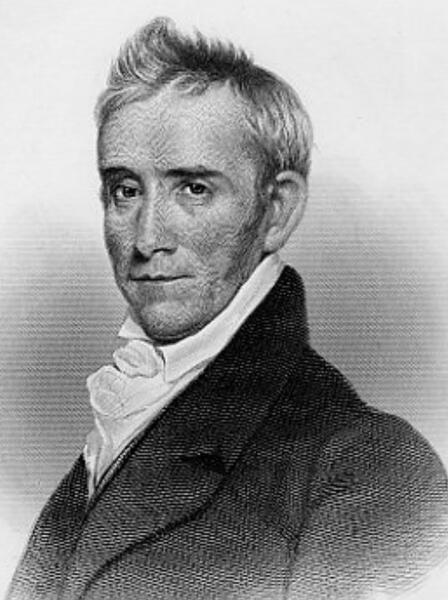
Here you will find contact information for Representative Charles Humphrey Atherton, including email address, phone number, and mailing address.
| Name | Charles Humphrey Atherton |
| Position | Representative |
| State | New Hampshire |
| District | -1 |
| Party | Federalist |
| Status | Former Representative |
| Term Start | December 4, 1815 |
| Term End | March 3, 1817 |
| Terms Served | 1 |
| Born | August 14, 1773 |
| Gender | Male |
| Bioguide ID | A000324 |
About Representative Charles Humphrey Atherton
Charles Humphrey Atherton (August 14, 1773 – January 8, 1853) was an American Federalist politician, banker, and distinguished attorney from Amherst, Hillsborough County, New Hampshire. A member of a prominent New England family, he was the son of Joshua Atherton, a noted lawyer and early opponent of slavery, and Abigail (Goss) Atherton. His grandfather was Colonel Peter Atherton, and he was a direct descendant of James Atherton, one of the early settlers of New England who arrived in Dorchester, Massachusetts, in the 1630s. Raised in an environment that combined legal learning, public service, and religious engagement, Atherton developed early the intellectual and civic interests that would characterize his long career.
Atherton pursued his education at Harvard University, where he studied alongside Elijah Dunbar, the son of Reverend Samuel Dunbar. He graduated from Harvard in 1794 and was elected to Phi Beta Kappa, reflecting his academic distinction. Soon after completing his studies, he prepared for the legal profession and was admitted to the bar in 1797. He established a law practice in Amherst, New Hampshire, which became the base of his professional and political life for more than half a century.
In addition to his private practice, Atherton quickly assumed public responsibilities. From 1798 to 1807 he served as register of probate for Hillsborough County, a position that placed him at the center of local legal and estate matters. During this period he emerged as a respected public orator. In 1798 he delivered an oration on the anniversary of American independence at his local church in Amherst, and following the death of George Washington on December 14, 1799, he delivered a formal eulogy in Amherst. On March 23, 1800, he sent a copy of this eulogy to Martha Washington, underscoring both his admiration for the first President and his growing prominence in New Hampshire public life.
Atherton’s national political career was relatively brief but significant. Elected as a Federalist candidate to the United States House of Representatives, he served in the Fourteenth Congress from March 4, 1815, to March 3, 1817, representing New Hampshire. He did not seek reelection in 1816, choosing instead to return to his legal practice and attend to family matters. His decision not to stand for another term coincided with a period of personal difficulty, including the illness and subsequent death of his wife, and it is likely that he focused his energies on his household and local affairs during these years.
Atherton remained active in state politics and civic organizations. He was thrice elected to the New Hampshire House of Representatives, serving in the state legislature in 1823, 1838, and 1839. After leaving the State House, he resumed the full practice of law in Amherst. He was one of the founders of the Hillsborough County Agricultural Society in 1819, reflecting his interest in regional economic development and agricultural improvement. In the financial sphere, he played a leading role in local banking, serving as president of the board of directors of the Farmers’ Bank from its formation in 1825 and continuing in that capacity throughout the existence of the corporation.
Beyond law and politics, Atherton was deeply engaged in religious and intellectual life. A prominent figure in the local Unitarian movement, he helped to establish The Christian Society in Amherst, contributing to the town’s evolving religious landscape. He was a member of the New Hampshire Historical Society and was elected a member of the American Antiquarian Society in 1815. For these organizations he prepared various historical and biographical papers, including an account of Wyseman Clagett, the father of Clifton Clagett, who had moved to substantial estates in Litchfield, New Hampshire, shortly before the American Revolution and served as the only Solicitor General under the temporary government before the office was abolished shortly before his death in 1784. Atherton delivered an address before the New Hampshire Historical Society at its annual meeting in Concord on June 8, 1831, further cementing his reputation as a learned commentator on the state’s history. In his final years he edited and published his father’s memoirs under the title “Memoir of the Hon. Joshua Atherton,” issued in 1852 by Crosby, Nichol and Company of Boston.
Atherton’s personal life was marked by both distinction and tragedy. On October 30, 1803, he married Mary Ann Toppan. They had seven children, including Charles G. Atherton, who would later serve as a United States Senator from New Hampshire. Through this marriage he was also connected to other political figures; his brother-in-law William Gordon served as a U.S. Representative from New Hampshire. Several of his children died young and are interred with their parents in the Old Cemetery in Amherst. Mary Anne Atherton (July 11, 1806 – September 24, 1807) died at fourteen months; Christopher Atherton (August 6, 1815 – May 3, 1816) died at nine months; and Henry Atherton (May 19, 1817 – May 19, 1817) died on the day of his birth. George Atherton (September 25, 1808 – April 10, 1825), a member of the junior class at Harvard College, died at age sixteen. James Humphrey Atherton (1813–1837), a broker, died in New York at age twenty-four. Two of the children survived into adulthood beyond their father’s lifetime: Mary Ann Toppan Atherton (December 18, 1810 – January 26, 1853), who outlived him by only eighteen days, and Charles Gordon Atherton (July 4, 1804 – November 15, 1853), who died later that same year.
The death of his wife Mary on October 15, 1817, just five months after childbirth, left Atherton a widower with four surviving young children: James (aged four), Mary (aged seven), George (aged nine), and Charles (aged thirteen). His withdrawal from national politics after 1816 is likely to have been influenced by these family responsibilities. Atherton’s prominence and social standing are reflected in the attention he received from leading American artists. He was painted by Raphaelle Peale in 1819, and in 1823, the year he returned to politics at the state level, he sat for another portrait in Boston by the renowned painter Gilbert Stuart. In 1837, after the death of his son James, the acclaimed artist and historian John Trumbull, who had recently retired as president of the American Academy of the Fine Arts, painted James’s likeness from memory. Trumbull’s advanced age and declining skills were evident in the work, and the perceived lack of resemblance was not appreciated by Atherton’s eldest daughter Mary.
Charles Humphrey Atherton died in Amherst, New Hampshire, on January 8, 1853, at the age of seventy-nine years and 147 days. He was buried in the Old Cemetery in Amherst alongside his wife Mary and five of their children. Over the course of his long career as lawyer, legislator, banker, and civic leader, he accumulated one of the largest estates ever left in Amherst, a testament to his professional success and careful management. His life and work linked the revolutionary generation of his father to the antebellum era of his son, and his contributions to law, politics, religion, and historical scholarship left a lasting imprint on New Hampshire’s public life.