Representative Charles Barwig
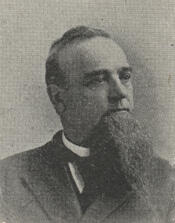
Here you will find contact information for Representative Charles Barwig, including email address, phone number, and mailing address.
| Name | Charles Barwig |
| Position | Representative |
| State | Wisconsin |
| District | 2 |
| Party | Democratic |
| Status | Former Representative |
| Term Start | December 2, 1889 |
| Term End | March 3, 1895 |
| Terms Served | 3 |
| Born | March 19, 1837 |
| Gender | Male |
| Bioguide ID | B000218 |
About Representative Charles Barwig
Charles Barwig (March 19, 1837 – February 15, 1912) was a German American immigrant, businessman, and Democratic politician who served three terms in the United States House of Representatives, representing the east-central part of Wisconsin. A member of the Democratic Party, he served in Congress from March 4, 1889, to March 3, 1895, during a significant period in American political and economic history, contributing to the legislative process over the course of three consecutive terms.
Barwig was born in Hesse-Darmstadt in the German Confederation on March 19, 1837. In 1845 he immigrated to the United States with his parents, who settled in Milwaukee in what was then the Wisconsin Territory. Growing up in an immigrant community in a rapidly developing frontier region, he attended the public schools of Milwaukee, receiving a basic education that prepared him for later commercial and civic pursuits.
Pursuing further training in business, Barwig enrolled at Spencerian Business College in Milwaukee, an institution known for its focus on commercial education, from which he graduated in 1857. This formal business education equipped him with skills in accounting, commerce, and administration that would underpin both his entrepreneurial activities and his later public service. His early years in Milwaukee coincided with the city’s emergence as a commercial hub, providing opportunities for a young businessman of his background and training.
In 1865, shortly after the end of the Civil War, Barwig moved to Mayville, Wisconsin. There he engaged in the wholesale liquor business, establishing himself as a local businessman in a growing community. His prominence in Mayville’s commercial life led naturally to involvement in local affairs, and he was elected mayor of Mayville, serving from 1886 until 1888. As mayor, he gained administrative and political experience that helped position him for higher office and strengthened his ties to constituents in the region he would later represent in Congress.
Barwig was elected as a Democrat to the Fifty-first, Fifty-second, and Fifty-third Congresses as the representative of Wisconsin’s 2nd congressional district, serving from March 4, 1889, to March 3, 1895. His tenure in the House of Representatives coincided with debates over tariffs, monetary policy, and federal expenditures in the late nineteenth century. During the Fifty-third Congress he served as chairman of the Committee on Expenditures in the Department of the Treasury, a position that placed him at the center of oversight of federal fiscal administration. As a member of the House, he participated in the democratic process and represented the interests of his east-central Wisconsin constituents in national legislative deliberations. He was an unsuccessful candidate for reelection in 1894 to the Fifty-fourth Congress, ending his congressional service after three terms.
After leaving Congress, Barwig returned to private life and engaged in the real estate business. Remaining in Mayville, he continued to be identified with the community where he had built his business and political career. His family also maintained a role in public affairs; his son, Byron Barwig, followed in his footsteps by serving as mayor of Mayville and later being elected to the Wisconsin State Senate, extending the Barwig family’s influence in Wisconsin civic and political life.
Charles Barwig died in Mayville, Wisconsin, on February 15, 1912. He was interred in Graceland Cemetery in Mayville, where his burial marked the close of a life that spanned immigration from the German Confederation, business success in Wisconsin, and service in both local government and the United States Congress.