Representative Charles Gustav Binderup
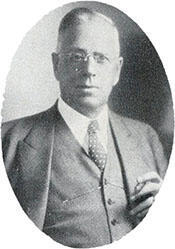
Here you will find contact information for Representative Charles Gustav Binderup, including email address, phone number, and mailing address.
| Name | Charles Gustav Binderup |
| Position | Representative |
| State | Nebraska |
| District | 4 |
| Party | Democratic |
| Status | Former Representative |
| Term Start | January 3, 1935 |
| Term End | January 3, 1939 |
| Terms Served | 2 |
| Born | March 5, 1873 |
| Gender | Male |
| Bioguide ID | B000466 |
About Representative Charles Gustav Binderup
Charles Gustav Binderup (March 5, 1873 – August 19, 1950) was a Nebraska Democratic politician who served as a Representative from Nebraska in the United States Congress from 1935 to 1939. He was born in Horsens, Denmark, the son of George Werner Binderup and Laurentza Bjerring. When he was six months old, his parents immigrated to the United States and settled on a farm near Hastings, Nebraska, where he was raised amid the agricultural life of the Great Plains. This early experience on a Nebraska farm would shape his later involvement in farming and his understanding of rural economic issues.
Binderup received his formal education at Grand Island Business College in Nebraska. His business training complemented his practical experience in agriculture, and after his studies he engaged in farming near Hastings and later near Minden, Nebraska. On September 18, 1900, he married Elena Westengaard, and the couple had three children. His family life and roots in the farming community helped establish him as a locally known figure in south-central Nebraska.
In addition to farming, Binderup entered the mercantile and creamery business in Minden, Nebraska. Through these enterprises he became closely involved with the economic life of the region, dealing with local producers and consumers and gaining insight into the financial and commercial challenges facing small-town and rural residents. His combined experience as a farmer and businessman provided a foundation for his later political career, particularly in matters related to agriculture, finance, and economic reform.
Binderup’s public career reached its peak with his election to the United States House of Representatives as a member of the Democratic Party. He was elected as a Democrat to the Seventy-fourth and Seventy-fifth Congresses and served from January 3, 1935, to January 3, 1939. During these two terms in office, he contributed to the legislative process at a time of significant national transformation under the New Deal, participating in the democratic process and representing the interests of his Nebraska constituents in the House of Representatives. His service in Congress occurred during a critical period in American history marked by efforts to address the Great Depression and to reform the nation’s financial and agricultural systems.
After serving two terms, Binderup failed to be reelected in 1938. Undeterred by this defeat, he sought to return to Congress by running as an Independent candidate for the Seventy-seventh Congress, but he was again unsuccessful. Following his congressional service and subsequent campaigns, he remained active in public affairs and reform movements. He helped organize the Constitutional Money League of America in Minden, reflecting his ongoing interest in monetary and economic issues and his concern with the structure of the nation’s financial system.
Charles Gustav Binderup spent his later years in Minden, Nebraska, where he continued to be identified with the community in which he had long lived and worked. He died in Minden on August 19, 1950. His career as a farmer, businessman, and two-term Democratic Representative from Nebraska placed him among the many immigrant Americans who rose from modest rural beginnings to national office during the first half of the twentieth century.