Representative Charles Martin Borchers
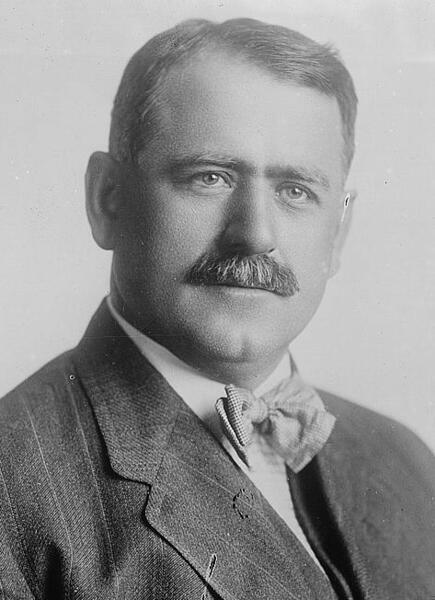
Here you will find contact information for Representative Charles Martin Borchers, including email address, phone number, and mailing address.
| Name | Charles Martin Borchers |
| Position | Representative |
| State | Illinois |
| District | 19 |
| Party | Democratic |
| Status | Former Representative |
| Term Start | April 7, 1913 |
| Term End | March 3, 1915 |
| Terms Served | 1 |
| Born | November 18, 1869 |
| Gender | Male |
| Bioguide ID | B000635 |
About Representative Charles Martin Borchers
Charles Martin Borchers (November 18, 1869 – December 2, 1946) was a Democratic politician, attorney, and public official who served one term as a U.S. Representative from Illinois from 1913 to 1915. Over the course of his career he was also twice elected mayor of Decatur, Illinois, and later became his party’s nominee for governor of Illinois.
Borchers was born on November 18, 1869, in Lockville, Fairfield County, Ohio. In 1875 he moved with his parents to Illinois, where the family settled in Macon County. He was educated in the common schools of the county, reflecting the typical rural public schooling of the era. Growing up in central Illinois during a period of agricultural expansion and small-town development, he became closely identified with the community that would form the base of his later legal and political career.
After completing his schooling, Borchers taught in the public schools of Macon County for seven years. His experience as a teacher provided him with local standing and familiarity with the concerns of residents in the area. While engaged in teaching, he pursued the study of law, preparing for admission to the bar. In 1897 he was admitted to the bar of Illinois and commenced the practice of law in Decatur, the county seat of Macon County, where he established himself as a practicing attorney.
Borchers’s involvement in local affairs led to his election as mayor of Decatur, serving his first term from 1909 to 1911. As mayor, he was part of the civic leadership of a growing industrial and commercial center in central Illinois. His tenure in municipal office helped build his reputation within the Democratic Party and among local voters, positioning him for higher office.
In 1912 Borchers was elected as a Democrat to the Sixty-third Congress, representing Illinois in the U.S. House of Representatives. His term extended from March 4, 1913, to March 3, 1915, a significant period in American history that coincided with the early years of the Woodrow Wilson administration and the onset of the Progressive Era reforms at the federal level. As a member of the House of Representatives, Borchers participated in the legislative process and represented the interests of his Illinois constituents, contributing to national debates during a time of substantial political and social change. A member of the Democratic Party, he served one term in office and was an unsuccessful candidate for reelection in 1914 to the Sixty-fourth Congress.
After leaving Congress in 1915, Borchers returned to Decatur and resumed the practice of law. Maintaining his engagement in public affairs, he again sought and won election as mayor of Decatur, serving a second period in that office from 1919 to 1923. His renewed leadership in municipal government reflected his continued prominence in local politics and his ongoing influence in shaping public policy at the city level.
Building on his local and congressional experience, Borchers became the Democratic candidate for governor of Illinois in 1924. Although he was unsuccessful in that statewide race, his nomination underscored his standing within the Democratic Party and his role as a significant figure in Illinois politics during the early twentieth century. Following this campaign, he continued his legal and civic activities in Decatur.
Charles Martin Borchers died in Decatur, Illinois, on December 2, 1946. He was interred in West Frantz Cemetery near Oakley, Illinois, in Macon County, close to the communities where he had spent nearly all of his life and career.