Representative Charles W. Boustany, Jr.
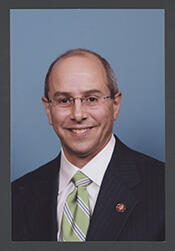
Here you will find contact information for Representative Charles W. Boustany, Jr., including email address, phone number, and mailing address.
| Name | Charles W. Boustany, Jr. |
| Position | Representative |
| State | Louisiana |
| District | 3 |
| Party | Republican |
| Status | Former Representative |
| Term Start | January 4, 2005 |
| Term End | January 3, 2017 |
| Terms Served | 6 |
| Born | February 21, 1956 |
| Gender | Male |
| Bioguide ID | B001255 |
About Representative Charles W. Boustany, Jr.
Charles William Boustany Jr. (born February 21, 1956) is an American politician, physician, and former congressman from Lafayette, Louisiana, who served as a Republican U.S. Representative from Louisiana from 2005 to 2017. During his six terms in the United States House of Representatives, he represented Louisiana’s 7th congressional district from January 3, 2005, until it was eliminated in redistricting in 2013, and then represented the 3rd congressional district from January 3, 2013, to January 3, 2017. Over the course of his congressional service, he participated in the legislative process during a significant period in American history and represented the interests of his south Louisiana constituents.
Boustany was born in Lafayette, Lafayette Parish, Louisiana, and is of Lebanese descent, part of a prominent local family that had been active in business and civic affairs. He grew up in Lafayette, where he attended local schools before pursuing higher education. He went on to earn a Bachelor of Science degree from the University of Southwestern Louisiana (now the University of Louisiana at Lafayette). He then attended medical school at Louisiana State University, receiving his M.D. and embarking on a career in medicine. Trained as a cardiovascular surgeon, he completed his surgical training and practiced medicine for many years in Lafayette, gaining recognition as a heart surgeon before entering electoral politics.
Before his election to Congress, Boustany built a professional reputation as a physician and was involved in medical and community organizations in Louisiana. His experience as a practicing cardiovascular surgeon informed his later interest in health policy and issues affecting physicians, hospitals, and patients. As national politics in Louisiana shifted toward the Republican Party, Boustany became increasingly engaged in public affairs and emerged as a Republican candidate in the early 2000s, seeking to translate his medical background and local standing into a role in federal policymaking.
Boustany’s congressional career began with the 2004 election, when incumbent Democratic U.S. Representative Chris John retired from Louisiana’s 7th congressional district to run for the U.S. Senate. John had held the district for eight years without serious difficulty, even as it trended increasingly Republican at the national level. Boustany entered the open race as a Republican, joining a field that included another Republican, David Thibodaux of Lafayette, and Democrats Willie Mount, a state senator from Lake Charles, and Don Cravins Jr., a state representative from Opelousas. In Louisiana’s nonpartisan blanket primary, he finished first with 39 percent of the vote, while Mount placed second with 25 percent, forcing a runoff because no candidate achieved a majority. Vice President Dick Cheney campaigned on Boustany’s behalf, underscoring national Republican interest in capturing the seat. In the December 4, 2004, runoff, Boustany defeated Mount by a margin of 55 to 45 percent, becoming only the second Republican ever to represent the district, following Jimmy Hayes, who had switched from the Democratic Party in 1995.
Taking office on January 3, 2005, Boustany quickly established himself as a Republican member focused on economic, energy, and health care issues important to south Louisiana. He won re-election to a second term in 2006 with 71 percent of the vote, defeating Democrat Mike Stagg. In 2008 he secured a third term by defeating Democrat Don Cravins Jr. and Constitution Party candidate Peter Vidrine. He was re-elected to a fourth term in 2010 without opposition, reflecting his consolidation of support in the district. During these years, he served through events such as Hurricanes Katrina and Rita and the Deepwater Horizon oil spill, participating in legislative debates affecting disaster recovery, offshore energy production, and the regional economy, while continuing to draw on his medical background in health policy deliberations.
Following the 2010 census, Louisiana lost a congressional district, and a major redistricting reshaped Boustany’s political landscape. Most of his former 7th District territory was incorporated into the new 3rd District, setting up a 2012 contest between Boustany and freshman Republican Jeff Landry of New Iberia, the incumbent in the pre-redistricting 3rd District. Although the district retained Landry’s numerical designation, it was geographically and demographically more aligned with Boustany’s former constituency, with nearly two-thirds of the new 3rd District drawn from his old 7th District, while Landry retained only the western third of his prior district. The race drew considerable attention as a clash between an establishment Republican, Boustany, and a Tea Party–aligned conservative, Landry. Landry led in third-quarter 2011 fundraising, $251,000 to Boustany’s $218,000, but Boustany held a substantial cash-on-hand advantage, $1.1 million to $402,000, according to Federal Election Commission reports. Agriculture and Forestry Commissioner Michael G. Strain endorsed Boustany, citing his assistance to the agricultural sector, while Landry drew support from many Republican parish executive committees and from Phyllis Schlafly’s Eagle Forum political action committee.
In the November 6, 2012, nonpartisan blanket primary, Boustany led a five-candidate field with 139,123 votes (45 percent), followed by Landry with 93,527 votes (30 percent). Democrat Ron Richard received 67,070 votes (22 percent), with the remaining votes split between Republican Bryan Barrilleaux and Libertarian Jim Stark. Because no candidate won a majority, Boustany and Landry advanced to a December 8 runoff. In that contest, Boustany prevailed with 58,820 votes (61 percent), carrying seven of the ten parishes in the district, including strong margins in Acadia, Calcasieu, and Lafayette parishes, while Landry carried St. Martin, Iberia, and St. Mary parishes. Boustany thus secured his fifth term in Congress and his first representing the renumbered 3rd District, and he went on to win a sixth and final term in 2014. Throughout his tenure, he served on key committees—most notably the House Ways and Means Committee—where he worked on tax, trade, and health care legislation, and he remained an active participant in the broader legislative process.
In 2016, Boustany chose not to seek re-election to the House and instead ran for the open U.S. Senate seat being vacated by retiring Republican Senator David Vitter. Entering a crowded field under Louisiana’s jungle primary system, he campaigned statewide but finished third on election day with 15.4 percent of the vote, behind Republican John Neely Kennedy and Democrat Foster Campbell, and therefore did not advance to the runoff. His service in the House concluded on January 3, 2017, and he was succeeded in Louisiana’s 3rd congressional district by Republican Clay Higgins, a Lafayette law enforcement officer residing in St. Landry Parish, outside the district’s boundaries. Boustany’s departure marked the end of twelve consecutive years in Congress, during which he had represented Louisiana in both the 7th and 3rd districts.
After leaving Congress, Boustany entered the private sector and worked as a lobbyist, drawing on his legislative experience and policy expertise, particularly in health care, trade, and economic issues. Remaining engaged in public affairs, he continued to comment on national politics and policy debates. In a notable departure from his long-standing Republican alignment in presidential politics, he endorsed Democratic nominee Kamala Harris in the 2024 United States presidential election, reflecting his evolving stance in the contemporary political environment while maintaining his identity as a Republican and former member of Congress from Louisiana.