Senator Charles Wayland Brooks
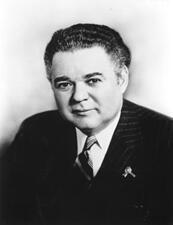
Here you will find contact information for Senator Charles Wayland Brooks, including email address, phone number, and mailing address.
| Name | Charles Wayland Brooks |
| Position | Senator |
| State | Illinois |
| Party | Republican |
| Status | Former Representative |
| Term Start | January 1, 1940 |
| Term End | January 3, 1949 |
| Terms Served | 2 |
| Born | March 8, 1897 |
| Gender | Male |
| Bioguide ID | B000874 |
About Senator Charles Wayland Brooks
Charles Wayland Brooks (March 8, 1897 – January 14, 1957) was a Republican U.S. Senator from Illinois who served in the United States Congress from 1939 to 1949, holding his Senate seat from 1940 to 1949. His decade of service in the Senate coincided with a transformative era in American history, spanning the final years of the Great Depression, the entirety of World War II, and the early stages of the Cold War, during which he participated in the legislative process and represented the interests of his Illinois constituents.
Brooks was born in West Bureau, Bureau County, Illinois. He attended public schools in his home state and later pursued higher education at Northwestern University in Evanston, Illinois. His early life in rural Illinois and subsequent university education helped shape his understanding of both agricultural and urban concerns, perspectives that would later inform his political career and his approach to representing a diverse statewide constituency.
During World War I, Brooks served in the United States Marine Corps. He enlisted in 1917 and saw active duty overseas, where he was wounded in combat. His military service, which earned him the rank of second lieutenant, left a lasting impression on him and contributed to his later interest in veterans’ affairs and national defense issues. After the war, he returned to Illinois and resumed his education, completing his legal studies at Northwestern University School of Law.
Following his admission to the bar, Brooks began practicing law in Chicago, Illinois. He built a legal career that brought him into contact with business, civic, and political leaders in the state. His involvement in public affairs grew steadily, and he became active in Republican Party politics. Before his election to the Senate, he ran for governor of Illinois in 1936 as the Republican nominee, an experience that raised his statewide profile even though he was not successful in that race.
Brooks’s service in Congress occurred during a significant period in American history. He entered the Senate after winning a special election in 1940 to fill a vacancy, and he was subsequently reelected, serving two terms in office and remaining in the Senate until 1949. As a member of the Senate, Charles Wayland Brooks participated in the democratic process and contributed to the legislative work of the chamber while the nation mobilized for World War II and then adjusted to postwar realities. He was known as a loyal Republican who generally supported his party’s positions on economic and foreign policy questions, and he took part in debates over wartime appropriations, military preparedness, and the emerging framework of international cooperation after 1945.
Representing Illinois, Brooks sought to balance the interests of the state’s industrial centers, particularly Chicago, with those of its agricultural regions. During his tenure, he worked within the committee system and on the Senate floor to address issues affecting his constituents, including economic recovery, support for returning veterans, and the transition from a wartime to a peacetime economy. His decade in the Senate placed him among the Republican voices shaping national policy during the presidencies of Franklin D. Roosevelt and Harry S. Truman.
After leaving the Senate in 1949, Brooks returned to private life and resumed his legal and business activities in Illinois. Though no longer in elective office, he remained associated with Republican politics and public affairs. Charles Wayland Brooks died on January 14, 1957, closing a career that had included military service in World War I, a prominent legal practice, a gubernatorial candidacy, and two terms in the United States Senate during one of the most consequential periods in twentieth-century American history.