Representative Charles Napoleon Brumm
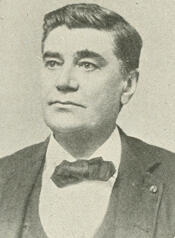
Here you will find contact information for Representative Charles Napoleon Brumm, including email address, phone number, and mailing address.
| Name | Charles Napoleon Brumm |
| Position | Representative |
| State | Pennsylvania |
| District | 12 |
| Party | Republican |
| Status | Former Representative |
| Term Start | December 5, 1881 |
| Term End | March 3, 1909 |
| Terms Served | 8 |
| Born | June 9, 1838 |
| Gender | Male |
| Bioguide ID | B000977 |
About Representative Charles Napoleon Brumm
Charles Napoleon Brumm (June 9, 1838 – January 11, 1917) was a Greenbacker and Republican member of the U.S. House of Representatives from Pennsylvania who served multiple nonconsecutive terms between 1881 and 1909. Over the course of eight terms in Congress, he participated actively in the legislative process and represented the interests of his Pennsylvania constituents during a period of significant economic and political change in the United States.
Brumm was born in Pottsville, Schuylkill County, Pennsylvania, on June 9, 1838. He attended the common schools of his native region and later pursued further studies at Pennsylvania College in Gettysburg, Pennsylvania. After his formal schooling, he began the study of law, devoting two years to legal training before the outbreak of the Civil War interrupted his early professional plans.
With the first call of President Abraham Lincoln for three-months’ volunteers at the start of the Civil War, Brumm enlisted as a private in the Union Army. He was soon elected first lieutenant of Company I, Fifth Regiment, Pennsylvania Volunteer Infantry. Later in 1861, he reenlisted for a three-year term and was elected first lieutenant of Company K, Seventy-sixth Regiment, Pennsylvania Volunteer Infantry. During his extended military service he was detailed to the staff of General Barton as assistant quartermaster and aide-de-camp, positions he continued to hold under both General Barton and General Galusha Pennypacker. He remained in these staff roles until the expiration of his term of service, after which he returned to civilian life.
Following the war, Brumm resumed the study of law and was admitted to the bar in 1871, commencing the practice of law in Pennsylvania. He entered electoral politics later in the decade and was an unsuccessful candidate for election to Congress in 1878. Undeterred by this initial defeat, he remained active in public affairs and party politics, building a reputation that would soon carry him to national office.
Brumm was first elected to the U.S. House of Representatives as a Greenbacker to the Forty-seventh and Forty-eighth Congresses, beginning his congressional service in 1881. He then continued his service as a Republican, winning election to the Forty-ninth and Fiftieth Congresses. During these years he contributed to the legislative deliberations of the House and represented the concerns of his Pennsylvania district at a time marked by debates over currency, labor, and industrial policy. He was a delegate to the 1884 Republican National Convention, reflecting his growing influence within the party. He was an unsuccessful candidate for reelection in 1888, temporarily interrupting his congressional career.
Returning to Congress as a Republican, Brumm was elected to the Fifty-fourth and Fifty-fifth Congresses. During this period he served as chairman of the United States House Committee on Claims, overseeing matters related to financial claims against the federal government. In 1898 he was an unsuccessful candidate for renomination, again stepping away from the House. He later reentered national politics when he was elected to the Fifty-ninth Congress to fill the vacancy caused by the death of Representative George R. Patterson. Brumm was subsequently reelected to the Sixtieth Congress and served until 1909. During the Sixtieth Congress he was chairman of the United States House Committee on Mileage, which dealt with the travel allowances of Members. Across these nonconsecutive periods of service, from his first election in 1881 through his final term ending in 1909, he completed eight terms in the House of Representatives.
In 1909, Brumm resigned from Congress after being elected judge of the Schuylkill County Court of Common Pleas in Pennsylvania. He assumed his judicial duties in that court and continued to serve on the bench for the remainder of his life. Known for having a highly mechanical and inventive mind, he was granted letters patent on a meat cutter and also devised several other mechanical innovations, including a brick and mortar elevator, a railroad snow shovel, and a self-starting car brake. His inventive activity paralleled his public career and reflected his interest in practical solutions to everyday problems.
Charles Napoleon Brumm served as judge of the Schuylkill County Court of Common Pleas until his death in Minersville, Pennsylvania, on January 11, 1917. He was part of a family with a tradition of public service; he was the father of Congressman George Franklin Brumm, who would also represent Pennsylvania in the U.S. House of Representatives.