Representative Charles Francis Buck
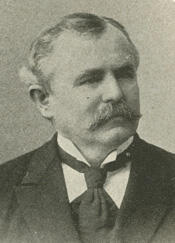
Here you will find contact information for Representative Charles Francis Buck, including email address, phone number, and mailing address.
| Name | Charles Francis Buck |
| Position | Representative |
| State | Louisiana |
| District | 2 |
| Party | Democratic |
| Status | Former Representative |
| Term Start | December 2, 1895 |
| Term End | March 3, 1897 |
| Terms Served | 1 |
| Born | November 5, 1841 |
| Gender | Male |
| Bioguide ID | B001012 |
About Representative Charles Francis Buck
Charles Francis Buck (November 5, 1841 – January 19, 1918) was a Democratic U.S. Representative from Louisiana who served one term in the United States Congress from 1895 to 1897. His congressional service took place during a significant period in American history, as the nation continued to confront the political, economic, and social consequences of the Civil War and Reconstruction, and as Louisiana navigated its own complex postwar development.
Buck was born in Durrheim, in the Grand Duchy of Baden, Germany, on November 5, 1841. In 1852 he immigrated to the United States with his parents, who settled in New Orleans, Louisiana. Growing up in a major Gulf port city that was both culturally diverse and economically vital, he came of age in the antebellum South and experienced firsthand the tensions that would culminate in the Civil War. He attended the public schools of New Orleans and graduated from the high school of New Orleans in 1861, at the outbreak of the war.
Following his secondary education, Buck attended the Louisiana State Seminary of Learning & Military Academy near Pineville, Louisiana, an institution that would later become Louisiana State University. His studies there reflected the era’s emphasis on both academic and military training, particularly in Southern states preparing for and then engaged in conflict. After the war years, he turned to the law as a profession, undertaking further legal study in New Orleans. He was admitted to the bar in 1867 and commenced the practice of law in that city, beginning a long legal and public career closely tied to New Orleans civic life.
In addition to his private legal practice, Buck became active in local public service. He served for many years as a member of the school board of New Orleans, contributing to the administration and development of the city’s public education system during a period of reconstruction and modernization. From 1880 to 1884 he held the position of city attorney of New Orleans, acting as the chief legal officer for the municipal government. In that capacity he advised city officials, represented New Orleans in legal matters, and helped shape the legal framework within which the city operated in the late nineteenth century.
Buck’s growing prominence in legal and civic affairs led to his election to national office. A member of the Democratic Party, he was elected as a Democrat to the Fifty-fourth Congress and served as a U.S. Representative from Louisiana from March 4, 1895, to March 4, 1897. During his single term in the House of Representatives, he participated in the legislative process and represented the interests of his Louisiana constituents at a time when issues such as economic policy, regional development, and the evolving federal role in Southern affairs were central to national debate. He declined to be a candidate for re-election in 1896, choosing instead to return to his legal practice in New Orleans after the close of his term.
After leaving Congress, Buck remained active in public and professional life. In 1896 he was an unsuccessful candidate for mayor of New Orleans, running as the Democratic nominee against Citizens’ League candidate Walter C. Flower in a closely watched municipal contest that reflected broader struggles over reform and political control in the city. He again sought the mayoralty in 1904 but was once more unsuccessful. From 1898 to 1900 he served as a member of the supreme court board of examiners for admission to the bar, helping to oversee the standards and examinations governing entry into the legal profession in Louisiana and further solidifying his reputation within the state’s legal community.
Charles Francis Buck continued to reside in New Orleans for the remainder of his life. He died there on January 19, 1918. His remains were interred in Metairie Cemetery in New Orleans, a resting place for many of the city’s prominent political, business, and civic leaders, reflecting his long-standing role in the legal, educational, and political life of Louisiana.