Representative Charles Henry Burke
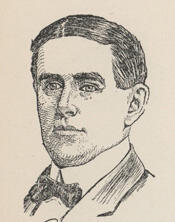
Here you will find contact information for Representative Charles Henry Burke, including email address, phone number, and mailing address.
| Name | Charles Henry Burke |
| Position | Representative |
| State | South Dakota |
| District | 2 |
| Party | Republican |
| Status | Former Representative |
| Term Start | December 4, 1899 |
| Term End | March 3, 1915 |
| Terms Served | 7 |
| Born | April 1, 1861 |
| Gender | Male |
| Bioguide ID | B001087 |
About Representative Charles Henry Burke
Charles Henry Burke (April 1, 1861 – April 7, 1944) was a Republican Congressman from South Dakota, a seven-term Representative in the United States Congress from 1899 to 1915, and Commissioner of the Bureau of Indian Affairs in the 1920s. A member of the Republican Party, he contributed to the legislative process during a significant period in American history, participating in the democratic process and representing the interests of his South Dakota constituents.
Burke was born near Batavia, Genesee County, New York, on April 1, 1861, and attended the public schools there. In 1882 he moved west to the Dakota Territory, settling first on a homestead in Beadle County in what is now South Dakota. The following year, in 1883, he moved to Hughes County, where the developing community around Pierre offered broader professional and political opportunities. His early years on the frontier helped shape his familiarity with land, settlement, and development issues that would later figure prominently in his public career.
After establishing himself in Dakota Territory, Burke studied law and was admitted to the bar in 1886. He began practicing law and also engaged in the real estate investment business in the area of Pierre, South Dakota, combining legal work with land and property ventures in a rapidly growing region. His involvement in local affairs and business quickly led him into public service. He was elected to the South Dakota House of Representatives in 1895 and again in 1897, gaining experience in state-level legislation during the formative years of South Dakota’s statehood.
Building on his state legislative service, Burke ran for the United States House of Representatives in 1898 as a Republican from South Dakota. He won election and entered Congress in 1899, beginning a congressional career that extended, with one interruption, until 1915. He remained in the House through 1907, but lost the Republican nomination for the 1906 election. Regaining political support, he won election again in 1908 and served continuously until 1915, completing a total of seven terms in office. During this period he became a prominent figure in his party’s House leadership, serving as Minority Whip from 1913 through 1915. His service in Congress coincided with a transformative era in American politics marked by rapid industrialization, Progressive Era reforms, and debates over federal authority and western development.
Burke was particularly associated with federal Indian policy. In 1906 he was heavily involved in the passage of the Burke Act, legislation that amended the General Allotment (Dawes) Act and affected the conditions under which Native Americans received citizenship and control of allotted lands. His role in this and related measures placed him at the center of national debates over Native American land tenure, citizenship, and assimilation. While he was regarded by some contemporaries as a protector of federal guardianship and business interests in Indian affairs, later reformers and historians criticized his policies as detrimental to Native American rights and autonomy.
In 1914, Burke received the Republican nomination for a United States Senate seat from South Dakota. In order to pursue this higher office, he chose not to run for reelection to the House of Representatives that year, thus ending his long tenure in the lower chamber. He was defeated in the Senate race, temporarily halting his electoral career but not his involvement in federal policy.
Burke returned to national prominence when he was appointed Commissioner of Indian Affairs in 1921, a post he held until his resignation in 1929. As Commissioner of the Bureau of Indian Affairs during the 1920s, he oversaw federal administration of Native American lands, education, and governance at a time when federal policy continued to emphasize allotment and assimilation. Alongside Secretary of the Interior Albert B. Fall in the early 1920s, Burke was viewed by reform advocates as part of an “obscurantist” faction that prioritized business and development interests over Native American welfare. Reformers such as John Collier and Gertrude Bonnin (Zitkala-Ša) opposed policies associated with Fall and Burke, arguing that these policies suppressed Native American culture and religion and facilitated exploitation of tribal lands. The struggle between Burke’s approach and that of the reformers, shaped in part by public opinion and church and media campaigns, helped set the stage for the eventual reversal of allotment policy and the passage of the Indian Reorganization Act of 1934, which granted tribes greater autonomy and resources.
In recognition of his prominence in South Dakota public life, the town of Burke, South Dakota, was named in his honor. Charles Henry Burke died in Washington, D.C., on April 7, 1944, closing a long career that had spanned frontier settlement, state politics, congressional leadership, and high federal office in the administration of Indian affairs.