Representative Charles Germman Burton
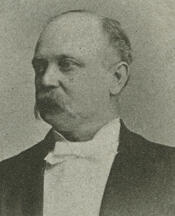
Here you will find contact information for Representative Charles Germman Burton, including email address, phone number, and mailing address.
| Name | Charles Germman Burton |
| Position | Representative |
| State | Missouri |
| District | 15 |
| Party | Republican |
| Status | Former Representative |
| Term Start | December 2, 1895 |
| Term End | March 3, 1897 |
| Terms Served | 1 |
| Born | April 4, 1846 |
| Gender | Male |
| Bioguide ID | B001147 |
About Representative Charles Germman Burton
Charles Germman Burton (April 4, 1846 – February 25, 1926) was a U.S. Representative from Missouri and a member of the Republican Party. Born in Cleveland, Ohio, he moved in childhood to Warren, Ohio, where he attended the public schools. His early years in Ohio provided the foundation for both his later legal career and his long involvement in public affairs.
During the American Civil War, Burton entered military service at a young age. He enlisted on September 7, 1861, as a private in Company C, 19th Ohio Infantry, and served with that regiment until his discharge on October 29, 1862. He later returned to uniform as a corporal in Company A, 171st Ohio Infantry during the “one hundred days” campaign of 1864, a short-term mobilization of state units in support of Union operations. These wartime experiences preceded his professional training and helped shape his subsequent public service.
After the war, Burton studied law and prepared for a legal career. He was admitted to the bar in Warren, Ohio, in 1867. Seeking opportunities in the developing communities of the Midwest, he moved to Virgil City, Missouri, in 1868, then to Erie, Kansas, in 1869, and finally settled in Nevada, Vernon County, Missouri, in 1871. There he established a law practice and became an active figure in local legal and political circles.
Burton’s professional advancement in Missouri was marked by significant judicial responsibilities. He served as circuit attorney and later as judge of the Twenty-fifth Judicial Circuit, roles in which he gained prominence in the state’s legal community. His growing stature within the Republican Party was reflected in his selection as a delegate to the Republican National Convention in 1884, an early indication of his influence in party affairs at the state and national levels.
Elected as a Republican to the Fifty-fourth Congress, Burton served as a Representative from Missouri from March 4, 1895, to March 3, 1897. His single term in the U.S. House of Representatives occurred during a significant period in American history marked by economic and political realignments in the 1890s. As a member of the House of Representatives, he participated in the legislative process, contributed to debates of the era, and represented the interests of his Missouri constituents. He was an unsuccessful candidate for reelection in 1896 to the Fifty-fifth Congress, ending his formal congressional service after one term.
Following his departure from Congress, Burton resumed the practice of law. He remained active in Republican politics and returned to the national stage as a delegate to the Republican National Convention in 1904. His public service continued in the federal executive sphere when he was appointed collector of internal revenue at Kansas City, Missouri, a post he held from 1907 to 1915. In this capacity he oversaw the administration of federal tax laws in a major regional center during a period of expanding federal revenue systems.
Burton also maintained a prominent role in veterans’ affairs. A Civil War veteran himself, he was elected commander in chief of the Grand Army of the Republic in 1908, leading the nationwide fraternal organization of Union veterans at a time when it remained an influential voice in public life. His leadership in the Grand Army of the Republic reflected both his longstanding identification with his fellow veterans and his continued engagement in civic and patriotic activities.
Charles Germman Burton died in Kansas City, Missouri, on February 25, 1926. He was interred in Deepwood Cemetery in Nevada, Missouri, the community where he had long practiced law and built his early career. His life encompassed service as a soldier, lawyer, judge, party leader, federal officeholder, and one-term Member of Congress, and he remained closely identified with Missouri and its public life for more than half a century.