Representative Charles J. Carney
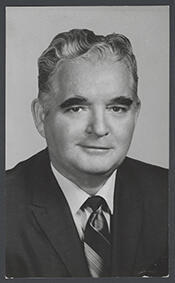
Here you will find contact information for Representative Charles J. Carney, including email address, phone number, and mailing address.
| Name | Charles J. Carney |
| Position | Representative |
| State | Ohio |
| District | 19 |
| Party | Democratic |
| Status | Former Representative |
| Term Start | January 3, 1969 |
| Term End | January 3, 1979 |
| Terms Served | 5 |
| Born | April 17, 1913 |
| Gender | Male |
| Bioguide ID | C000164 |
About Representative Charles J. Carney
Charles Joseph Carney (April 17, 1913 – October 7, 1987) was an American politician and member of the U.S. House of Representatives from Ohio, serving as a Democratic Representative from 1969 to 1979. Over the course of five terms in Congress, he contributed to the legislative process during a significant period in American history, participating in the democratic process and representing the interests of his constituents in northeastern Ohio.
Carney was born on April 17, 1913, in Youngstown, Mahoning County, Ohio. He attended public schools in Youngstown and in neighboring Campbell, Ohio, reflecting his early ties to the industrial communities of the Mahoning Valley. He later pursued higher education at Youngstown State University, then a growing regional institution serving many first-generation college students from working-class families. His formative years in this heavily industrialized region, combined with his education, helped shape his long-standing commitment to labor issues and public service.
Before entering elective office, Carney built his career in the labor movement, closely aligned with the industrial workforce of the Youngstown area. From 1934 to 1950, he served as a staff member to the vice president and president of United Rubber Workers Union Local 102, working on behalf of rubber industry employees during a period marked by economic upheaval, wartime production, and postwar adjustment. Beginning in 1950, he became a staff representative of the United Steelworkers of America, a position he held until 1968, representing steelworkers during the height of the region’s steel production. He also served as vice president of the Mahoning County CIO Industrial Council, further solidifying his role as a key labor advocate in northeastern Ohio.
Carney’s prominence in organized labor led naturally to a career in state politics. He was elected to the Ohio Senate in 1950 and served there for two decades, from 1950 to 1970. During his tenure in the state legislature, he represented a district centered on the Youngstown area and focused on issues affecting industrial workers, local infrastructure, and economic development. In the final phase of his state legislative service, he rose to a leadership role as minority leader of the Ohio Senate from 1969 to 1970, reflecting the confidence of his Democratic colleagues in his experience and judgment.
Carney entered national politics in 1970, when he was elected to the U.S. House of Representatives as a Democrat. He won a special election on November 3, 1970, to the Ninety-first Congress, defeating attorney Richard McLaughlin and filling the vacancy caused by the death of long-serving Representative Michael J. Kirwan. He was subsequently reelected to the four succeeding Congresses, serving continuously from November 3, 1970, to January 3, 1979. Across these five terms, his service in Congress coincided with a transformative era in American public life, encompassing the later years of the Vietnam War, the Watergate scandal, shifting national economic conditions, and the early stages of deindustrialization in the Midwest. In the House of Representatives, Carney drew on his extensive labor background to advocate for working-class constituents, industrial communities, and social programs important to his district. He was an unsuccessful candidate for reelection to the Ninety-sixth Congress in 1978, ending his tenure in the House at the conclusion of his fifth term.
After leaving Congress in January 1979, Carney returned to private life in Youngstown, remaining identified with the region and the labor and political causes that had defined his career. His long record of service—from union staff representative to state senator and minority leader, and then to U.S. Representative—reflected the trajectory of a public figure rooted in the industrial heartland and closely aligned with the concerns of organized labor and working families.
Charles Joseph Carney died on October 7, 1987, in Youngstown, Ohio, the city of his birth and the center of his public life. He was interred in Calvary Cemetery in Youngstown, closing a life of more than five decades of involvement in labor advocacy and public service at the local, state, and national levels.